

You've been to 50 corporate events. You remember maybe three. The ones you remember? They felt like someone built them just for you. Not because of the budget. Not because of the venue. Because something in that room made you feel like you weren't just another lanyard in a sea of lanyards.
That feeling isn't an accident. It's engineered. And the gap between forgettable events and unforgettable ones comes down to one thing: personalization.
Not the kind where you slap someone's name on a badge and call it a day. Real personalization. The kind that rewires how an individual experiences a shared space. The kind that makes 500 people in the same ballroom each walk away with a different story about the same night.
Let's break down how it works.
Why Does Your Brain Remember Some Events and Forget the Rest?
Your brain is ruthless about what it keeps. Cognitive psychologists call it the — your ability to zero in on a single voice in a noisy room. Colin Cherry first described it in 1953, and the principle hasn't changed. Your brain is constantly scanning for relevance. It filters out the generic. It locks onto what feels personally meaningful.
This is why the keynote everyone sat through gets forgotten, but the moment someone called your name from the stage sticks. Why you don't remember the buffet, but you remember the bartender who asked about your drink preference and remembered it an hour later.
Personalized event experiences exploit this filter. They give your brain a reason to pay attention. Not to the event in general — to this specific moment, right now, for you.
What Is Choice Architecture — And Why Does It Matter at Events?
Choice architecture is a concept from behavioral economics. It's the idea that how you present options shapes the decisions people make. At events, it's the difference between a curated experience and a chaotic one.
Most planners get this backwards. They think more options equals better experience. Twelve breakout sessions. Eight food stations. Four entertainment zones. The thinking goes: something for everyone.
The reality? You get paralysis for everyone.
Psychologist Barry Schwartz nailed this in his book The Paradox of Choice and his . His research showed that when people face too many options, they make worse decisions — or no decision at all. One study found that for every 10 mutual funds added to a retirement plan, participation dropped by 2%. More choice, less engagement. The same principle destroys events.
The fix isn't fewer options. It's better-framed options. Two to three clear tracks. A curated path with permission to deviate. You're not limiting freedom — you're designing it. Give people a confident "choose your adventure" with three doors, not a hallway with thirty.
How Do Micro-Moments Create Personal Connections at Events?
Micro-moments are the small, often invisible touches that make someone feel recognized. They don't cost much. They don't require complex technology. But they compound.
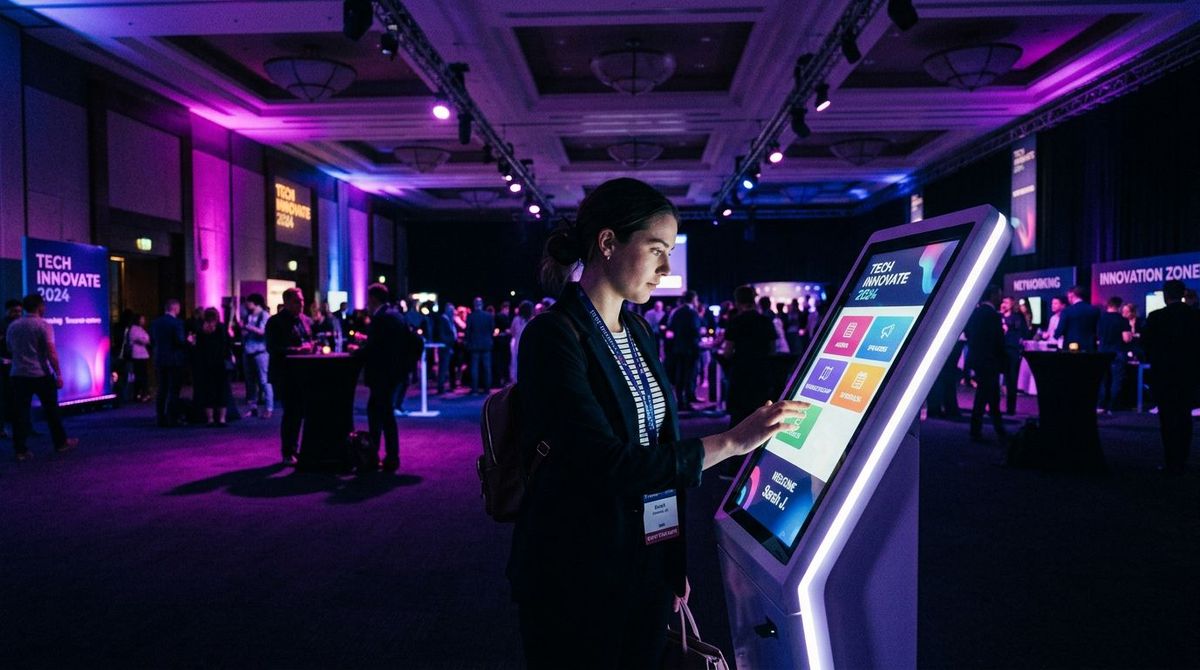
A bartender who remembers your order. A welcome screen that greets you by name when you check in. A DJ who plays a song you requested twenty minutes ago and gives you a nod from the booth. A photo booth that already knows your company's branding.
These moments work because they trigger what psychologists call the "self-reference effect" — we process and remember information more deeply when it relates to us personally. It's not vanity. It's neurology.
The best event producers I know obsess over these moments. They map the attendee journey and ask one question at every touchpoint:Does this feel generic, or does this feel like it knows who I am?
How Does AI Enable Personalization at Scale?
Here's where the industry has genuinely shifted. Five years ago, personalization meant hand-writing place cards. Today, AI makes it possible to create individual experiences for hundreds of guests simultaneously.
Take AI-powered photo experiences like . Every guest walks up to the same station, but every output is unique — generated in real time based on the individual. It's not a photo booth with props. It's a creative engine that treats each person as a unique input, not a queue number.
Or consider that adapt in real time. Screens that shift content based on who's standing in front of them. Entertainment that responds to crowd energy rather than following a rigid script.
According to 95% of event teams expect AI usage to increase this year. The smart ones aren't using AI to replace human touches — they're using it to multiply them. One producer can now deliver the kind of personalized attention that used to require a team of twenty.
Why Does Too Much Choice Ruin the Event Experience?
Back to Schwartz for a moment, because this is where most corporate events silently fail.
You've seen the agenda. Seven concurrent sessions, four networking lounges, two entertainment stages, a wellness room, a VR zone, and a "quiet reflection space" that nobody uses because everyone feels guilty about not networking. The event planner is proud. Look at all these options.
The attendee is exhausted. And the night hasn't started.
backs this up — only 15% of organizers rate their networking opportunities as "very effective" in 2026, down from 46% in 2025. More programming. Worse outcomes. That's the paradox in action.
The events people love don't offer everything. They offer the right things, presented with confidence. Two signature cocktails instead of a full bar menu. Three entertainment moments instead of eight. A single dance floor where everyone ends up together because the music is that good — not twelve scattered zones where nobody builds shared energy.
Constraint creates connection.
How Does Music Personalization Transform Corporate Events?
Music is one of the most powerful personalization tools at any event, and most planners barely think about it. They hand a DJ a genre and say "keep it upbeat." That's not a strategy. That's a prayer.
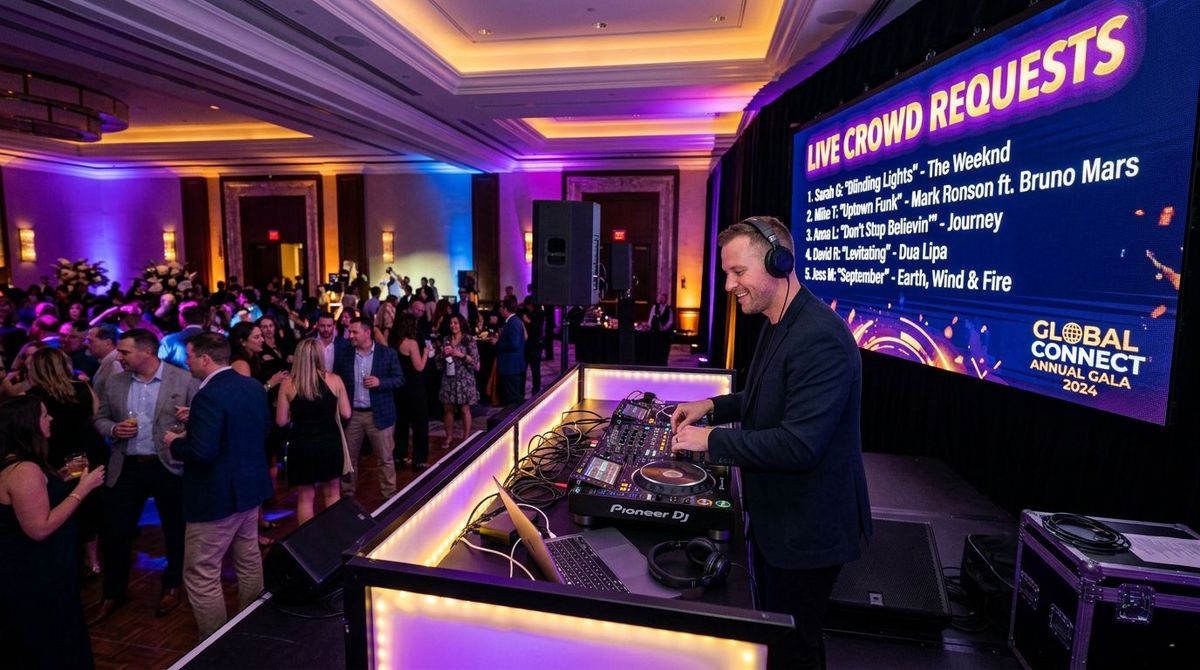
Real music personalization means the audience shapes the soundtrack. Platforms like let guests request songs in real time, vote on what plays next, and see their picks hit the speakers. The DJ still curates — they're not a jukebox. But the crowd has agency. And agency is the core of personalization.
When someone hears a song they requested, the whole room changes for them. That's their moment. Their song. In a room of 300 people, they just had an individual experience inside a collective one. That's what personalized event experiences actually look like in practice.
What's the Difference Between Personalization and Customization at Events?
This distinction matters more than most planners realize.
Customization requires effort from the attendee. Pick your breakout session. Fill out a dietary form. Choose your swag bag items. It's opt-in. It's work. And it puts the cognitive burden on the guest.
Personalization is invisible. It happens without the attendee doing anything. The lighting shifts to match the energy of the room. The check-in screen greets them by name because the system already knows who they are. The entertainment adapts to the crowd's preferences in real time without anyone filling out a survey.
The best events lean heavily on personalization and use customization sparingly. When you force people to customize their own experience, you're outsourcing your job. When you personalize it for them, you're doing what great producers do — anticipating needs before they're expressed.
How Do Food, Space, and Sensory Design Create Personal Experiences?
Personalization isn't only digital. It's physical.
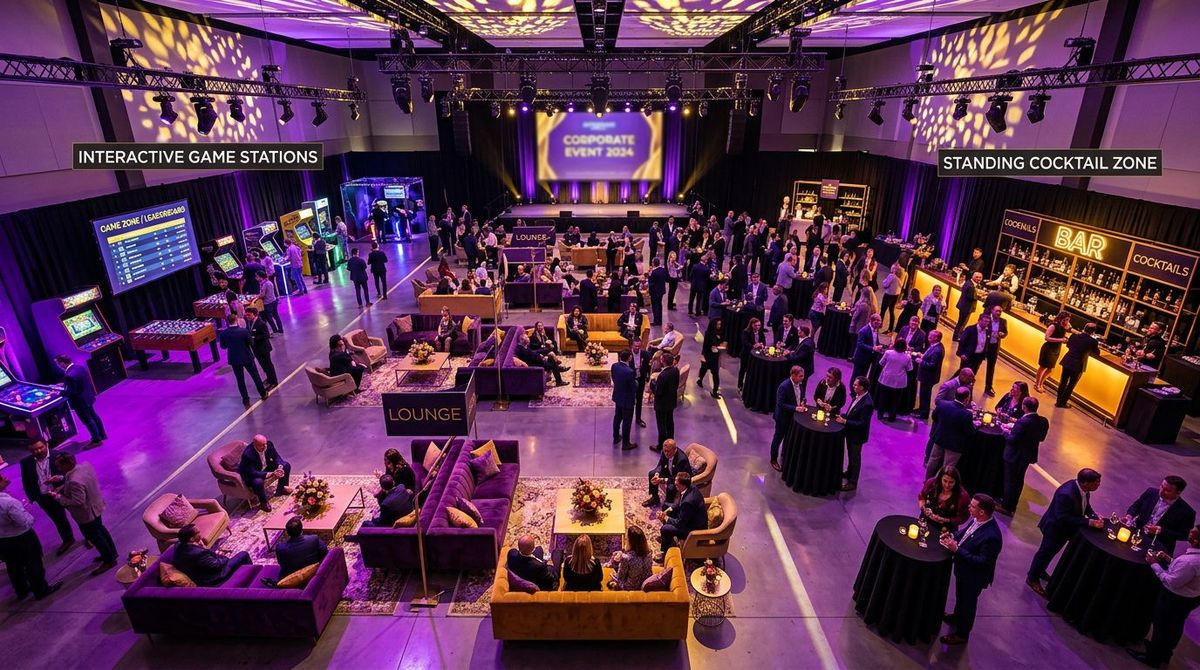
A food station that lets guests build their own plate with three well-curated options feels more personal than a pre-set menu with five courses nobody asked for. A venue with distinct zones — intimate conversation corners, high-energy social areas, quiet recharge spots — lets people self-select their experience without being told to.
Scent, temperature, lighting — these are all levers. A room that shifts from warm amber during dinner to cool blue during the after-party isn't just an aesthetic choice. It's a signal that the experience is evolving, and it creates distinct memories tied to different sensory states.
The producers who get this right don't just plan a room. They plan a journey through a room. Entry feels one way. The middle of the night feels different. The close is something else entirely. Each shift gives the brain a new anchor point, and each anchor point becomes a personal memory.
Frequently Asked Questions
How do you personalize a corporate event?
Start with data. Pre-event surveys (short ones — three questions, not thirty) tell you what people actually want. Use that data to shape entertainment, food options, and programming. During the event, use technology that adapts in real time: interactive music platforms, AI-powered photo experiences, and dynamic digital signage. After the event, personalized follow-ups based on what each attendee actually engaged with. The key is making people feel recognized without making them do work.
What is choice architecture in event planning?
Choice architecture is how you structure and present options to guide better decisions. In event planning, it means offering two to three curated tracks instead of twelve, designing clear pathways through the space, and framing choices so attendees feel confident rather than overwhelmed. It's borrowed from behavioral economics and it's one of the most underused tools in the industry.
How does AI enable event personalization?
AI processes individual data points — preferences, behaviors, engagement patterns — and delivers unique outputs at scale. AI photo experiences generate one-of-a-kind images for each guest. Smart check-in systems recognize attendees and tailor their welcome. Recommendation engines suggest sessions based on role or interest. The technology handles the scale; the producer handles the strategy.
What's the difference between personalization and customization at events?
Customization asks the attendee to make choices — pick a session, select a meal, choose a swag item. Personalization delivers a tailored experience without the attendee lifting a finger. The check-in screen knows their name. The lighting shifts based on crowd energy. The entertainment adapts to the room. Personalization is invisible and effortless. Customization requires labor from the guest.
How much does event personalization cost?
Less than you think. The most effective personalization tactics — name recognition at check-in, curated choice architecture, music request platforms, micro-moment mapping — add minimal cost to an existing budget. AI-powered experiences like BananaCam.ai and interactive entertainment platforms are scalable and often replace more expensive static alternatives. The real cost isn't financial. It's the planning time required to think about the attendee as an individual, not a headcount.
What are examples of personalized event experiences?
Live music request platforms where guests shape the playlist. AI photo stations that create unique art for each person. Smart badges that unlock different experiences based on attendee profiles. Food stations with curated build-your-own options. Welcome screens that greet guests by name. Venue zones designed for different energy levels so people self-select their vibe. None of these require massive budgets. All of them require intentional design.
The events people talk about for years aren't the ones with the biggest budgets or the most famous headliners. They're the ones where, somewhere in the middle of a room full of strangers, you felt like the whole thing was built around you. That's not magic. That's design. And the producers who understand the difference are the ones getting the callback.