
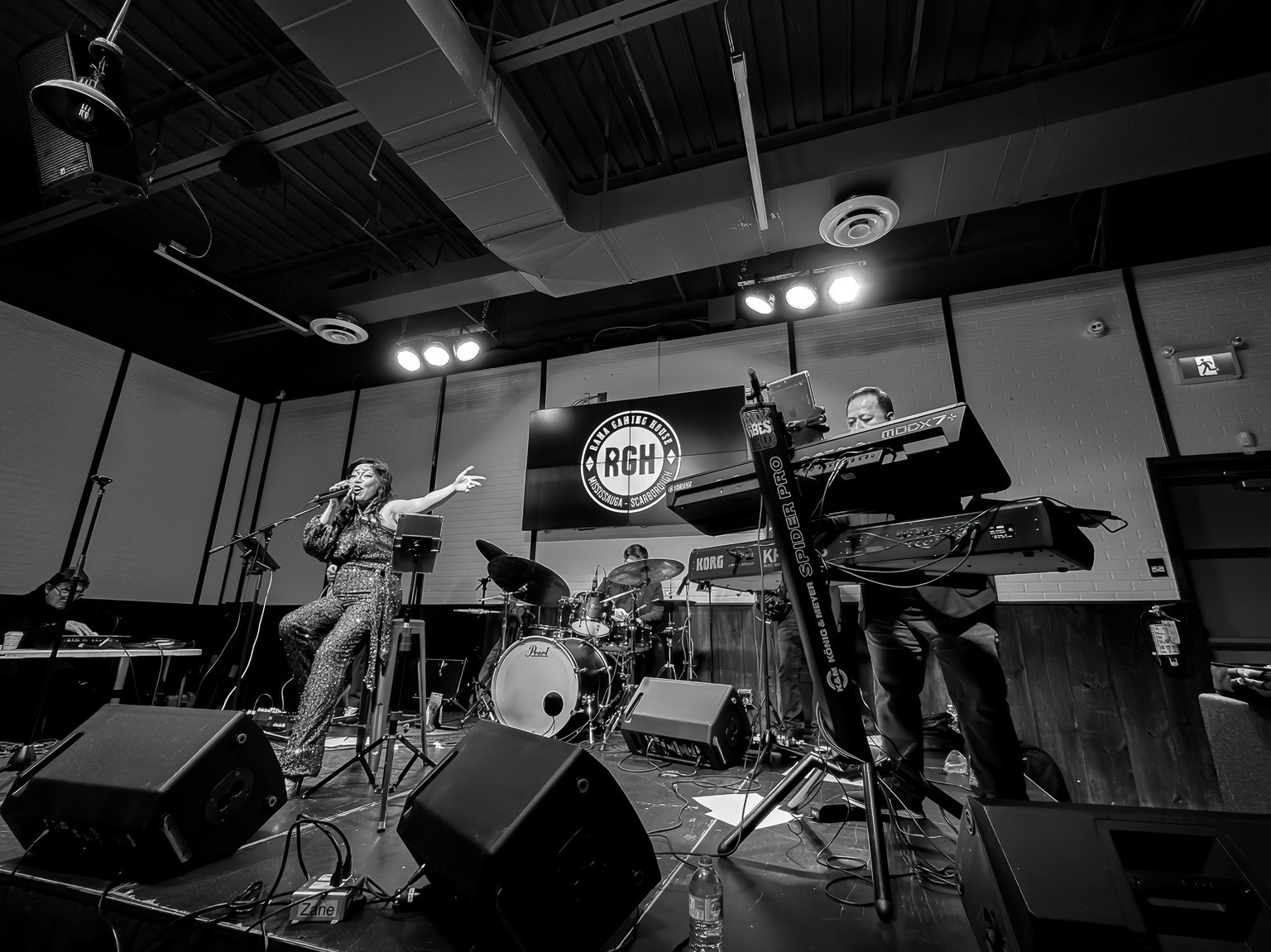
Client Appreciation Event Entertainment Guide Client Appreciation Event Entertainment Guide
How to select entertainment that strengthens client relationships — premium, networking-friendly, and memorable without being overpowering.
Planning Timeline
- Define the guest list and understand the client demographic — age range, cultural mix, industry
- Select a venue that facilitates conversation — avoid cavernous spaces that scatter guests
- Set the entertainment budget (20-25% of total event budget for premium client events)
- Book headline entertainment — a versatile act that balances sophistication with energy
- Determine the event format — cocktail reception, seated dinner, or a hybrid
- Book cocktail hour entertainment — elegant live music at networking-friendly volume
- Select interactive entertainment that encourages mingling — AI photo booth, tasting stations
- Coordinate entertainment timing with your client engagement strategy — when your team circulates
- Plan personalized touches — welcome music, custom photo booth themes, branded elements
- Confirm venue sound restrictions and ensure entertainment levels support conversation
- Finalize the run-of-show with entertainment mapped to each event segment
- Brief entertainment on the audience — key clients, VIPs, any special requests
- Coordinate entertainment volume levels for each segment (conversation-friendly during networking)
- Confirm any personalization — custom songs, branded photo booth templates, name recognition
- Entertainment setup and sound check (3-4 hours before guests arrive)
- Volume calibration — test levels with venue empty and adjust for when room fills
- Brief entertainment on any last-minute VIP arrivals or special acknowledgments
- Execute the entertainment plan with seamless transitions between event segments
Entertainment Recommendations
Budget Ranges
- Solo musician (pianist, guitarist, or vocalist) for the full evening
- Curated playlist with professional sound system for transitions
- Digital photo booth with branded template
- Basic ambient lighting enhancement
- String quartet or jazz trio for cocktail reception
- Live band (4-6 piece) for dinner and optional dancing
- AI photo booth with custom branded experience
- Professional event lighting — wash lighting and accent spots
- Sound system with dedicated engineer for volume management
- String quartet for arrivals and cocktails
- Full live band (6-8 piece) for dinner and dance sets
- Feature performance act for the program highlight
- AI photo booth with premium custom themes
- Full production lighting design
- Professional MC for any speaking program
- Late-evening DJ or lounge music for after-party
- Personalized entertainment elements — custom songs, name recognition
Networking-First Entertainment: Supporting Conversation, Not Competing With It
The fundamental rule of client appreciation entertainment is this: entertainment exists to enhance networking, not replace it. Your clients came to connect with your team and with each other. Entertainment that demands attention for extended periods works against that goal.
Volume Management Is Everything: The single most important technical specification for client event entertainment is volume. During networking segments (cocktail hour, post-dinner mingling), music should sit at 65-68 dB — the level where two people standing three feet apart can talk comfortably without raising their voices. This requires a sound engineer who understands the assignment. Many bands default to performance volume (80+ dB) unless specifically briefed on the networking context. We include volume parameters in every run-of-show and position a sound engineer with a dB meter to maintain levels throughout the evening.
Visual Presence Without Audio Dominance: A string quartet or jazz trio provides elegant visual presence — guests see live musicians, register that this is a premium event — without generating volume that kills conversation. This 'visual-first, audio-second' approach works brilliantly during the networking phase. Clients notice the entertainment (and are impressed by it) without being forced to stop talking to listen to it.
Strategic Attention Moments: While continuous background music supports networking, you want 2-3 brief moments during the evening where entertainment captures the room's full attention — a toast backed by a musical build, a feature performance between dinner and dessert, or the band's first dance song that signals the evening's energy shift. These shared moments give clients a collective experience to bond over.
Client Event Formats and Entertainment Pairings
The format of your client event determines how entertainment should be deployed. Each format has different goals, and the entertainment should align accordingly:
Cocktail Reception Only (2-3 hours): The most popular format for client appreciation events because it maximizes networking time. Entertainment is entirely background — a jazz trio or string quartet for the full evening, plus an AI photo booth as an activity. No formal program, no stage moments, no dancing. This format works best for 50-150 guests where the goal is quality conversation time.
Seated Dinner with Program (3-4 hours): A more formal format that includes a dinner with speeches, awards, or a presentation. Entertainment layers through cocktails (trio or quartet), dinner (the band plays at background level), the program (MC manages transitions with musical accents), and optional dancing after the program. This format suits 80-250 guests and events with specific content to deliver — annual reviews, partnership announcements, milestone celebrations.
Experiential Event (2-4 hours): An emerging format where the entertainment IS the event. Song Co-Lab (collaborative songwriting), a cooking class with live music, a private concert, or an interactive game show with a celebrity host. These events skip the standard cocktail-dinner-dancing formula in favor of a shared experience that gives clients stories to tell. This format works best for smaller groups of 20-60 high-value clients.
Hybrid Networking + Entertainment (3-4 hours): Combines open networking time with structured entertainment moments. Clients mingle during the first hour with background music, then participate in a 30-minute interactive experience (game show, live band karaoke, group activity), then return to networking. The structured segment gives clients a shared experience and breaks the ice for deeper conversations in the second networking phase.
Client Entertainment by Industry
Different industries have different expectations and sensitivities when it comes to client entertainment. Here's what we've learned producing client events across Toronto's key sectors:
Financial Services and Law: These clients expect understated elegance. A string quartet or jazz trio is almost mandatory for the cocktail hour. Entertainment should never feel loud, flashy, or undignified. The dress code is typically business formal, and the entertainment should match — classical musicians in concert attire, not a rock band in jeans. That said, these audiences are enthusiastic dancers once the formality is broken — a live band that transitions from elegant dinner music to sophisticated dance music (Motown, classic rock, soul) keeps the floor packed.
Technology and Startups: Tech clients tend to be younger and more open to unconventional entertainment. A freestyle rapper who incorporates tech industry jargon, live band karaoke, or an AI photo booth with cutting-edge custom themes all resonate well. Tech clients appreciate innovation in entertainment choices — they notice when you've chosen something unexpected rather than the standard band-and-DJ formula.
Real Estate and Development: These clients appreciate spectacle and production value. They're accustomed to high-end launch events and appreciate when entertainment matches the premium branding of their projects. A full showband, professional lighting design, and a feature performance act signal that the host understands the industry's aesthetic standards. Venue choice matters enormously for real estate clients — the setting is part of the entertainment.
Healthcare and Professional Services: More conservative entertainment choices work best. A live trio or quartet, an AI photo booth, and a professional MC create an appropriate atmosphere. Volume management is especially important — many healthcare professionals attend evening events after long, high-stress days and appreciate entertainment that relaxes rather than energizes. Consider a lounge format with lower volume and more intimate entertainment.
Frequently Asked Questions
What's the ideal entertainment volume for a client networking event?
Should we have dancing at a client appreciation event?
How do we choose entertainment that appeals to a diverse client base?
What entertainment works for an intimate client dinner of 20-40 guests?
How much should we spend on entertainment for a VIP client appreciation event?
Can entertainment help facilitate networking at client events?
What are the biggest entertainment mistakes at client appreciation events?
Tell us about your client appreciation event and we'll design entertainment that strengthens your most important relationships.
Plan Your Client Event
Get StartedExplore the live music, interactive experiences, and premium acts perfect for VIP client events in Toronto.
See Our Premium Entertainment
Contact Us