

Picture a TV game show, then swap the contestants for your sales team, the categories for your own product line and the studio for a hotel ballroom. That is a corporate game show: a host, real buzzers or phone voting, a live scoreboard and a room that actually pays attention. Below is what happens from the moment the crew arrives to the final round, which format fits your group, and what it costs in Toronto.
What actually happens at a corporate game show?
Most planners book one without ever having seen one, so here is the run of a typical night from our side of the stage.
Before guests arrive: setup
Our crew arrives well ahead of doors. Setup takes 60 to 90 minutes, and we bring everything: screens, audio, wireless buzzers, the scoring system and all game materials. The venue supplies the room and power outlets. That is it.
If you are booking the room, tell the venue about that setup window when you sign. It is the detail most often missed, and it matters most when a game show follows a session in the same space.
The open: teams and rules
The host opens by splitting the room into teams. At round tables, each table is usually a team. In theatre seating, we split by section. The host explains the rules in about the time it takes to read this paragraph, because nobody wants a lecture before the fun starts.
The rounds
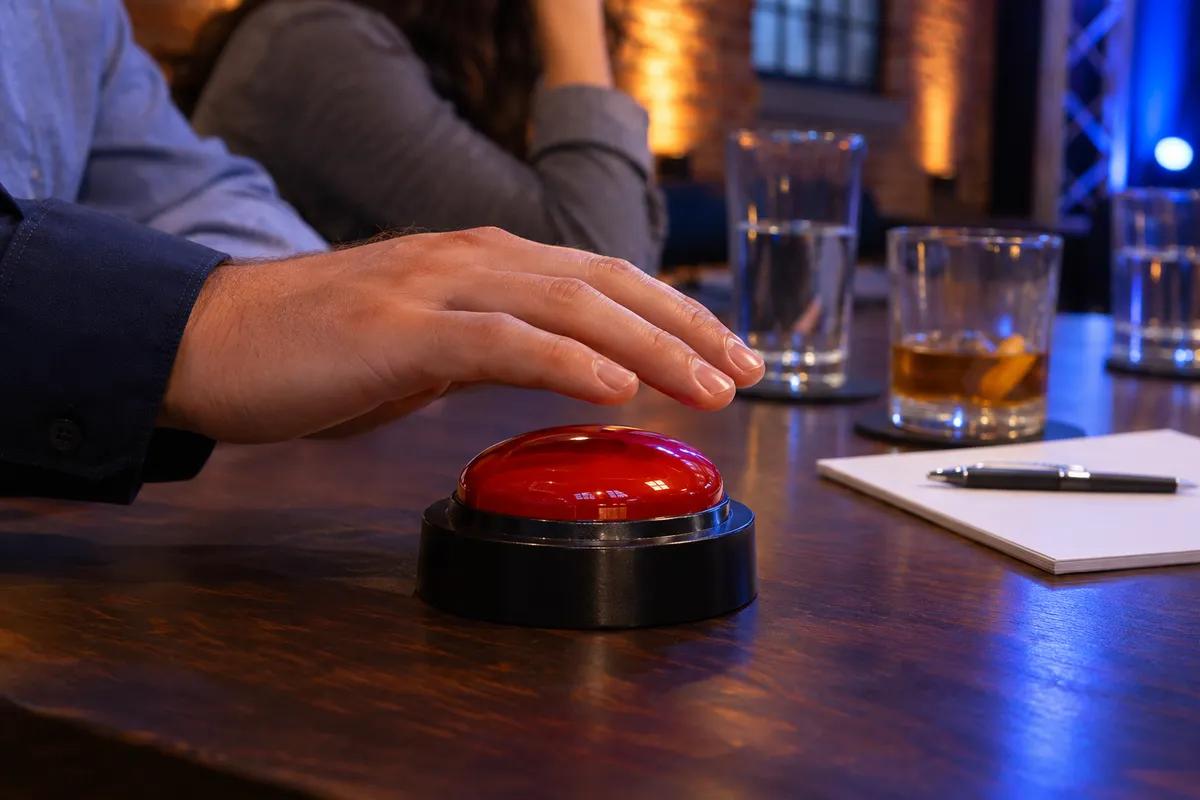
This is where it stops being a quiz and starts being a show. Teams race to buzz in, the scoreboard updates live on the big screens, and the host plays the room: teasing the team in last place, milking the suspense before a reveal, pulling a quiet table into the spotlight. Every one of our comes with a professional host for exactly this reason. The questions get people in. The host keeps them there.
The final round
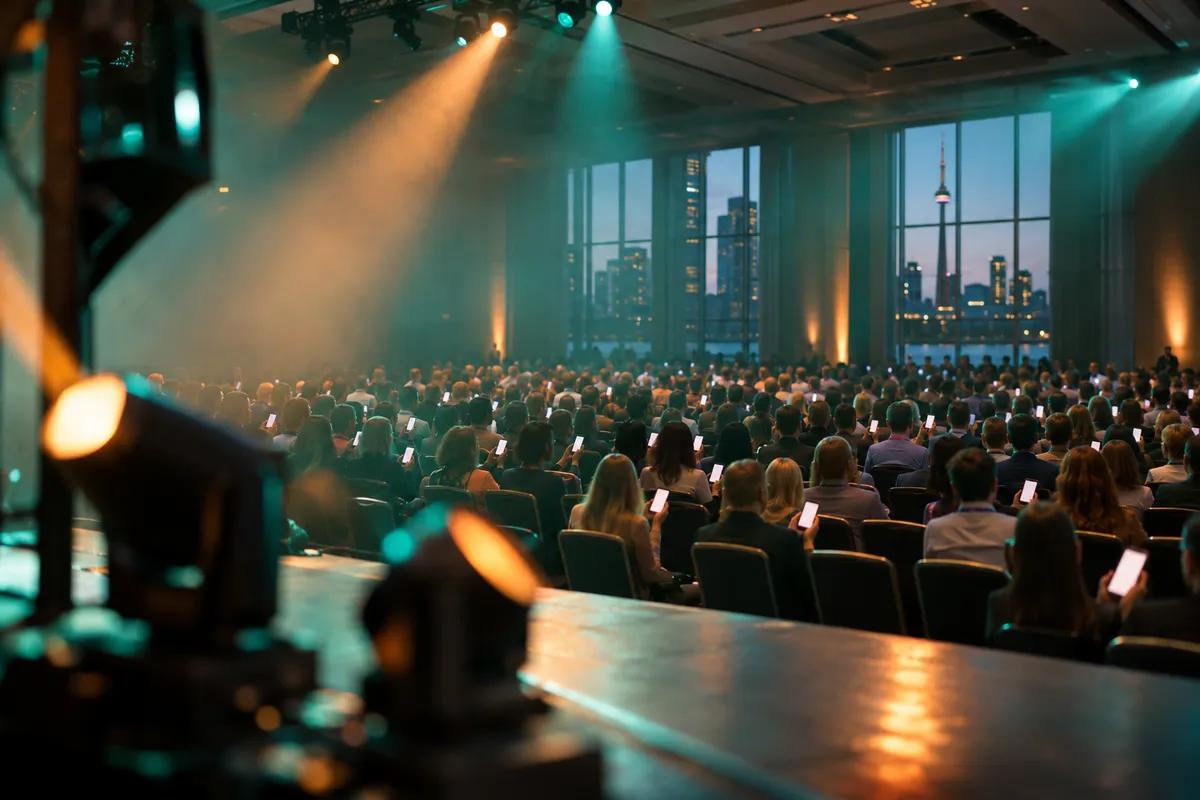
The top teams go head to head. This is the part people film on their phones. A close final, a rowdy room and one team's name on the scoreboard is usually the moment guests are still quoting at the coffee machine on Monday.
Which corporate game show format fits your group?
"Game show" covers several different experiences. We run four, and the right one depends mostly on your headcount and how your room is set.
| Format | How guests play | Group size | Best room setup | Best for |
|---|---|---|---|---|
| Quiz Show | Teams buzz in on wireless buzzers, live scoring | 10 to 1,000+ | Round tables or team stations | Holiday parties, team building, product training |
| Custom Trivia | Teams answer questions written about your company or industry | 10 to 1,000+ | Round tables | Company milestones, onboarding, client events |
| Majority Rules | Everyone votes from their phone; the most popular answer wins | 50 to 2,000+ | Any, including theatre seating | Conferences, town halls, hybrid audiences |
| Mega Golf | Two halves of the room move giant wobble balls over the crowd to a "hole" | 100 to 1,000+ | Theatre seating, 12 ft ceiling minimum | Conference openers, sales kickoffs, product launches |
Quiz Show and Custom Trivia: for rooms that sit at tables
These are the classic formats. Teams of tablemates confer, buzz in and argue about answers. They work from a 10-person leadership offsite to a 1,000-guest gala dinner. Custom Trivia is the same engine with every question written about your world: your product, your history, your industry, your event theme.
Majority Rules: for rooms too big to buzz
In a room of 1,500, a buzzer round leaves most people watching. Majority Rules fixes that. Everyone votes on their phone, and the right answer is whatever most of the room picked. So the game is really about guessing what your colleagues think, which is a lot funnier than it sounds. It also lets remote staff play alongside the room.
Mega Golf: for the room you need to wake up
Mega Golf is less a quiz and more a stadium moment. The audience splits into left and right teams, giant wobble balls go into the crowd, and teams pass them over their heads toward a designated seat. A score triggers an electric guitar solo and indoor pyrotechnics. It needs theatre-style seating and at least a 12-foot ceiling, so check your room before you fall in love with it.
How long does a corporate game show take?
As long as the slot you give it. We size the number of rounds to your agenda rather than selling a fixed length, so the same format can reset a room after lunch or anchor a whole evening. For a sense of the market, one US provider's packaged lists 90 minutes for 20 to 200 people and asks for at least 2,000 square feet.
What does not flex is setup. Plan for 60 to 90 minutes before the show, and build it into the venue booking.
On placement: the slot that benefits most is the early afternoon at a conference or kickoff, when attention drops hardest. At holiday parties, the sweet spot is after dinner and before the dance floor opens, while everyone is still seated. Our walks through agenda slots in more detail.
How much does a corporate game show cost in Toronto?
Our game shows run $2,500 to $10,000 CAD. Where your event lands in that range depends on three things:
- Format.A Quiz Show for a single team at a dinner sits at a different point than Mega Golf with pyrotechnics for a 1,000-seat ballroom.
- Customization.Questions written from your product material, branded scoreboard graphics and custom team names take writing and design time.
- Audience size.Bigger rooms need more screens, more audio and sometimes more buzzers or a switch to phone voting.
Prices exclude 13% Ontario . If you want a celebrity host, Adam Growe, the host of the TV show Cash Cab hosts live game shows and custom trivia for corporate events through us. That is a separate booking with its own fee, so ask for it in the quote.
What do we need to give you to make it custom?
Here is where most of the magic comes from, and it is less work than you think. We write the questions. You send raw material:
- Product facts, launch names and features the team should know
- Company milestones, office locations, founding stories
- Safe inside jokes, and a list of topics that are off limits
- Team names or regions if you want them competing against each other
- Logos and colours for the scoreboard
That is why we ask for 4 to 6 weeks for a custom show. Peak months like December and January can need longer, so book early if your date falls there.
Is a game show right for your event?
A game show is a strong pick when you need the whole room participating at once, when the group mixes people who do not know each other, or when you want to sneak product knowledge into something people enjoy. It is a weaker pick if your guests mainly want to dance, or if the room cannot go quiet enough for a host to be heard.
After 5,000+ events, the pattern we see is consistent: guests remember what they did more than what they watched. A good game show turns a seated audience into players, and that is exactly why it works for team building as much as for parties.
Want more options first? Our guide to covers other formats, the shows where games fit in a full program, and if you want to run a quick round yourself, start with our .
Ready to put your team on the buzzers?
We build every show around your group, your room and your agenda. Browse the formats on our then tell us your date and guest count and we'll send options.