
How to Hire a Magician Who Actually Reads the Room
Close-up, stage, mentalism, or virtual: here is how to pick the right magician for your event, what to ask before you book, and how to spot the ones who will flop.
The Types of Magician (and What Each One Actually Does)
Close-Up Magician
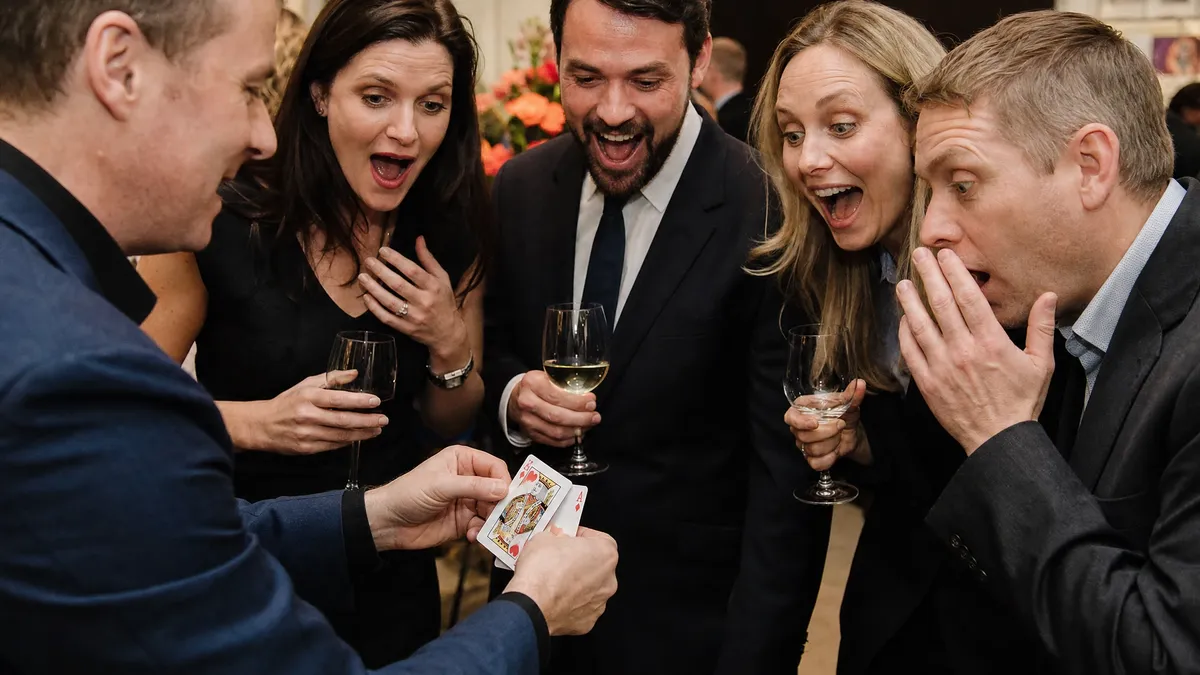
A close-up magician performs inches from your face, usually with cards, coins, rings, and borrowed objects. This is sleight of hand, and it is the most intimate form of magic there is. No stage, no sound system, just a performer and a small huddle of guests who cannot believe what they are seeing in their own hands. This is the format that works a cocktail room, a dinner table, or a bar lineup better than anything else.
Strolling or Roving Magician
Same skill set as close-up, delivered on the move. A strolling magician works the floor during a reception, drifting from group to group, performing a tight two or three minute set, then moving on before anyone gets restless. This is the magician you hire for a cocktail hour, a trade show floor, or the awkward gap between arrival and dinner. They cover the whole room without ever needing a spotlight.
Stage or Cabaret Magician
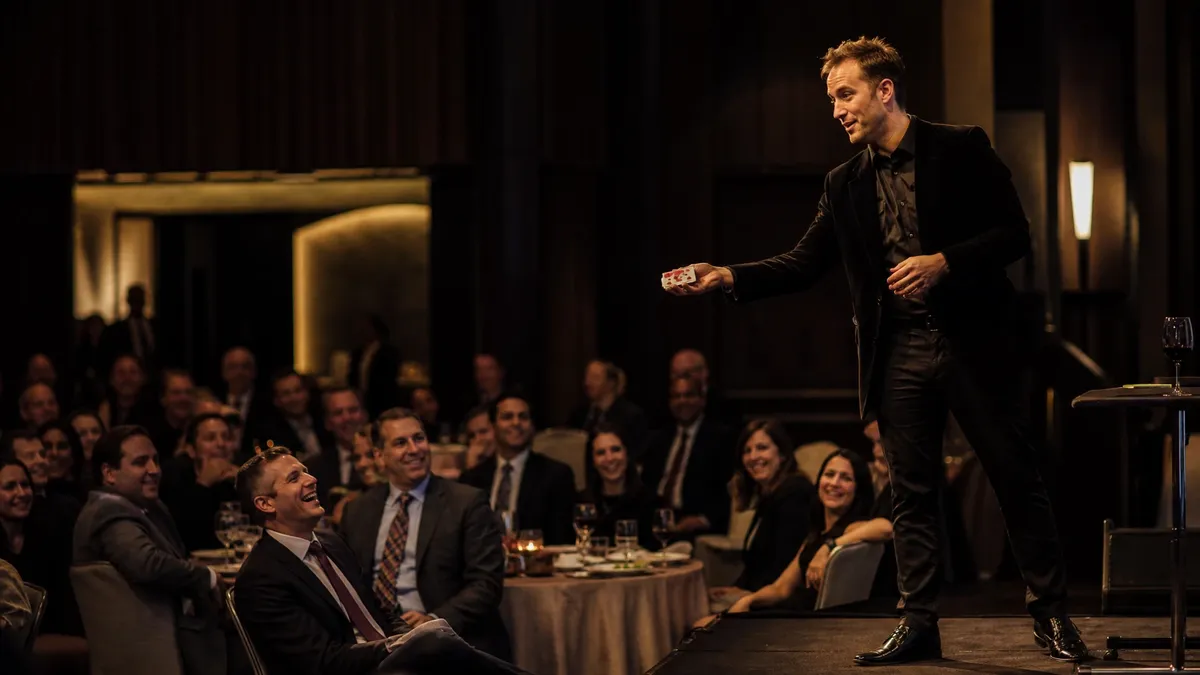
This is magic as a headline show. A stage magician performs for the whole audience at once from a raised platform, with bigger effects, comedy, and often audience volunteers pulled up on stage. You need a real stage, proper sound, and lighting. This is the act that owns 20 to 45 minutes of your program, not the act that mingles.
Parlour Magician
Parlour magic sits between close-up and full stage. It is built for a mid-sized room of roughly 20 to 80 people seated together, no giant illusions, no separate audio rig, just a skilled performer holding a whole room's attention with sleight of hand scaled up to be visible from a few rows back. Perfect for a private dinner, a boardroom celebration, or an intimate wedding reception.
Mentalist or Mind Reader
A mentalist does not use cards and coins. They use psychology, suggestion, and misdirection to appear to read minds, predict choices, and know things they could not possibly know. For a professional adult audience this often lands harder than traditional magic because it feels intellectual and eerie rather than cute. Our virtual act with Yan Markson leans heavily on this, and mentalism is the format that leaves executives genuinely rattled in the best way. See our virtual magic and mentalism shows.
Virtual Magician
Yes, magic works over a screen, and when it is built for the format it works shockingly well. A virtual magician designs the entire act around the camera and the participant at home, using objects the audience already has on their desk, so the impossible happens in the viewer's own hands, not the performer's. This is a real, deliberate craft, not a stage act pointed at a webcam. Our virtual magic and mentalism show with Yan Markson is built exactly this way.
Comedy Magician
A comedy magician leads with the laughs and lets the magic be the punchline. The tricks are real and fool you, but the point of the performance is the room laughing together. This is a strong pick for a crowd that did not come for a magic show and might roll their eyes at one, because they buy in through the comedy first and get fooled second.
Family and Children's Magician
A different craft entirely, built for kids and mixed-age crowds with high energy, participation, and material that keeps six-year-olds and their parents laughing at the same time. Relevant for family fun days, staff appreciation picnics, and weddings with a lot of kids in the room during the reception.
Which Magician Fits Which Event
Corporate Cocktail Reception
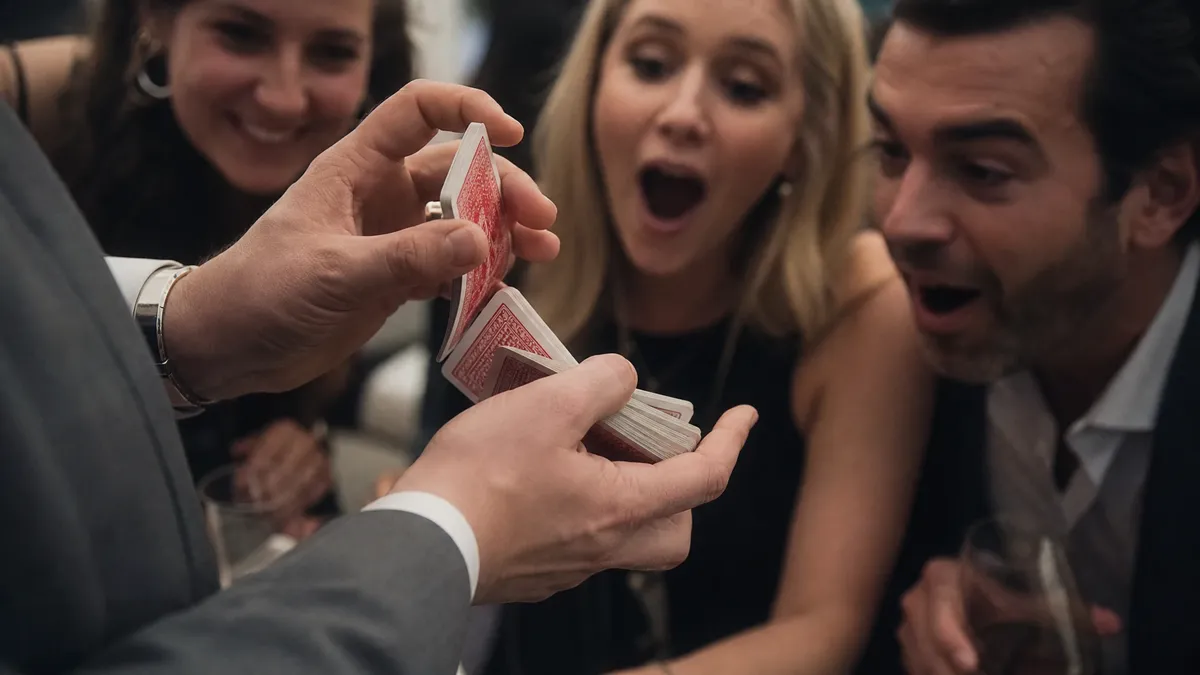
Book strolling close-up magic. Guests are standing, holding drinks, and often do not know each other. A roving magician is a professional ice-breaker, giving strangers from different departments a shared thing to react to. It turns a stiff networking hour into a room full of small, warm crowds.
Trade Show Booth or Brand Activation
A strolling or close-up magician is one of the best crowd-gatherers on a trade show floor. They stop foot traffic, hold a crowd, and can be scripted to weave your product or key message into the routine so the payoff line is about your brand, not just the trick.
Wedding Cocktail Hour
This is the magician's home turf. While the couple is off taking photos, a strolling magician entertains guests who would otherwise be standing around checking their phones. It covers the single most awkward gap in a wedding timeline and gives grandparents and college friends something to bond over.
Gala Dinner or Awards Night
Layer it. Close-up or parlour magic works the tables between courses, keeping energy up during the slow stretches of a seated dinner, and a short stage or mentalism set can anchor a moment in the program. Magic keeps a long seated evening from sagging.
Conference or General Session
For a general session, book a stage magician or mentalist as a keynote-adjacent act to re-energize a room that has been sitting through slides all day. Audiences are tired of being talked at, and a performer who pulls the whole room into a shared moment resets the energy better than another speaker.
Holiday Party
Strolling magic during the reception, and optionally a short stage or comedy set once everyone is seated. A holiday party is a mixed crowd of coworkers, plus-ones, and leadership all in one room, and roving magic gives everyone a low-stakes reason to talk to each other.
Virtual or Hybrid Event
Book a magician who designs specifically for remote audiences. A well-built virtual magic and mentalism show makes the impossible happen in each viewer's own hands at home, which is exactly the shared, participatory jolt a screen-based event usually lacks.
Small Private Dinner or Boardroom Celebration
Close-up or parlour magic is ideal. In an intimate room the personal, hands-on nature of close-up magic feels like a private show performed just for your table. It suits VIP client dinners, executive retreats, and milestone celebrations where the guest list is small and the impression needs to be big.
What to Ask Before You Book
Do you perform close-up, stage, or both?
Get this straight first, because they are different skills. A brilliant stage magician can bomb doing table magic, and vice versa. Match the format to your event before you fall in love with a demo reel, or you will hire the wrong tool for the room.
How many guests can you realistically engage in an hour?
This number sets your headcount. A strolling magician covers a finite number of small groups per hour, and if your guest count is double that, one performer leaves half the room untouched. Ask for a real figure and staff to it.
Is your material clean and corporate-appropriate?
For a corporate or family audience this is non-negotiable. Ask directly whether the act contains crude language, risky volunteer bits, or anything that could embarrass a guest or leadership. A pro will tell you exactly how they tailor content to the room.
What is your set structure and timing?
You need to know exactly how long they perform, how many sets, and how those slot into your timeline. A magician who cannot describe their own timing has not thought about your event, and vague timing wrecks a run of show.
What do you need from the venue?
Stage, sound, lighting, a table, a green room, power. Close-up needs almost nothing, but a stage act has real technical requirements. Get the rider up front so there are no surprises on the day when the performer needs a mic the venue does not have.
Can you personalize or brand the act?
The best corporate magic references your company, your milestone, or your product. Ask whether they will build custom moments around your event, and how much lead time that needs. Personalization is what turns a good trick into the thing people quote back at the next meeting.
Do you carry liability insurance?
Most professional venues require performers to be insured, and a working pro will have it ready. If a magician cannot produce a certificate of insurance, that is a signal they are not operating as a real business.
Can I see unedited live footage and talk to references?
Social clips are cut to show only the best reactions. Ask for a full, unedited live performance video and two references from events like yours. How a magician performs to a real, distracted, half-listening room is the only thing that matters.
What Actually Drives the Cost
The Type of Act
Close-up and strolling magic generally sit at the lower end because they need no production, while a full stage or grand-illusion show carries the cost of equipment, transport, and often assistants. The format you choose is the single biggest lever on price.
Experience and Demand
A performer with decades of credits, TV appearances, and a packed calendar commands more than a talented newcomer. You are paying for reliability and the near-certainty that they will land the room, which at a high-stakes event is worth the premium.
Duration and Number of Sets
An hour of strolling costs less than three hours plus a stage set. More performance time, more sets, and longer on-site hours all move the number. Book the coverage your timeline actually needs rather than defaulting to the biggest package.
Travel and Location
A magician traveling well outside their home base adds travel, and sometimes accommodation, to the fee. For destination events this is normal and worth budgeting for up front rather than treating it as a surprise line item.
Customization and Branding
Custom effects built around your brand, product, or milestone take development time, and that time is part of the fee. It is usually money well spent, but know that a bespoke routine costs more than the performer's standard set.
Date, Season, and Group Size
Peak season dates, weekend evenings, and December book out first and price accordingly. A larger crowd may also need multiple performers to cover the room. Flexible dates and off-peak timing give you more room to negotiate.
Red Flags That Mean You Should Walk Away
Only Ever Shows Heavily Edited Clips
If every piece of footage is a tight cut of a gasping crowd and they will not show you a full live set, assume the edit is hiding the reality. Real performers are proud of how they work an unedited room.
Cannot or Will Not Provide References
A working pro has a trail of happy planners behind them. A refusal to connect you with anyone who has actually hired them, especially for an event like yours, means there may be nothing good to say.
No Liability Insurance
A performer with no insurance is not running a real business, and most reputable venues will not even let them in the door. This alone can derail your event on the day.
Vague About Timing and Structure
If they cannot tell you how long they perform, how many sets, or how it fits your timeline, they have not engaged with your event. Vagueness now becomes chaos on the day.
Being Pitched as Last-Minute Filler
Bad entertainment is almost always an event-design failure, booked last-minute to fill a gap rather than chosen to do a job. If a magician is being slotted in as an afterthought, the result usually shows it.
Cannot Explain How They Will Work Your Specific Room
A great magician talks about your guests, your flow, and your awkward gaps before they talk about their tricks. If the conversation is all about their illusions and never about your event, they are performing at your crowd, not for it.
How a Great Magician Works the Room
They Read the Org Chart of a Corporate Crowd
A skilled corporate magician clocks the room in seconds: who is leadership, who is quiet, who wants to be pulled in and who wants to be left alone. They perform to the group without ever putting the wrong person on the spot, which is a survival skill at a work event.
They Keep the Material Clean for Work Crowds
At a corporate event the magician is representing your brand for those few minutes. The good ones keep it sharp, inclusive, and safe, so nobody is embarrassed and leadership never winces. The magic still fools everyone without any edge that could backfire.
They Turn Magic Into an Ice-Breaker
Strangers who just watched the same impossible thing happen have an instant reason to talk. A roving magician manufactures shared moments between people from different teams, and those little huddles are where the actual networking starts.
They Cover the Wedding Photo Gap
During a wedding cocktail hour the couple vanishes for photos and guests are left to fend for themselves. A strolling magician turns that dead stretch into the part of the night people describe later, keeping every group engaged until the reception opens.
They Work With the Bar, Not Against It
The bar is a gravity well. Put entertainment next to the action and it holds the party together, leave it isolated and the crowd drifts. A smart magician gravitates toward where guests naturally cluster and works the lineups instead of fighting them.
They Move in a Deliberate Rhythm
A strolling pro performs a tight two or three effect set for each group, lands a strong finish, then moves on before the energy dips. That rhythm is what lets one performer cover a whole reception without any group feeling rushed or ignored.
They Make the Reaction the Real Show
The trick is the setup, but the reaction is the payoff. Audiences are tired of being talked at, and participation beats presentation every time. The magicians who get rebooked make the guest the star of the moment, so the room remembers how it felt, not just what they saw.
Expert Pro Tips
Frequently Asked Questions
What is the difference between a close-up magician and a stage magician?
How much does it cost to hire a magician?
How many guests can one magician entertain?
Which type of magician is best for a corporate event?
Should we hire a magician for our wedding cocktail hour?
Can a magician really perform over Zoom or for a virtual event?
How far in advance should we book a magician?
Tell us about your crowd and your timeline, and we will match you with a magician who fits the room, not just a name from a list.
Talk to Us About Your Event
Get StartedMeet Yan Markson, our virtual magic and mentalism act built specifically for remote and hybrid audiences.
See Our Virtual Magic and Mentalism Show
Contact Us