
The Complete Wedding MC Guide
What a wedding MC actually does, how the night should flow, and how to make sure yours holds the room instead of losing it.
What a Wedding MC Actually Does
Category: The Role
Runs the Show, Not Just the Mic
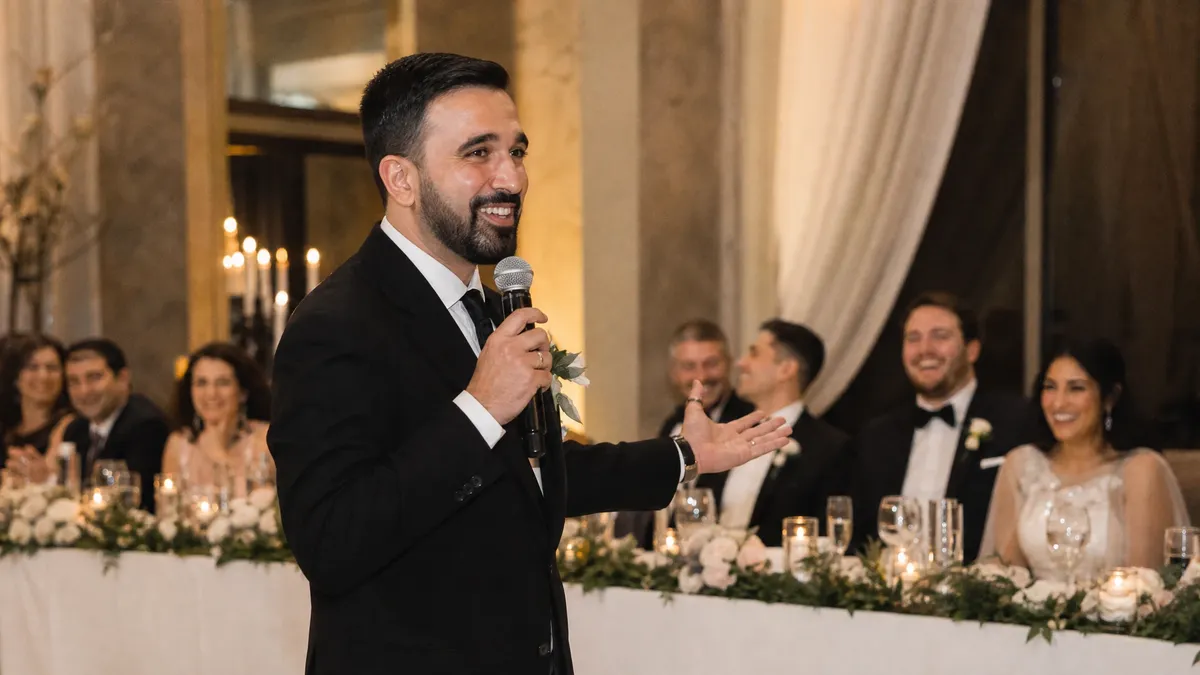
The MC owns the reception timeline. They know what happens next, they know who is supposed to be in the room for it, and they know when to hold and when to move. A wedding is a live production with no rehearsal and no second take. Somebody has to be the conductor, and that is the MC.
Manages the Energy of the Room
Every reception has an energy curve: the buzz of the entrance, the settle of dinner, the emotional peak of speeches, the release of the first dance, and the surge of the open dance floor. A good MC reads where the room is and steers it. They lift a flat moment and calm an overexcited one. This is the part most amateurs never even realize is their job.
Owns the Transitions
The gaps between moments are where weddings die. Dinner ends, and then what? Speeches finish, and now what? A professional MC fills those seams so the night never sags. They bridge dinner into speeches into dancing without the room ever feeling a lull. The transitions are invisible when done well and painfully obvious when they are not.
Cues Every Other Vendor
The band, the DJ, the photographer, the videographer, the caterer, and the venue coordinator all take their cues from the MC. When the MC says the first dance is next, the band starts, the photographer moves into position, and the room turns to the floor. The MC is the communication hub that keeps a dozen moving parts synchronized.
Sets the Tone With Their Voice
The MC is the sonic personality of your wedding. Warm and relaxed, high-energy and playful, elegant and understated, the room takes its emotional temperature from how the MC speaks. This is why voice, timing, and presence matter more than a perfectly written script. A flat delivery of great words still lands flat.
Handles the Unexpected
The toast that runs 12 minutes long. The uncle who grabs the mic uninvited. The caterer who is 20 minutes behind. The best man who is nowhere to be found when it is time for his speech. A seasoned MC absorbs these without the room ever noticing. Improvisation under pressure is the difference between a host and a name-reader.
Protects the Couple's Experience
You should be present at your own wedding, not managing it. A strong MC takes every logistical decision off your plate so you are dancing and hugging people instead of chasing down the videographer. The best compliment an MC can get is that the couple never once had to think about what was happening next.
Professional MC vs the Funny Uncle
Category: Honest Trade-offs
The Case for a Friend or Family Member
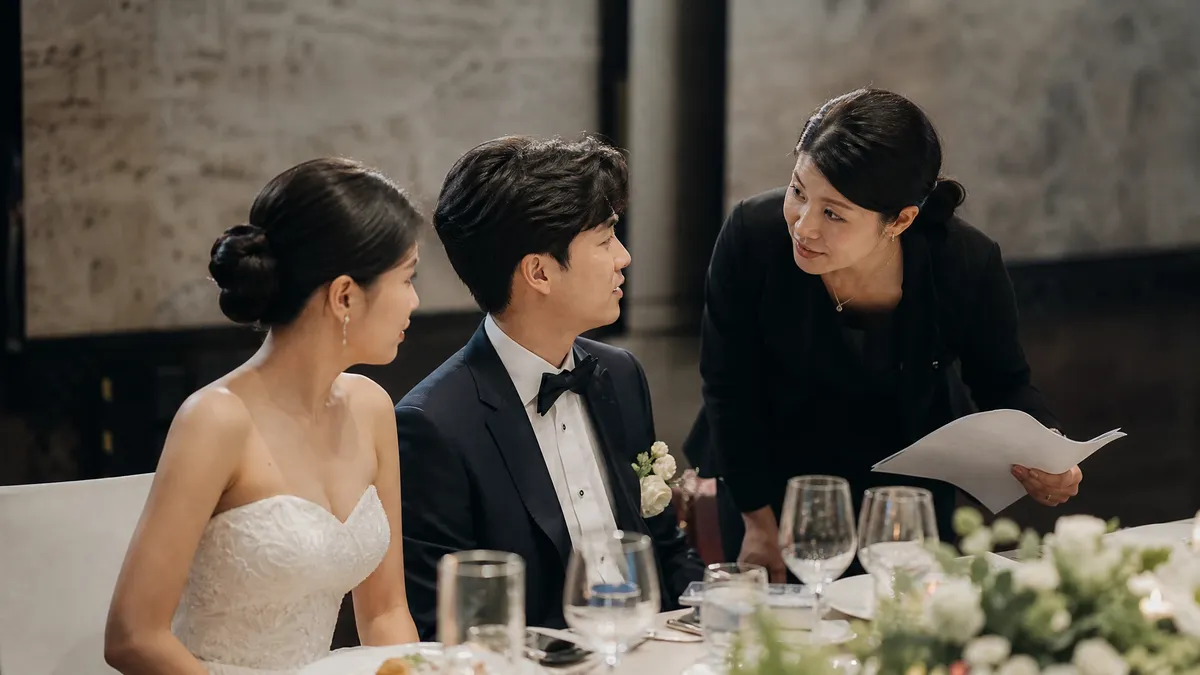
A close friend or family member brings genuine warmth, real inside knowledge, and stories that no hired host could ever tell. Guests feel the personal connection instantly. If your friend is naturally comfortable on a mic and organized under pressure, they can absolutely carry the night, and it will feel deeply personal in a way a pro cannot fake.
The Real Cost of the Funny Uncle
Here is the honest version most couples do not hear until it is too late. The funny uncle is funny for three minutes and lost for the other three hours. He does not know the timeline, he cannot cut a rambling toast short, he drinks through cocktail hour, and he treats the mic as his personal open mic set. Charm does not replace competence, and the reception is four hours long.
What a Professional Actually Buys You
A professional MC buys you certainty. They have run hundreds of these nights, they know exactly how long a room can hold attention, and they never freeze. You are paying for the invisible work: the timing, the crowd control, the recovery when something goes sideways. On a five-figure wedding, gambling the flow of the entire night to save a host fee is a strange place to cut.
The Hybrid Approach
You do not have to choose all or nothing. Many of our couples pair a professional host who runs the logistics and timeline with a friend who delivers a personal welcome or a heartfelt segment. The pro handles the machinery, the friend brings the heart. You get warmth and competence instead of trading one for the other.
How to Honestly Assess Your Friend
Ask three questions. Are they comfortable speaking to 150 people without notes shaking in their hands? Can they read a room and cut something short when it is not landing? Will they stay sober and focused for a four-hour shift while everyone around them celebrates? If the answer to all three is a confident yes, they can do it. If you hesitated on any, hire a pro.
Band Leaders and DJs Who MC
Many experienced wedding bands and DJs include MC duties, and this is often the most seamless option because the person cueing the music is the person running the room. When the announcer and the entertainment are the same team, transitions get tighter and the energy never drops between the words and the first note. Ask any entertainment vendor exactly who will hold the mic before you book.
The Wedding MC Script, Beat by Beat
Category: Run of Show
Guest Welcome and Housekeeping
As guests move from cocktails into the reception space, the MC delivers a warm welcome and the practical notes: where the bar is, when dinner is served, and any venue-specific housekeeping. Keep it short and friendly. This is the moment the room learns who is steering the night, so the tone set here carries through everything after.
The Grand Entrance
The wedding party and the couple are announced into the room. This is a high-energy beat and the MC's delivery makes or breaks it. Names must be pronounced correctly, the timing must sync with the music, and the applause must be led, not hoped for. A confident, well-paced entrance sets an electric tone for the entire reception.
First Dance or First Course
Depending on your flow, the couple's first dance either opens the reception right off the entrance or follows the first course. The MC frames the moment, cues the band or DJ, and clears the sightlines so every guest and camera can see. Decide the order in advance, because a first dance to a room still finding their seats loses its magic.
Dinner Service Announcements
The MC guides the room through the meal: inviting tables to a buffet in an orderly sequence, or simply setting the pace for a plated service. During dinner the MC steps back and lets the room breathe, checking in with the caterer and the couple on timing rather than talking over the meal.
Speeches and Toasts
This is the emotional core of the night and the segment most likely to run off the rails. The MC introduces each speaker with warmth, manages the order, and gently keeps things moving if a toast runs long. They also cue the servers to have everyone's glass filled before the toast lands. Good speech management is invisible, bad speech management is 40 minutes of one person rambling.
Cake Cutting and Special Traditions
The cake cutting, and any cultural or family traditions like a hora, a money dance, a tea ceremony, or a first look with a parent, each need to be announced and timed. The MC coordinates with the entertainment and the photographer so these moments are captured and the room is gathered and paying attention when they happen.
Opening the Dance Floor
This is the pivot from formal to fun, and it is the beat most amateurs botch by opening the floor too early to an empty room or too late to a room that has drifted. The MC times it to the room's energy, often stacking the parent dances or a group tradition to seed the floor before the general dancing so nobody is dancing alone under the lights.
Late-Night and Send-Off
As the night winds down, the MC manages any late-night snack announcement, the bouquet toss if you are doing one, and the final send-off or last dance. They read whether the room wants one more big song or a soft landing, and they close the night on the note you want your guests to leave on.
The Wedding MC Announcements Checklist
Category: Don't Forget These
Welcome and Room Housekeeping
Bar location, dinner timing, washroom locations, and any venue rules such as no confetti or a hard curfew. Get the practical noise out of the way early so the rest of the night can be about emotion, not logistics.
Grand Entrance Names and Titles
The full, correctly pronounced names of the wedding party and the couple, in the exact order they will enter. Phonetic spellings for anything tricky. This is the single most common thing MCs get wrong, and mispronouncing a name in front of 150 people is a hard mistake to recover from.
Blessing or Grace
If a family member or officiant is giving a blessing before the meal, the MC needs to know who, when, and how to introduce them. Confirm the person is comfortable being called up and knows roughly when it is coming.
Speech Order and Speaker Names
The full running order of every toast, with correct names and their relationship to the couple. Note anyone who is nervous so the MC can give them extra warmth, and flag anyone who tends to run long so the MC can manage the clock.
First Dance and Parent Dances
Song titles, the exact recorded versions if there is a choreographed routine, and who is dancing with whom. Confirm whether parent dances flow straight into open dancing or return to a formal beat afterward.
Cultural and Family Traditions
Any hora, money dance, grand march, tea ceremony, or other tradition, with the timing, the music, and who leads it. These moments carry deep meaning and cannot be improvised, so the MC needs every detail in writing.
Cake Cutting and Bouquet Toss
Whether you are doing them, when, and what music plays. If you are skipping either one, tell the MC explicitly so they do not announce a tradition you deliberately cut.
Vendor Thank-Yous and Last Call
Any shout-outs the couple wants to give, the last-call timing from the bar, transportation reminders for guests, and the final send-off cue. Ending the night cleanly matters as much as starting it well.
How to Brief Your MC
Category: Set Them Up to Win
Deliver a Written Run of Show
Give your MC a single-page, minute-by-minute timeline of the reception with every cue, name, and song. Verbal instructions the day of are how details get dropped. A clean written document is the foundation everything else sits on, and it should exist at least a week before the wedding.
Provide a Phonetic Name Guide
Write out every name the MC will say, with phonetic spelling for anything remotely tricky, including in-laws, wedding party, and anyone giving a speech. Do not assume. A name that looks obvious to you can trip a stranger reading it cold in front of a full room.
Flag the Sensitivities
Tell your MC what to avoid: a recently deceased family member, a divorce that makes certain jokes land wrong, a do-not-mention topic. A good MC will never step on a landmine you warned them about, but they cannot dodge what they do not know is there.
Introduce the Key Players
Make sure your MC can identify your planner, your venue coordinator, your band leader or DJ, your photographer, and your maid of honour and best man on sight. The MC coordinates with all of them, and hunting for a stranger in a crowd of 150 wastes the exact minutes when timing matters most.
Agree on Who Makes the Call
When dinner runs late or a toast goes long, someone has to decide whether to compress the timeline or hold. Decide in advance that this person is the MC, working with your planner, so nobody is looking around for permission mid-reception. Empower them to adjust so you never have to.
Talk Through the Vibe You Want
Tell your MC the feeling you are going for. High-energy party, elegant and understated, laid-back and warm. Share a couple of examples of moments you loved or hated at other weddings. This calibrates their delivery to your taste instead of their default, and it is the conversation most couples skip.
What Great MCs Do That Average Ones Miss
Category: Reading the Room
They Feel the Next Move Before It Happens
Our roots are in live wedding and corporate bands, and we learned the most important skill in this business on the bandstand: we would swap the setlist mid-show because we could feel the next song was not going to land. A great MC has that same instinct. They sense the room drifting before it happens and adjust, instead of plowing through a script that stopped working two beats ago.
They Talk to the Room, Not at It
Audiences are tired of being talked at. The average MC recites announcements. A great one makes 150 people feel like participants in the night rather than an audience watching a program. Participation beats presentation every single time, and the room can feel the difference within the first two minutes.
They Protect the Dance Floor
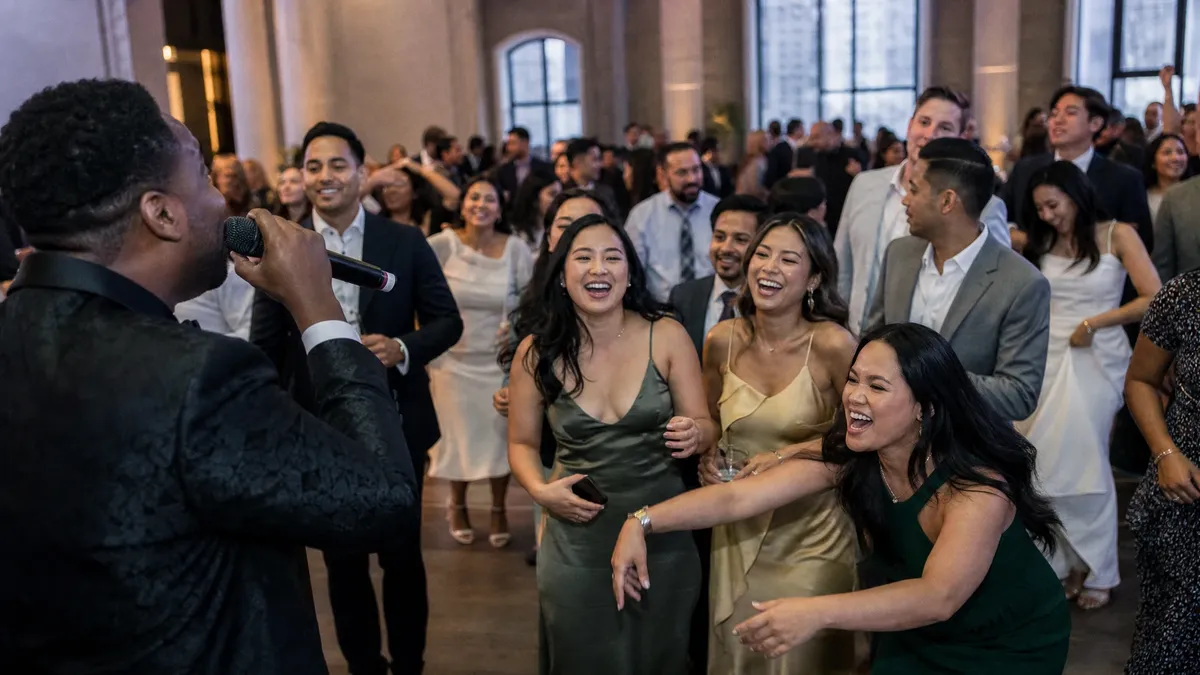
A great MC knows a dance floor is fragile early and self-sustaining once it fills. They time the opening precisely, seed it with a tradition or a guaranteed crowd song, and never let it empty out during a lull. The difference between a packed floor at midnight and everyone gone by 10 is almost always the MC's read on energy.
They Make the Couple Invisible to the Logistics
The best sign of a great MC is what the couple does not experience: no one asking them what happens next, no awkward pause where the room looks around, no vendor pulling them aside mid-dinner. Great MCs absorb all of that so the couple gets to be guests at their own wedding.
They Treat Entertainment as Event Design, Not Filler
Bad entertainment is not bad luck, it is an event-design failure, usually booked last-minute to fill space. A great MC treats the flow of the night as something to be designed on purpose, working with the band or DJ as one system rather than a name-reader hired as an afterthought. The intention shows in every transition.
They Recover Without the Room Noticing
Something always goes sideways. The magic is in the recovery. A great MC covers a 20-minute catering delay with a well-placed tradition or an unscripted moment, and the guests leave thinking the whole night was planned exactly that way. That composure only comes from having done this many, many times.
Expert Pro Tips
Frequently Asked Questions
What does a wedding MC actually do?
Should we hire a professional MC or ask a friend?
How long should a wedding MC talk during the reception?
What information does a wedding MC need from us?
Do wedding bands and DJs provide MC services?
How does a good MC keep the reception on schedule?
When should the MC open the dance floor?
We provide professional hosts and MCs who run your reception so you can actually enjoy it. Tell us about your wedding.
Get a Free Quote
Get StartedOur wedding bands include experienced MC services, so the team cueing the music is the team running your room.
See Our Toronto Wedding Bands
Contact Us