

Every vendor pitch deck in 2025 had the same slide: "AI-Powered." Most of them meant a ChatGPT wrapper with a logo on it. That was then. In 2026, the gap between companies actually using AI in their events and companies still debating it isn't a gap anymore — it's a canyon. And the canyon is getting wider every week.
I've spent the last year integrating AI tools into live corporate event production — not theoretically, not in a webinar, but on actual show floors with actual clients spending actual money. Here's what's real, what's hype, and where you should be putting your budget.
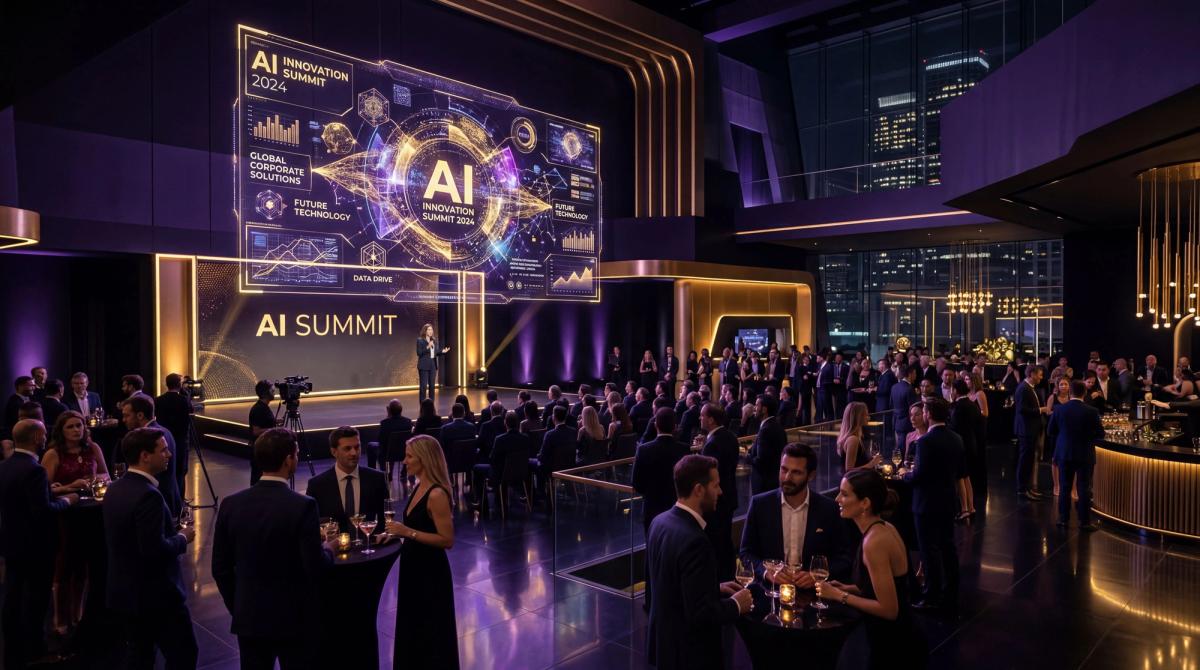
The 7 Ways AI IS Changing Corporate Events
1. Attendee Matchmaking That Actually Works
Remember when "networking" at a conference meant wandering a cocktail hour hoping to bump into someone relevant? That's over.
AI-powered matchmaking platforms like and Swapcard now analyze attendee profiles, registration data, LinkedIn activity, and stated goals to generate ranked connection recommendations before the event even starts. We're not talking about matching people by job title — these systems model intent. A VP of Marketing looking for a video production partner gets matched with the right vendor, not just another VP of Marketing.
The numbers back it up:and behavior-based recommendations are increasing session engagement by roughly 25%.
For corporate planners, this is the single highest-ROI AI application. Your attendees came to make connections. AI makes those connections happen faster and with less friction. That alone justifies the platform cost.
2. Hyper-Personalized Event Journeys
One agenda for 500 people was always a compromise. Now it's unnecessary.
AI builds individualized schedules based on each attendee's role, interests, past behavior, and real-time session availability. Walk into a 3-day conference and your app shows you your conference — not the generic one. Sessions re-rank as you attend them. If you skip the blockchain panel and hit two marketing sessions instead, the algorithm recalibrates by lunch.
This isn't futuristic. It's table stakes for any event platform worth its subscription fee in 2026. The — and attendees now expect it.
If you're still emailing a static PDF agenda, you're not just behind. You're telling your attendees their time doesn't matter.
3. Content Generation at Production Speed
Here's where it gets personal. We built specifically because we were drowning in the content demands of event marketing. Pre-event emails, social posts, speaker bios, session descriptions, post-event recaps — the volume is brutal.
AI doesn't write your content for you. But it gets you 80% of the way there in 10% of the time. That last 20% — your voice, your angle, your specific knowledge — is where the human comes in. And that's exactly the part that should never be automated.
For event producers managing multiple clients, this is the difference between working until midnight and actually having a life.across the industry.
4. AI-Powered Interactive Entertainment
This one's close to home. We've been running at corporate events for years, but AI has completely changed the game.
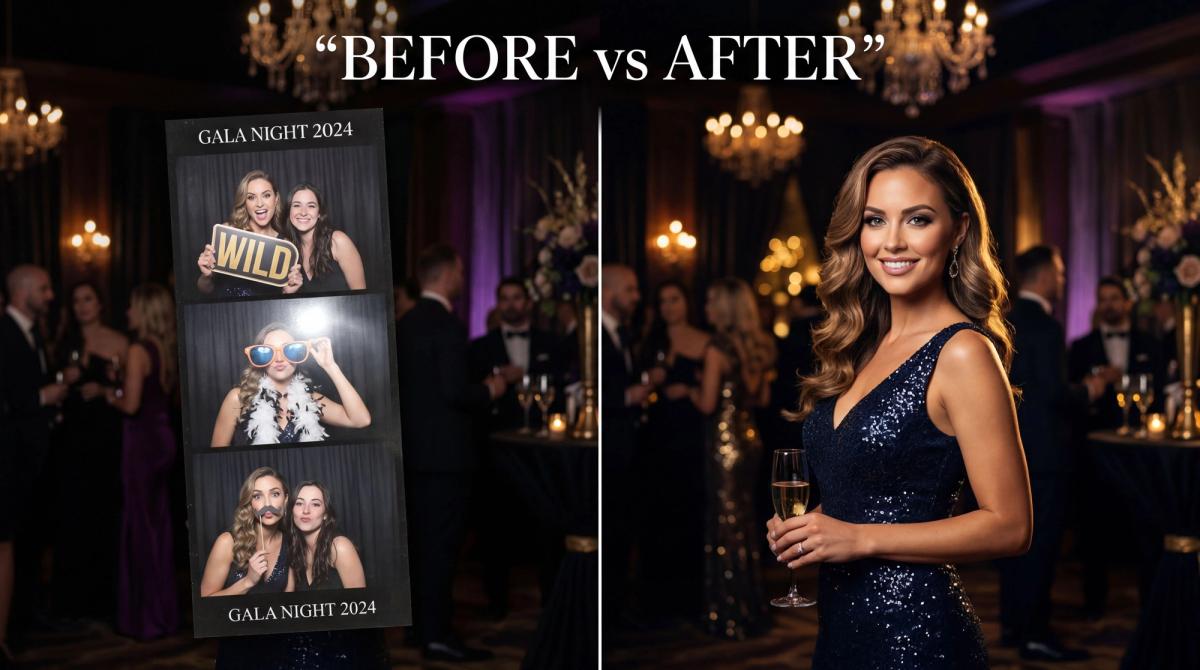
AI photo booths — like BananaCam — generate real-time stylized portraits, themed backgrounds, and instant digital art from attendee photos. Not a filter. Not a frame. A full AI-generated image that takes your face and drops you into a custom scene matching the event's brand.
Our already lets guests control the music in real-time through voting. Layer AI on top and you get predictive playlist curation, mood analysis, and dynamic energy management throughout the night. The DJ still drives — but now they've got a co-pilot.
5. Real-Time Translation and Accessibility
Global companies used to budget $15K–$30K for simultaneous interpretation at a multi-language event. AI translation tools now deliver real-time captioning and translation for a fraction of that cost, directly to attendees' phones.
Is it perfect? No. A human interpreter still wins for nuanced keynotes and high-stakes negotiations. But for breakout sessions, networking, and general session content, AI translation has crossed the "good enough" threshold — and "good enough in 12 languages simultaneously" beats "perfect in 2."
For this is transformative. You just removed one of the biggest barriers to global attendance.
6. Predictive Event Analytics
Historically, event analytics meant counting badge scans and sending a post-event survey nobody fills out. AI has turned analytics into a predictive tool, not just a retrospective one.
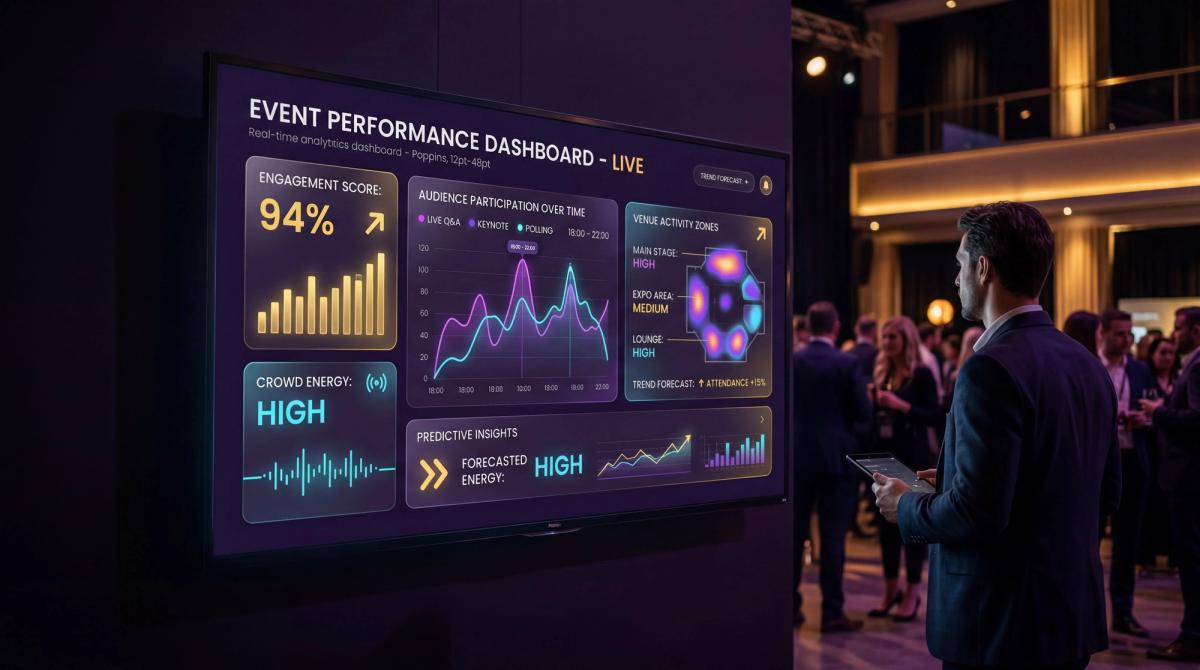
Mid-event dashboards now track session attendance patterns, engagement scores, dwell time at booths, app interactions, and networking activity — then predict which sessions will overflow, which sponsors are underperforming, and where your attendee drop-off points are. In real time. While the event is happening.
You can reallocate staff, open overflow rooms, or push targeted notifications before problems become visible. That's not reporting. That's event intelligence.
7. Production Automation and Show Control
This one's for my fellow production nerds. AI is changing how we run the technical side of live events.
Lighting scenes that auto-adjust based on presenter energy and audience engagement. Camera switching that follows speaker movement without a dedicated operator. Audio mixing that identifies and suppresses feedback before it happens. Automated highlight reel generation from multi-camera captures.
None of this replaces a skilled technical director. All of it makes a skilled technical director more effective. The best production teams in 2026 are using AI as a force multiplier — getting broadcast-quality output from crews half the size.
The 3 Ways AI Is NOT Changing Events (Despite What LinkedIn Tells You)
8. AI Is NOT Replacing Event Planners
I see this take weekly. "AI will replace event planners by 2027." Written, invariably, by someone who has never planned an event.
Event planning is crisis management wearing a cocktail dress. It's reading a room. It's knowing that the CEO's ex-wife is at table 4 and the CEO's current wife is at table 7 and those tables need to be on opposite sides of the ballroom. No AI model on earth handles that.
AI handles logistics, data, and pattern recognition brilliantly. The human planner handles politics, emotion, and the thousand micro-decisions that determine whether 500 people have a good night or a bad one. If you're an event planner worried about AI taking your job — stop worrying and start learning to use it. It'll make you better, not redundant.
As a full-service we've seen this firsthand. AI makes our team faster. It doesn't make our team smaller.
9. AI Is NOT Making Events Feel "More Human"
Hot take: most AI-generated "personalized" experiences still feel robotic. Getting a push notification that says "Based on your profile, you might enjoy Session 4B" doesn't feel personal. It feels like Amazon recommending you buy another toaster because you bought a toaster.
True human connection at events comes from surprising moments, unexpected conversations, and shared experiences that couldn't have been predicted by an algorithm. The best events in 2026 use AI for the infrastructure and protect the serendipity.
Don't let the optimization engine optimize away the magic. Leave room for the unplanned. That's where the stories come from.

10. AI Is NOT a Substitute for Bad Event Design
Here's the uncomfortable truth: AI amplifies whatever you already have. Great event design + AI = extraordinary experience. Mediocre event design + AI = a mediocre experience with better data about how mediocre it was.
If your event concept is boring, AI will deliver a perfectly optimized boring event. If your content is thin, AI will efficiently distribute thin content to precisely targeted audiences who will be precisely disappointed.
Fix the fundamentals first. Then layer AI on top. The technology is a multiplier, not a miracle.
So Where Does That Leave You?
Every day you resist integrating AI into your event workflow, you fall further behind. Not because AI is magic — but because your competitors are using it and you're not. The compounding advantage is real.
Start with one application. Matchmaking, content generation, or analytics. Get comfortable. Then expand. The event producers who thrive in 2026 and beyond won't be the ones who adopted every AI tool on the market. They'll be the ones who adopted the right tools and never forgot that events are, fundamentally, about people in a room together.
AI is the most powerful tool the event industry has ever been handed. Use it like a tool. Not like a replacement for the craft.
Frequently Asked Questions
How is AI used in corporate event planning?
AI is used across the entire corporate event lifecycle: attendee matchmaking and networking optimization, personalized agenda building, automated content creation for marketing and communications, real-time translation, predictive analytics during events, and production automation including intelligent lighting and camera systems. The most common applications in 2026 are AI-powered matchmaking (used by 42% of planners) and content generation.
Will AI replace event planners?
No. AI handles data processing, logistics optimization, and pattern recognition — but event planning requires emotional intelligence, crisis management, political awareness, and creative judgment that AI cannot replicate. The most effective model is human planners using AI tools to work faster and make better-informed decisions, not AI operating independently.
What are the best AI tools for corporate events in 2026?
Leading AI event platforms include Grip and Swapcard for attendee matchmaking, Bizzabo for AI-powered networking recommendations, and tools like ContentSidekick.ai for event marketing content generation. For interactive entertainment, AI photo booth platforms like BananaCam create real-time stylized images. The best tool depends on your specific event goals — matchmaking platforms deliver the highest ROI for networking-focused conferences.
How much does AI cost for corporate events?
AI event tools range from included features in existing platforms (most major event apps now include AI matchmaking) to standalone tools costing $500–$5,000 per event. AI translation services typically cost 70-80% less than human simultaneous interpretation for multi-language events. The ROI question matters more than the cost question — AI matchmaking alone can measurably increase attendee satisfaction scores and rebooking rates.
Is AI-generated content good enough for event marketing?
AI-generated content gets you approximately 80% of the way to a finished product in a fraction of the time. It excels at first drafts of session descriptions, email sequences, social media posts, and speaker bios. However, your brand voice, specific industry knowledge, and strategic messaging still require human editing. The most effective approach is using AI for volume and speed, then applying human expertise for quality and authenticity.
What AI trends should event planners watch for in 2027?
Watch for AI agents that manage entire event workstreams autonomously — not just generating content but coordinating vendor communications, managing timelines, and flagging risks. Physical AI (robotics integrated into event spaces), more sophisticated real-time sentiment analysis during events, and AI-generated immersive environments for hybrid experiences are all moving from experimental to production-ready.
Arthur Kerekes is the founder of [Fusion Events](https://www.fusion-events.ca/entertainment-agency), a Toronto-based entertainment agency specializing in corporate events, interactive experiences, and live production. He builds AI tools for the event industry at ContentSidekick.ai.