

Your last event looked incredible. The lighting was dialed in, the catering was on point, and every single guest had a great time.
And then it disappeared. Like it never happened.
No posts. No shares. Maybe one blurry Instagram story from someone in catering. That's it. Thousands of dollars in production value, and the digital footprint of a Tuesday lunch.
Here's the thing: the event itself isn't the product anymore. The content from the event is the product. And if you're not engineering your events to generate shareable content at scale, you're leaving an absurd amount of marketing value on the table.
Let's fix that.
The Real Problem: Events Are Content Black Holes
Most corporate events have a content problem, and it's not what you think.
It's not that guests don't want to share. It's that you haven't given them anything worth sharing. A logo-covered step-and-repeat backdrop and a photographer who emails photos "within 5-7 business days" is not a content strategy. It's a time capsule.
The math here is simple and brutal. Say you have 200 guests at a corporate event. Each of them has an average of 500 followers across their social platforms. If even 30% of those guests share a piece of content from your event, that's 30,000 potential impressions — organic reach that would cost you thousands in paid advertising.
But that only happens if you build the sharing infrastructure into the event itself. Not as an afterthought. As a core design principle.
Give Guests Content They'd Actually Post
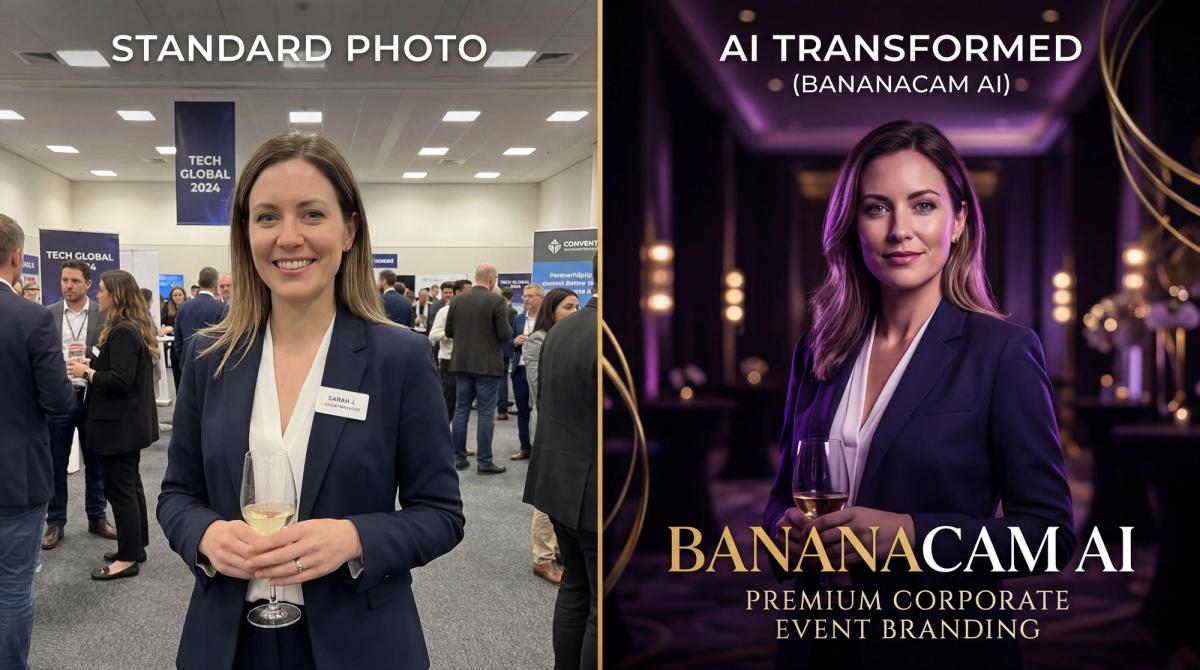
Let's be honest: nobody shares a photo of themselves standing in front of a vinyl banner. They share content that makes them look interesting.
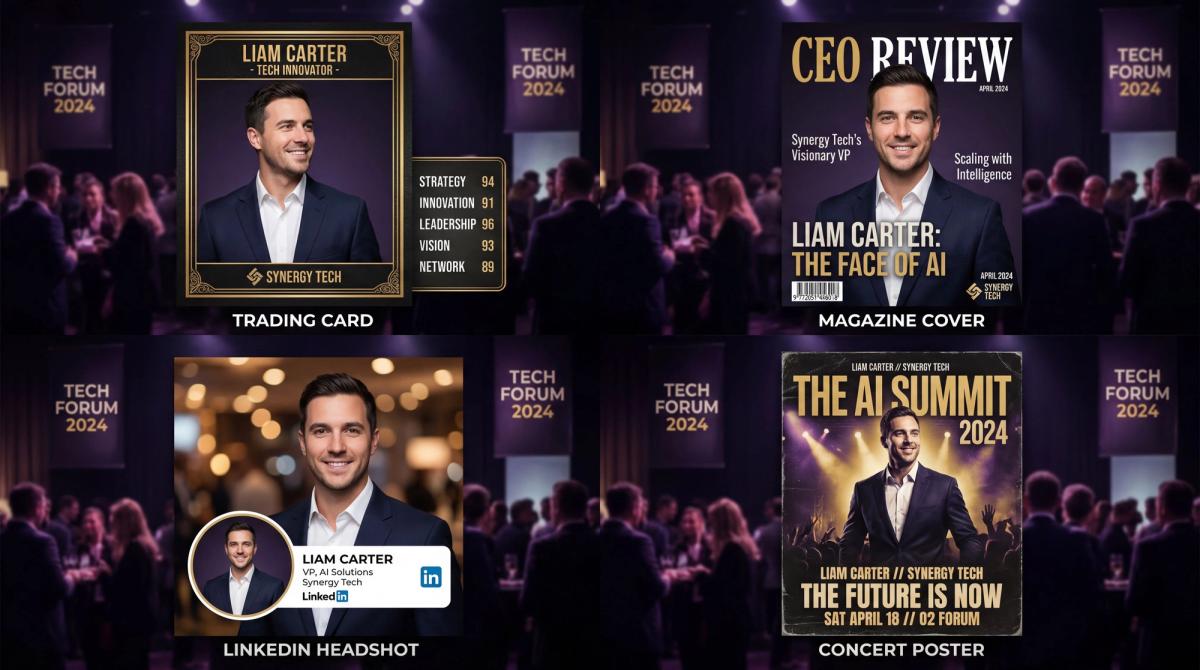
This is where AI photo activations have completely changed the game. Instead of a static photo booth churning out the same strip of four awkward poses,transform guest photos into genuinely creative content — Magazine Covers, Trading Cards, Superhero Comics, LinkedIn Headshots, Concert Posters, and over a dozen other AI styles.
The psychology is straightforward. When someone sees themselves transformed into an Action Movie hero or a Fantasy RPG character, they're not just entertained — they're compelled to share it. It's their face in a piece of content that looks like it took a design team to create. That's the kind of thing people post without being asked.
And each share carries your brand with it, because the branded overlays and custom borders travel with the image. Your logo, your event name, your visual identity — all embedded in content that guests are choosing to distribute for you.
The 60-Second Sharing Window (And Why It Matters)
Here's a stat that should change how you plan events: if a guest doesn't share content within 60 seconds of creating it, the probability of them sharing it later drops off a cliff.
That means your sharing flow needs to be instant. Not "we'll email it to you." Not "check our website tomorrow." Instant.
The best activations use QR code gallery sharing — guests scan a code, see their photos immediately on their phone, and share directly to whatever platform they want. No app download. No email signup gate. No friction.
Every second of delay between "that's amazing" and "posted" is a lost impression. Build the pipeline so content flows from creation to social feed in under a minute.
Branded Overlays: The Trojan Horse of Event Marketing
This is where most event planners miss the real opportunity.
A branded overlay isn't just a logo slapped on a photo. Done right, it's a Trojan horse. It turns every guest share into a branded impression that reaches audiences you'd never access through your own channels.
Think about it: when a guest shares their AI-transformed Trading Card with your company's chrome metallic border and event branding, their 500 followers don't see an ad. They see a cool piece of content that happens to carry your brand. That's the difference between .
The key is making the branding enhance the content rather than detract from it. Premium borders, tasteful logo placement, event-specific design elements that make the photo look more polished, not less. BananaCam's Chrome Metallic premium border is a good example — guests actually prefer it because it makes their photo look higher-end.
The Post-Event Content Multiplier
The event ends. Guests go home. And for most planners, the content opportunity is over.
That's a $50K mistake.
Every photo, every AI transformation, every video clip captured during your event is raw material for weeks of social content. The problem is that most teams don't have the bandwidth to turn 500 event photos into platform-ready posts. Creating individual captions, formatting for different platforms, maintaining brand voice across dozens of posts — it's a full-time job.
This is exactly the problem solves. You feed it your event photos, and its Vision AI analyzes each image to understand the context — who's in it, what's happening, what the energy is. Then it generates platform-specific posts across Instagram, LinkedIn, TikTok, Facebook, and X, all in your trained brand voice.
The real insight: the photo itself becomes the constraint that makes the output authentic. You're not generating content from thin air. You're generating content from real moments at your event. That's the difference between AI content that feels hollow and AI content that feels genuine.
One corporate event can fuel 4-6 weeks of social content if you capture it properly and have the right tools to repurpose it.
Engineer the Shareable Moment (Don't Just Hope for It)
Amateur event planners set up a nice room and hope guests take photos. Professionals engineer specific shareable moments into the event timeline.
Here's what that looks like in practice:
Pre-event:Tease the AI photo activation in your event communications. "Come see yourself as a Cyberpunk character" generates more buzz than "photo booth available." Give people a reason to show up curious.
During the event:Place at strategic points in the guest flow — not tucked in a corner, but in high-traffic areas where lines create social proof and FOMO. Time specific activations to coincide with natural energy peaks (after the keynote, during cocktail hour).
The capture window:Ensure every activation has instant digital delivery. QR codes, not email collection forms. The goal is content in their camera roll within seconds.
The amplification layer:Create an event hashtag that's short, unique, and already populated with content before guests arrive. Display a live social wall showing real-time posts from the hashtag — nothing motivates sharing like seeing other people sharing.
Post-event follow-up:Send a curated gallery link within 24 hours. Include the best AI-transformed photos and make them dead simple to share. This triggers a second wave of content from people who were too busy enjoying the event to post in the moment.
The Numbers Don't Lie (But Most Planners Don't Track Them)
Let's run the actual math on a well-executed content amplification strategy.
200-person corporate event:
- 70% participation rate at AI photo activation = 140 guests
- Average 2.5 photos per guest = 350 pieces of content created
- 40% instant share rate = 140 shares during the event
- Average 500 followers per guest = 70,000 potential impressions from live shares alone
- Post-event gallery email (60% open rate, 25% share rate) = additional 21,000 impressions
- Brand's own post-event content (30+ posts over 4 weeks) = 15,000-25,000 additional impressions
That's 100,000+ potential impressions from a single event. And we're being conservative.
According to digital photo sharing from events generates significantly higher engagement than traditional marketing channels. The key metric isn't just impressions — it's that these are trusted impressions. Content shared by a friend has on purchasing decisions than brand-generated ads.
And with lead capture built into the photo activation (guests provide contact info to receive their photos), you're building a qualified database at the same time. That's marketing and sales working from the same playbook.
The Deeper Truth About Event Content
Here's what the "10,000 impressions" framing misses.
The real value isn't the number. It's the type of content being created. When a guest shares an AI-transformed photo from your event, they're not just giving you reach. They're giving you a testimonial. They're saying, "I was here, and it was worth sharing."
That kind of endorsement can't be bought. It can't be manufactured. It can only be earned by creating experiences that are genuinely worth talking about.
The brands that understand this aren't adding photo booths as an afterthought. They're building their entire around the content moment. The keynote speaker, the catering, the venue — those are table stakes. The content activation is the multiplier.
If you're planning events in 2026 and you're not thinking about content amplification from day one, you're building a beautiful house and forgetting the address. Nobody can find it. Nobody can share it. And nobody will remember it existed six months from now.
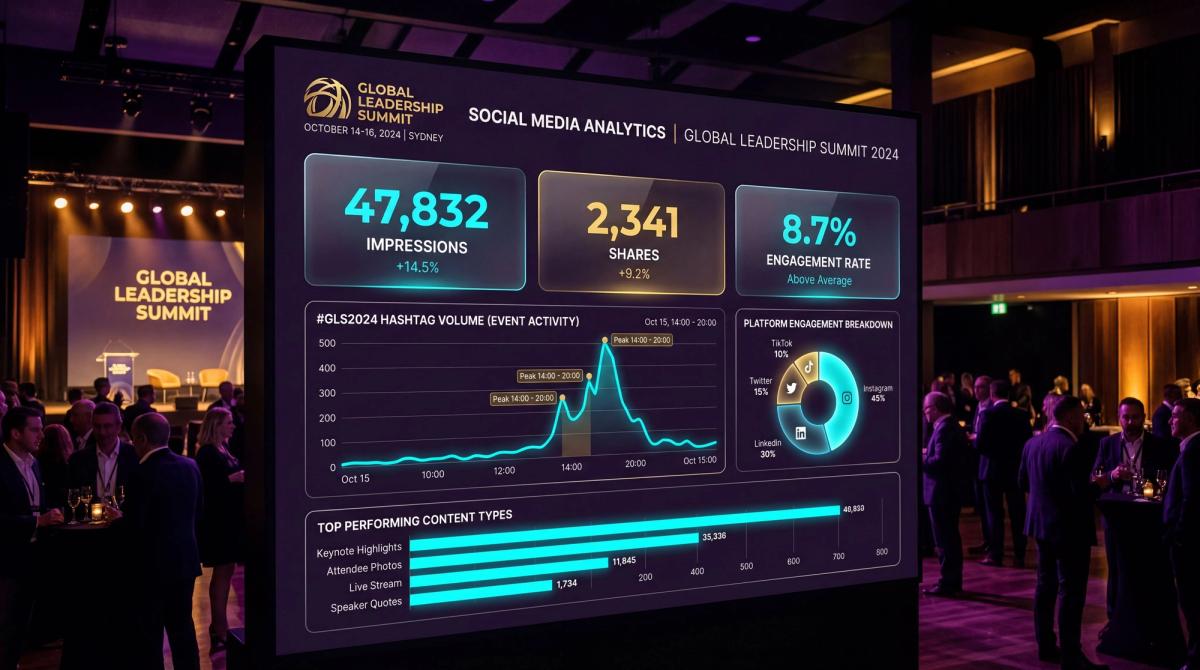
Make the content flow frictionless. Make the creative output irresistible. And give your guests every reason to become your marketing team for the night.
That's how you turn one event into 10,000 impressions. Or 100,000. The ceiling is as high as your activation is good.
Frequently Asked Questions
How many social media impressions can a corporate event realistically generate?
A well-executed 200-person event with proper content activations can generate 50,000-100,000+ organic impressions. The key variables are participation rate at photo activations (aim for 60-70%), instant sharing infrastructure (QR codes, not email), and post-event content follow-up within 24 hours. Without intentional content engineering, most events generate under 1,000 impressions.
What's the difference between an AI photo booth and a traditional photo booth?
Traditional photo booths capture standard photos with maybe a branded frame. AI photo booths like use AI to transform guest photos into entirely new creative outputs — Magazine Covers, Trading Cards, Superhero Comics, LinkedIn Headshots, and 15+ other styles using SDXL Inpainting and ControlNet for face preservation. The share rate is dramatically higher because the output is genuinely novel and visually impressive.
How do branded overlays increase social media reach at events?
Branded overlays embed your company logo, event name, and visual identity directly into the content guests share. Every share becomes a branded impression that reaches the guest's entire social network. The key is making the branding enhance the photo (premium borders, tasteful placement) rather than making it look like an ad. Well-designed overlays actually increase sharing because they make the content look more polished.
What's the best way to encourage guests to share event content on social media?
Remove all friction from the sharing process. Use QR code galleries for instant access (no app downloads). Place activations in high-traffic areas. Create a unique event hashtag and display a live social wall. Time activations for peak energy moments. And most importantly — give guests content worth sharing. AI-transformed photos, creative interactive experiences, and genuinely fun moments outperform any "please share" signage.
How can event photos be repurposed for ongoing social media content?
One corporate event can fuel 4-6 weeks of social content. Tools like use Vision AI to analyze event photos and generate platform-specific posts (Instagram, LinkedIn, TikTok, Facebook, X) in your trained brand voice. The photo provides the authentic constraint — you're creating content from real moments, not from thin air. Plan for at least 30 posts across platforms from a single event's photo library.
Do AI photo activations work for B2B corporate events, or just consumer events?
B2B events are actually where AI photo activations deliver the highest ROI. The LinkedIn Headshot style alone gives corporate guests something immediately useful — a professional AI-generated headshot they'll use as their profile photo, carrying your branding with it for months. Trading Cards and Magazine Covers work brilliantly for sales kickoffs and conferences. The novelty factor is even higher in corporate settings where guests don't expect this kind of creative activation.