

Your company just spent $40,000 on a corporate gala. The CEO loved it. People danced. Someone from accounting did karaoke. Monday morning, your CFO asks a simple question: "What did we get for that?"
And you freeze.
Not because the event wasn't great. It was. But because you have absolutely no framework for answering that question with anything other than "people had a good time."
That's the gap. And it's costing you more than you think — not in dollars wasted on bad events, but in budgets slashed because nobody could prove the good ones were worth it.
I've watched this play out hundreds of times. A company invests in the night goes brilliantly, and then the budget gets cut the following year because "we can't quantify the value." The entertainment didn't fail. The measurement did.
Let's fix that.
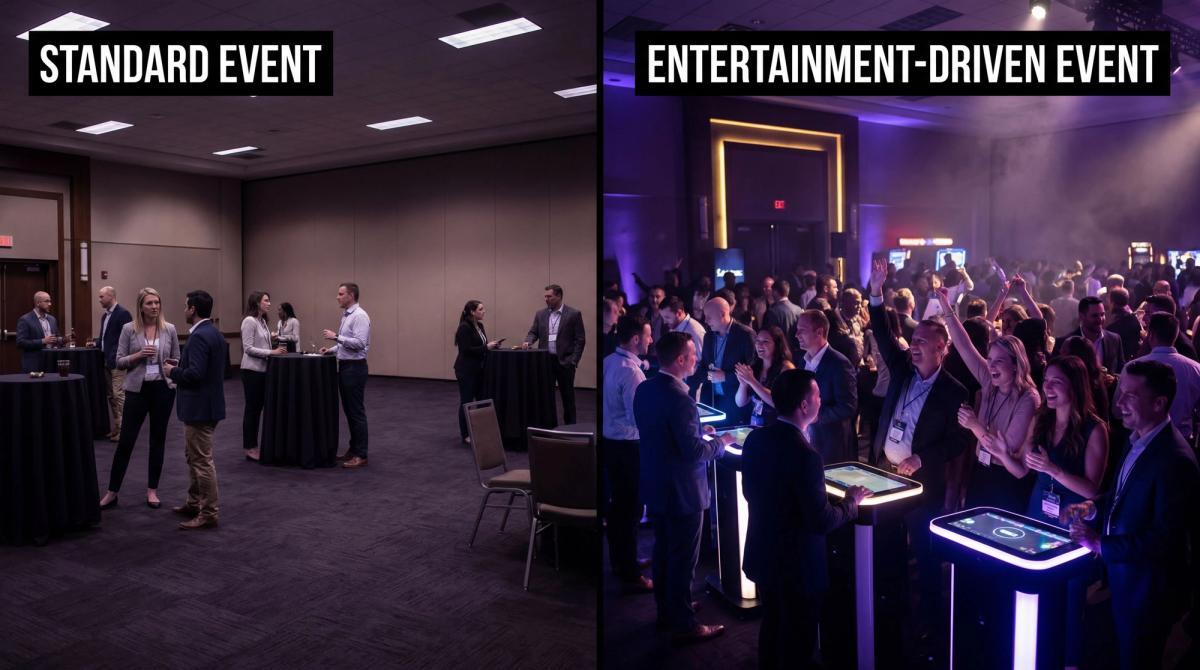
Why Most Companies Don't Measure Entertainment ROI
It's not laziness. It's a structural problem.
Most event teams are measured on logistics: Was it on time? Under budget? Did the AV work? Those are pass/fail metrics. They tell you whether the event happened not whether it mattered.
Entertainment gets lumped into "atmosphere" — a soft category that finance teams instinctively distrust. And honestly? Most entertainment vendors don't help. They sell you a performer, collect a cheque, and disappear. Nobody's handing you a post-event analytics report alongside the DJ's breakdown playlist.
I wrote about this dynamic in — the tendency to treat entertainment as the last thing you plan and the first thing you cut. That mindset is the root cause of the measurement problem. If you don't plan entertainment strategically, you can't measure it strategically.
Here's the uncomfortable truth:measuring entertainment ROI requires you to define what you wanted the entertainment to accomplish _before_ the event.Most teams skip that step entirely.
The Entertainment ROI Framework: Before, During, After
Forget complex attribution models for a moment. This is a practical framework anyone can use — whether you're planning a 200-person holiday party or a 2,000-person national sales kickoff.
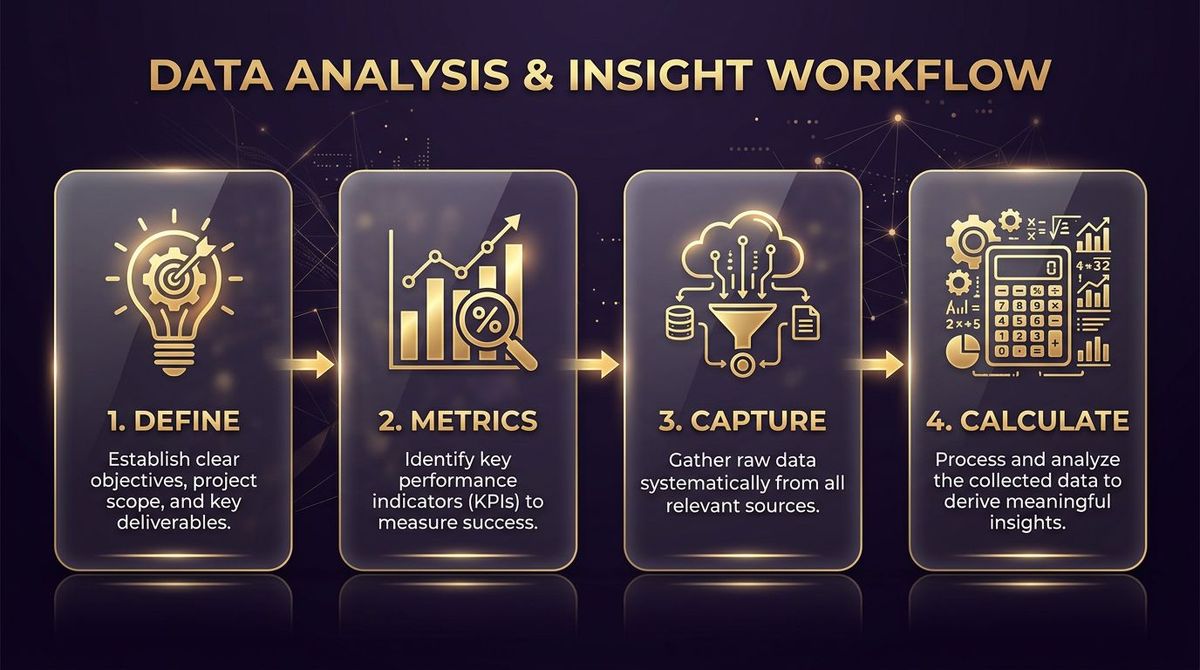
Step 1: Define the Outcome (Before the Event)
Every entertainment decision should tie to one of these business objectives:
- Retention & morale— "We want employees to feel valued and energized"
- Client relationship deepening— "We want clients to associate our brand with premium experiences"
- Culture building— "We want cross-departmental connection and team bonding"
- Lead generation— "We want prospects to engage and convert"
- Brand positioning— "We want attendees to perceive us as innovative/fun/premium"
Pick one primary objective. Maybe a secondary. Not all five. If your entertainment is trying to do everything, it's doing nothing — and it's definitely not measurable.
A that's worth their fee will push you on this question before you've even looked at a single vendor quote.
Step 2: Choose Your Metrics (Before the Event)
Once you know the objective, the metrics become obvious:
Entertainment ROI Metrics by Objective
Retention & Morale → Post-event survey scores, voluntary turnover rate (30/60/90 days), eNPS shift
Client Relationships → Follow-up meeting conversion rate, NPS from attending clients, deal pipeline acceleration
Brand & Culture → Social media mentions, employer brand perception scores, internal engagement metrics
Recruitment → Offer acceptance rate post-event, candidate pipeline from attendees, Glassdoor score changes
Revenue → Closed deals attributed to event contacts, upsell conversations initiated, partnership inquiries
You don't need all of them. Pick 2-3 that you can actually track and commit to measuring them before the event happens.
Step 3: Capture Data (During the Event)
This is where most teams drop the ball. You need systems in place at the event:
- Digital engagement tools— Apps, QR codes, live polling,interactive experiences that naturally capture participation data
- Observation— Assign someone to photograph engagement levels at key moments (not just posed photos — real candid crowd energy)
- Real-time feedback— Quick pulse surveys during the event, not just after
- Social listening— Monitor your event hashtag and brand mentions in real time
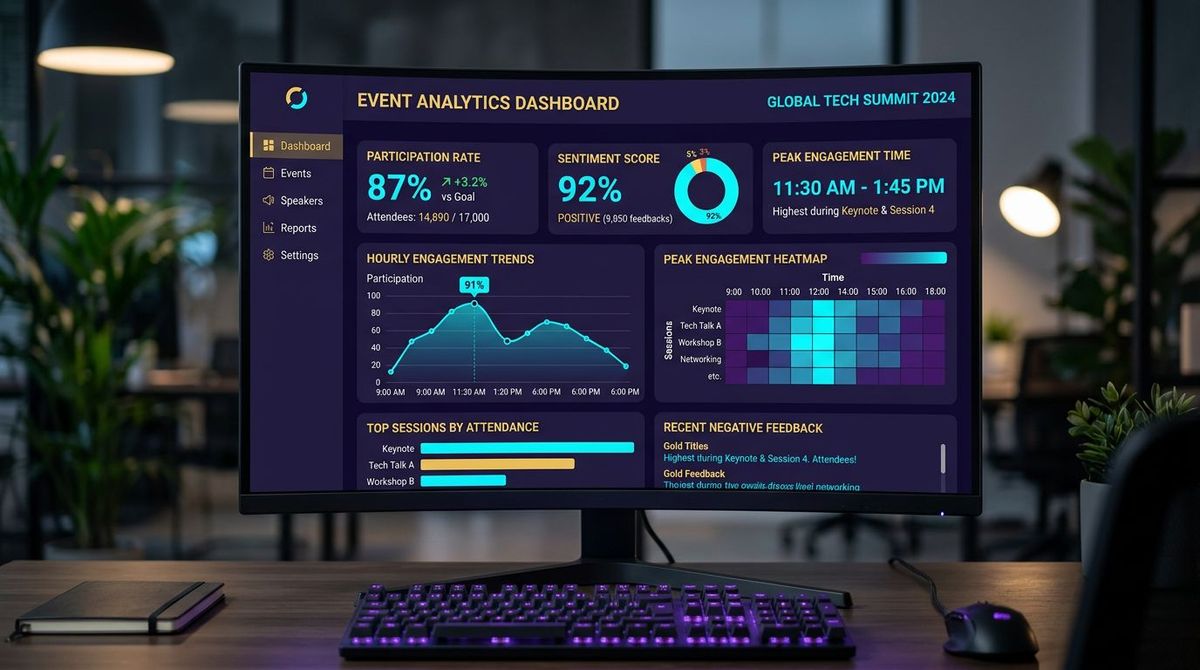
The best entertainment creates natural data capture moments. When we run at corporate events, every song request, every vote, every interaction is a data point. We know exactly how many people engaged, when peak engagement happened, and how participation flowed through the room. That's not surveillance — it's measurement built into the experience.
Step 4: Calculate and Compare (After the Event)
Now the math. Here's the basic ROI formula adapted for entertainment:
Entertainment ROI = (Value Generated − Entertainment Cost) / Entertainment Cost × 100
The "value generated" part is where it gets interesting — and where you need to be honest, not creative with numbers.
For retention-focused events:If your average employee replacement cost is $50,000 and your post-event voluntary turnover drops by even 2-3 people compared to the previous year's trend, that entertainment investment paid for itself several times over. You don't need to claim the event caused the retention — you just need to include it in the attribution model alongside other retention initiatives.
For client events:If you hosted 50 clients and 15 of them booked follow-up meetings within 30 days (vs. your normal 5 from a standard dinner), that delta has a pipeline value you can calculate.
For lead generation:This one's the most straightforward. Cost of entertainment / qualified leads captured = cost per lead. Compare that to your other channels.
The has an excellent deep-dive on multi-touch attribution models if you're running complex B2B event programs. For most corporate events, though, the framework above is more than sufficient.
The Metrics That Actually Matter (And the Ones That Don't)
Let's be blunt about vanity metrics.
Metrics that look good but tell you nothing:
- Total headcount (bodies in seats ≠ engagement)
- "The event was great" feedback (too vague to act on)
- Social media impressions without sentiment analysis
- Budget came in under estimate (congratulations, you spent less — but on what?)
Metrics that actually drive decisions:
- Engagement rate— What percentage of attendees actively participated in the entertainment, not just watched?
- Net Promoter Score (event-specific)— Would attendees recommend this event to a colleague? This single question predicts repeat attendance and word-of-mouth better than any other metric.
- Time-in-room— Did people stay for the entertainment or leave early? Simple but devastating data.
- Post-event action rate— Did attendees do something measurable after the event? Schedule a meeting, complete a survey, share on social, sign up for the next one?
- Sentiment themes— What specific words and phrases appear in feedback? "Fun" is fine. "Best event we've ever done" is a data point. "I finally got to talk to the VP of engineering" is gold.

The Real Cost of Not Measuring
Here's what happens when you don't measure entertainment ROI:
Year 1:You spend $30K on great entertainment. Everyone loves it.
Year 2:Budget review. No data to support the spend. Budget cut to $15K. You book a mediocre DJ.
Year 3:Event is forgettable. Attendance drops. People start "having conflicts" on event night.
Year 4:Leadership questions whether to hold the event at all.
That's a $30K mistake compounding into a six-figure cultural loss. The entertainment wasn't the problem — the absence of measurement was.
Meanwhile, the company down the street measured their event ROI, showed leadership that their $40K entertainment investment correlated with a 15-point eNPS increase and $200K in retained client revenue, and just got approved for an even bigger budget.
Same spend. Different story. The only difference? One team measured. One didn't.
How to Present Entertainment ROI to Your CFO
You've got the data. Now you need the story. Here's how to frame it.
Don't say:"The event was a huge success."
Say:"78% of attendees actively participated in the entertainment programming. Post-event NPS was 72, up from 45 last year. Within 30 days, we converted 12 client follow-up meetings from attendees — triple our baseline."
Don't say:"We need $40K for entertainment."
Say:"Last year's $30K entertainment investment contributed to a measurable 18-point increase in employee engagement scores across the 200 attendees. Based on industry benchmarks for engagement-driven retention, that represents approximately $150K in avoided replacement costs. We're requesting $40K to expand the program."
Don't say:"Everyone loved it."
Say:"92% of surveyed attendees rated the entertainment as the highlight of the event. 67% said it directly influenced their positive perception of the company. Here are three unsolicited LinkedIn posts from senior clients praising the experience."
Numbers first. Context second. Anecdotes third. That's the language finance speaks.
The offers additional frameworks for presenting ROI data to executive stakeholders — particularly useful if you're running large-scale conference programs.
Technology That Makes Measurement Easier
You don't need a six-figure martech stack to measure entertainment ROI. But a few tools make it dramatically easier:
- Live polling and interaction platforms— Tools that capture real-time engagement data during entertainment segments
- Post-event survey tools— Keep it under 5 questions. Response rates crater after that.
- Social listening dashboards— Track mentions, hashtags, and sentiment automatically
- CRM integration— Tag event attendees and track their post-event behaviour in your existing pipeline tools
- AI-powered analytics— Emerging tools that can analyze feedback themes, predict engagement patterns, and even measure crowd energy from video
The smartest investment isn't in the measurement tools themselves — it's in choosing entertainment that has measurement built in. Interactive entertainment naturally generates engagement data. A band plays and you guess whether people liked it. An plays and you know— because you have the participation numbers.
The One-Page ROI Template
Here's what your post-event report should look like. One page. No fluff.
Event:[Name, Date, Headcount]
Entertainment Investment:[$X]
Primary Objective:[From Step 1]
One-Page Entertainment ROI Scorecard
Engagement Rate — Target: 60% | Actual: ___% | vs. Previous: +/- ___%
Event NPS — Target: 50 | Actual: ___ | vs. Previous: +/- ___
Post-Event Action Rate — Target: 20% | Actual: ___% | vs. Previous: +/- ___%
Social Shares — Target: 200 | Actual: ___ | vs. Previous: +/- ___
Entertainment Cost Per Attendee — Target: $75 | Actual: $___ | vs. Previous: +/- $___
Overall Entertainment Rating — Target: 4.5/5 | Actual: ___/5 | vs. Previous: +/- ___
Calculated ROI:X%
Qualitative Highlights:[2-3 specific quotes or observations]
Recommendation:[Maintain / Increase / Adjust for next event]
That's it. One page that justifies your budget, guides your next event, and speaks your CFO's language. According to aligning measurement with stakeholder expectations from the start is the single biggest predictor of whether ROI data actually influences future budgets.
Start Measuring Now
You don't need to overhaul your entire event program to start measuring entertainment ROI. Start with your next event. Pick one objective. Define two metrics. Capture the data. Run the calculation.
The companies that measure their event entertainment ROI don't just get bigger budgets — they get better events. Because when you know what works, you do more of it. When you know what doesn't, you stop wasting money on it.
That's not just good event planning. That's good business.
Ready to plan an event with measurement built in from day one?.
FAQ: Event Entertainment ROI
How do you calculate ROI on corporate event entertainment?
Use the formula:(Value Generated − Entertainment Cost) / Entertainment Cost × 100. The key is defining "value generated" before the event. For client events, that might be follow-up meetings booked or pipeline created. For employee events, it could be engagement score increases or retention improvements. The calculation is simple — the discipline is in deciding what to measure before you spend the money.
What is a good ROI for a corporate event?
There's no universal benchmark because it depends entirely on your objective. A client appreciation event that generates $500K in retained revenue on a $50K investment is a 900% ROI. An employee event that prevents 3 resignations (at $50K replacement cost each) on a $30K budget is a 400% ROI. The question isn't whether your ROI is "good" compared to an industry average — it's whether it justifies continued or increased investment to your specific stakeholders.
What metrics should I track for event entertainment specifically?
Focus on engagement rate (what percentage of attendees actively participated), time-in-room during entertainment segments, event-specific NPS, post-event action rate (meetings booked, surveys completed, social shares), and qualitative sentiment themes from feedback. Avoid vanity metrics like total headcount or generic "satisfaction" scores that don't drive decisions.
How do I justify entertainment spending to my CFO?
Lead with numbers, not feelings. Frame entertainment as an investment with measurable outcomes, not an expense. Show the cost of not investing — declining attendance, lower engagement scores, lost client relationships. Use the one-page ROI template from this post. And always compare your cost-per-outcome to other channels. If your event generates qualified leads at $200 each while your digital ads cost $350 per lead, that's a conversation finance wants to have.
Can you measure ROI on entertainment that isn't directly tied to revenue?
Yes — but you need to connect it to proxy metrics that leadership values. Employee engagement events tie to retention (which has a dollar value), productivity scores, and eNPS. Culture-building events tie to cross-departmental collaboration metrics and internal mobility. Brand events tie to social sentiment and press coverage. The goal isn't to fabricate a direct revenue line — it's to connect the entertainment to outcomes your organization already tracks and values.
When should I start planning ROI measurement for my event?
At the same time you start planning the event itself. ROI measurement isn't something you bolt on after — it's something you design into the event from the beginning. Your entertainment choices, your engagement tools, your survey strategy, and your data capture systems all need to be aligned with your measurement goals. If you're thinking about ROI for the first time the week after the event, you've already lost most of your data.