

You are choosing between an AI photo booth and a classic photo booth, and every vendor says theirs is the one guests will love. The short answer: a classic booth gives guests a real snapshot and usually a print, while an AI booth turns that snapshot into a styled portrait in under a minute and sends it to their phone. They solve different problems, so the right pick depends on what you want guests to walk away with.
We run the for Toronto events, so we have an obvious interest here. That is exactly why this post is about fit, not hype. Plenty of events are better off with a classic booth, and we will tell you which ones.
What is the actual difference between an AI and a classic photo booth?
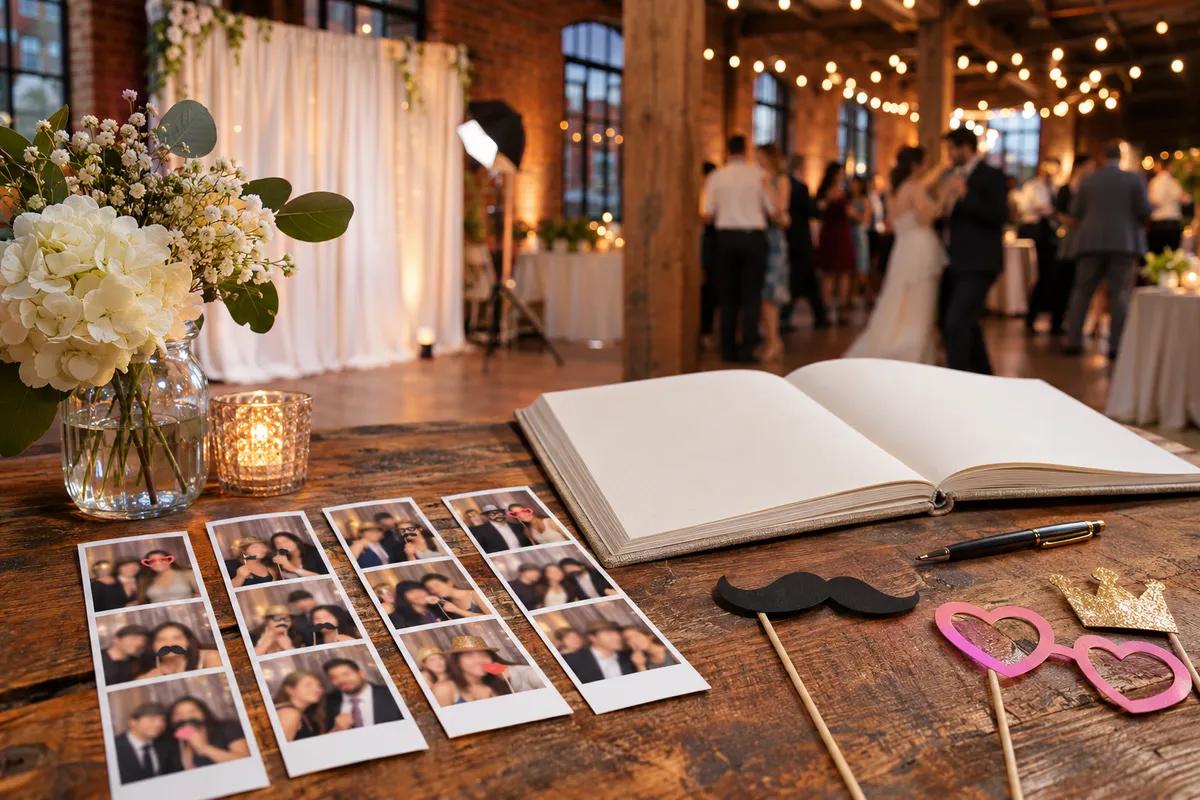
A classic photo booth is a camera, a light, a backdrop and usually a printer. Guests grab props, take three or four frames, and walk away with a strip or a 4x6 print plus a digital copy. What you get is a real photo of real people having a good time.
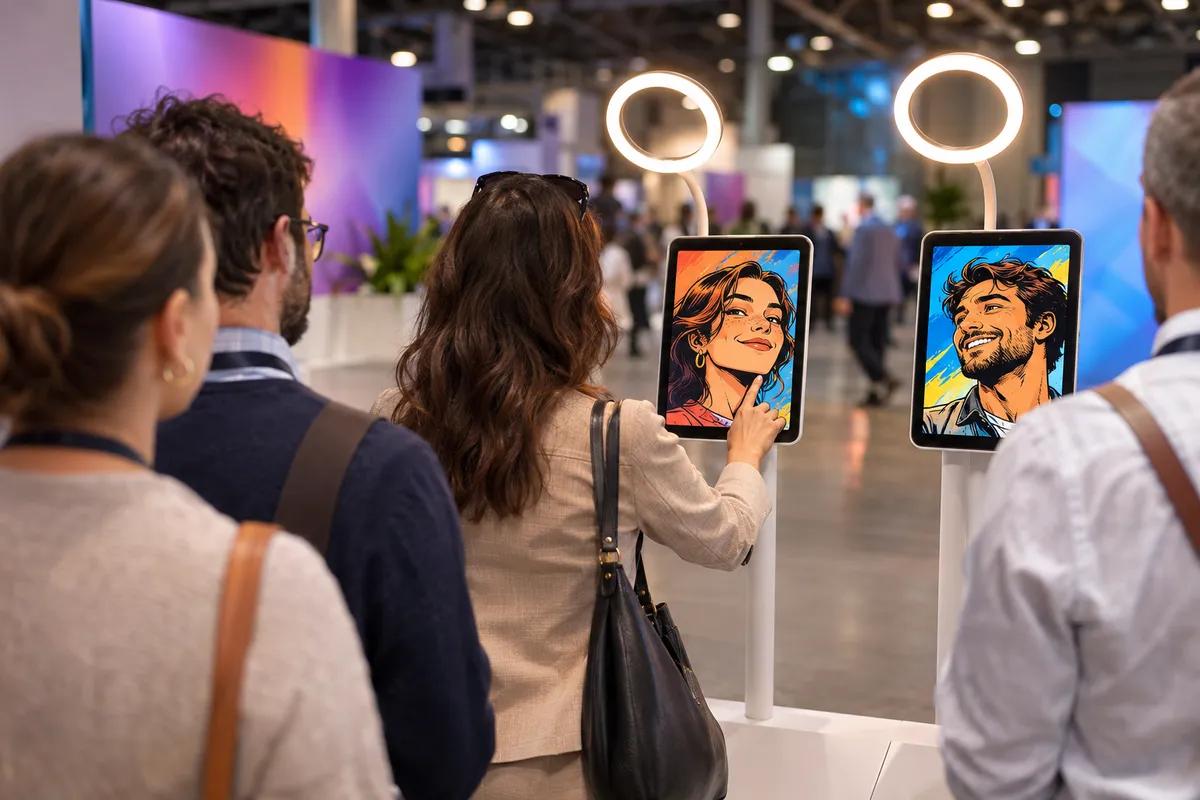
An AI photo booth starts the same way, with a photo, then hands it to an image model that rebuilds the whole picture. The guest picks a style (a magazine cover, a superhero poster, a vintage portrait, a trading card) and the system generates a new image that keeps their face but changes everything around it. Our setup, powered by BananaCam.ai, takes 30 to 60 seconds per transformation, offers more than 20,000 styles, and runs on tablets or iPads in a web browser.
So the honest one-liner:classic captures the moment, AI reinvents it.
What guests take home
| Classic photo booth | AI photo booth | |
|---|---|---|
| Output | Real photo, often printed on the spot | Styled portrait, usually digital |
| Time per guest | Seconds to shoot, about 30 seconds to print | 30 to 60 seconds to generate |
| Props and backdrop | Central to the fun | Optional, the style does the work |
| Physical keepsake | Yes, if prints are included | Only if the vendor adds a printer |
| Branding | Logo on the print frame or overlay | Logo built into the image itself |
| Guest data | Optional email for digital copies | Name and email typically collected before delivery |
| Hardware | Booth or open-air rig, printer, prop table | Tablets on stands, reliable WiFi |
| Typical Toronto price | About $400 to $1,200 CAD for 3 to 4 hours | Quoted per event |
The classic price comes from Toronto vendor which also lists extra hours at $200 to $300 each. AI booths are mostly quoted per event because the price moves with hours, number of stations, custom styles and lead capture. If you want the full cost breakdown by booth type, our post on covers it.
Which one fits your event?
Start with the goal, not the tech. Here is how we steer clients.
Weddings and milestone parties: usually classic
Printed strips go straight into the guest book. Grandparents know how to use a booth with a curtain. The photos are of the actual night, not an artist's version of it. If the couple wants one photo activation, classic is the safer bet for most crowds.
AI earns its spot at a wedding when the couple wants something nobody has seen before, such as a magazine cover with their names and date, or when there is budget for a second activation during cocktail hour.
Corporate parties, galas and launches: usually AI
Corporate events want something classic booths are bad at: branded content that leaves the room. With an AI booth, your logo and colours are part of the generated image, not a sticker on the corner, so a guest who posts it is posting your brand. If the event has a theme (a holiday party, a product launch, an awards night), custom styles can match it.
Trade shows and conferences: AI, with the right setup
On a show floor the booth is a lead tool first. An AI booth asks for a name and email before it delivers the image, which beats a fishbowl of business cards. Because our setup has no limit on stations, high-traffic booths can add tablets instead of building a longer line.
Holiday parties: either, decided by the crowd
A December office party with a mixed-age crowd and an open bar is classic booth territory: props, prints, chaos. A client appreciation event where you want follow-up afterwards leans AI. For the rest of the holiday picture, see our .
What do planners forget to ask about AI booths?
The transformation is the fun part. These are the parts that go wrong.
WiFi at the exact spot
Our AI booth runs in a browser and needs a reliable connection for every image. Ballroom guest WiFi with 300 phones on it is not reliable. Ask the venue for a dedicated network or password, and test the signal at the spot where the stations will stand, not in the lobby.
The line at peak moments
At 30 to 60 seconds per image, one station tops out at roughly 60 to 120 images an hour in theory, and real guests browse styles, retake and pose in groups. Plan for the rush (right after dinner, right after the speeches) rather than the average. The fix with an AI booth is more tablets, not a faster AI.
Prints, or no prints
Some Toronto vendors attach printers to their AI booths; ours delivers digitally, so there is no paper, ink or printer jam to manage. If your guests expect a physical keepsake, say so before you book, because it changes the vendor list.
Consent for the emails you collect
This one matters in Canada. Collecting an email at a booth is easy. Sending marketing to it is regulated. Under Canada's Anti-Spam Legislation, you need express consent before you send commercial email, and the is clear that the person has to take an active step, such as ticking a box that was not pre-ticked. The federal privacy commissioner's adds that people generally have to agree to their email being collected for marketing at all.
In practice: put a plain-language opt-in on the sign-in screen ("Send me news from [your company]"), leave it unticked, and export the consent flag along with the email. Delivering the photo is fine. Adding everyone to your newsletter without that box is not.
What do planners forget to ask about classic booths?
Classic booths have their own traps, and they are mostly physical.
- Footprint.An enclosed booth plus a prop table and a queue can eat a corner of a small Toronto restaurant buyout. Measure first.
- Attendant or drop-off.Drop-off is cheaper, but nobody fixes a paper jam at 10:30 p.m. We recommend an attendant.
- Print limits.Some packages cap prints or charge for unlimited. Get it as a line item.
- Same old photos.Your guests have seen a classic booth at a dozen events. That is fine at a wedding and less fine at a launch where you want people talking.
Our walks through booth types and setup questions in more detail, and covers the wedding side.
Is an AI photo booth just a fancy filter?
It should not be. A filter changes colours on top of your photo. A good AI booth generates a new image while keeping the guest's real likeness, so the result looks like a styled photo shoot rather than a face pasted onto a cartoon. Cheap versions do look like face swap apps, and guests notice.
Before you book any AI booth, ask for three things:
- Real event outputs not marketing renders. You want to see results from ordinary guests under venue lighting.
- Group shots.Plenty of AI tools look great on one face and fall apart with five.
- Your own style.Ask whether the vendor can build a custom style around your theme or brand, and what it costs.
For a broader side-by-side of the two formats, our lays out pros and cons by feature.
Can you have both?
Yes, and at bigger events it often makes sense. Put a classic booth near the dance floor for the late-night crowd and an AI station in the cocktail area or near registration, where guests have a minute to wait for their image. Across the 5,000+ events we have produced, the activations that work best are the ones placed where guests naturally pause, not tucked into a corner they have to look for.
If you can only book one, use this rule:
- The memory is the product (weddings, birthdays, reunions): classic.
- The share or the lead is the product (corporate, launches, trade shows): AI.
- Not sure:look at your guest list. Older, family-heavy crowds lean classic; younger, social-heavy crowds lean AI.
Ready to pick?
If an AI booth sounds like the right fit, our shows the styles, the setup and how lead capture works. Tell us your date and guest count and we'll send options, including how many stations your crowd needs and whether a classic booth would serve you better.