

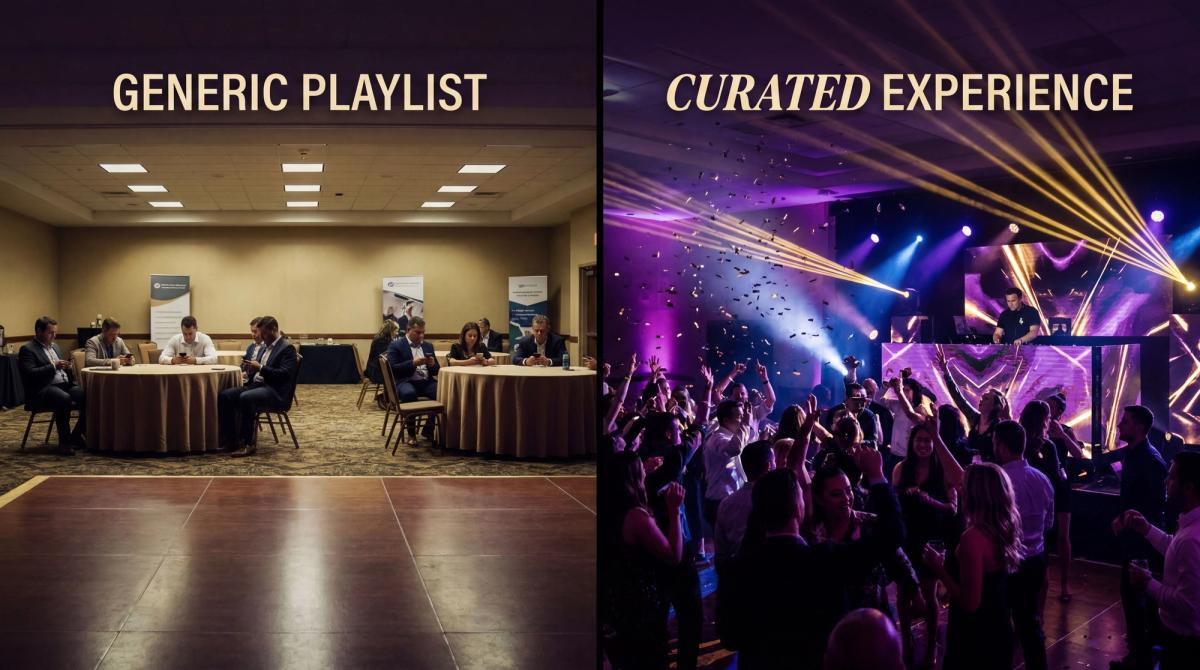
I know you're looking at that entertainment line item thinking it's the easiest cut.
I get it. Budget season hits, procurement sends the spreadsheet, and someone highlights the $15,000 band line and says, "Do we really need this?" The question sounds reasonable. It sounds fiscally responsible. It sounds like the kind of thing a serious person asks in a serious meeting.
It's also the most expensive mistake you'll make this quarter.
I've spent over a decade producing across Canada. I've watched organizations gut their entertainment budgets with surgical precision, then spend twice as much the following year trying to fix the damage — low attendance, bad feedback scores, a reputation internally as the company that throws boring parties. The savings never survive contact with reality.
This isn't an emotional argument. This is a business case. Let me make it in a language finance understands.
Why Is Entertainment Always the First Budget Line to Get Cut?
Because it looks discretionary. Venue? Non-negotiable — you need a room. Catering? Can't starve people. AV? Need a microphone. But entertainment? That's the "fun stuff." The "nice to have." The line item that doesn't have a contractual obligation or a safety requirement attached to it.
Here's what that logic misses: entertainment isn't operational infrastructure. It's the experience layer. And the experience is the entire reason you're hosting the event in the first place.
Nobody flies to a conference for the sandwich platters. Nobody remembers Q3 for the PowerPoint transitions. They remember how the event made them feel. And if it made them feel nothing, you just spent six figures on forgettable.
How Does the Peak-End Rule Apply to Corporate Events?
Let's talk science for a moment. Daniel Kahneman and Barbara Fredrickson's is one of the most well-documented findings in behavioral psychology. People judge an experience based on two moments: the emotional peak and the ending. Not the average. Not the duration. The peak and the end.
Think about what that means for your event. You could have flawless logistics, perfect catering, a beautiful venue, and an on-time schedule. But if there's no emotional peak — no moment that elevates the room — attendees walk away with a vague sense of "it was fine." And "fine" doesn't drive attendance next year. "Fine" doesn't generate word-of-mouth. "Fine" doesn't justify the budget at all.
Entertainment is your peak. It's the moment people photograph, talk about at dinner, and reference six months later. Cut the entertainment and you haven't saved money. You've removed the only part of the event that people will actually remember.
What Is the Real Cost of a Boring Corporate Event?
Let's run the numbers on what "saving" $15,000 on entertainment actually costs.
Scenario:300-person corporate event. Total budget: $150,000. You cut the entertainment line to save $15K.
Here's what you've purchased with that savings:
- Reduced attendance next year.If even 10% fewer people show up because last year was forgettable, you're paying the same venue and catering costs for fewer bodies. Your cost per attendee just went up, not down.
- Lower engagement scores.Post-event surveys drop. Leadership questions the value of the event program entirely. Now you're defending the whole budget, not just the entertainment line.
- Wasted speaker investment.You paid $20,000 for a keynote. Without energy in the room — without something that broke the monotony — that keynote landed in a room of people checking email under the table.
- Zero social proof.Nobody posts about a forgettable event. You've lost organic reach that would have cost thousands to replicate through paid channels.
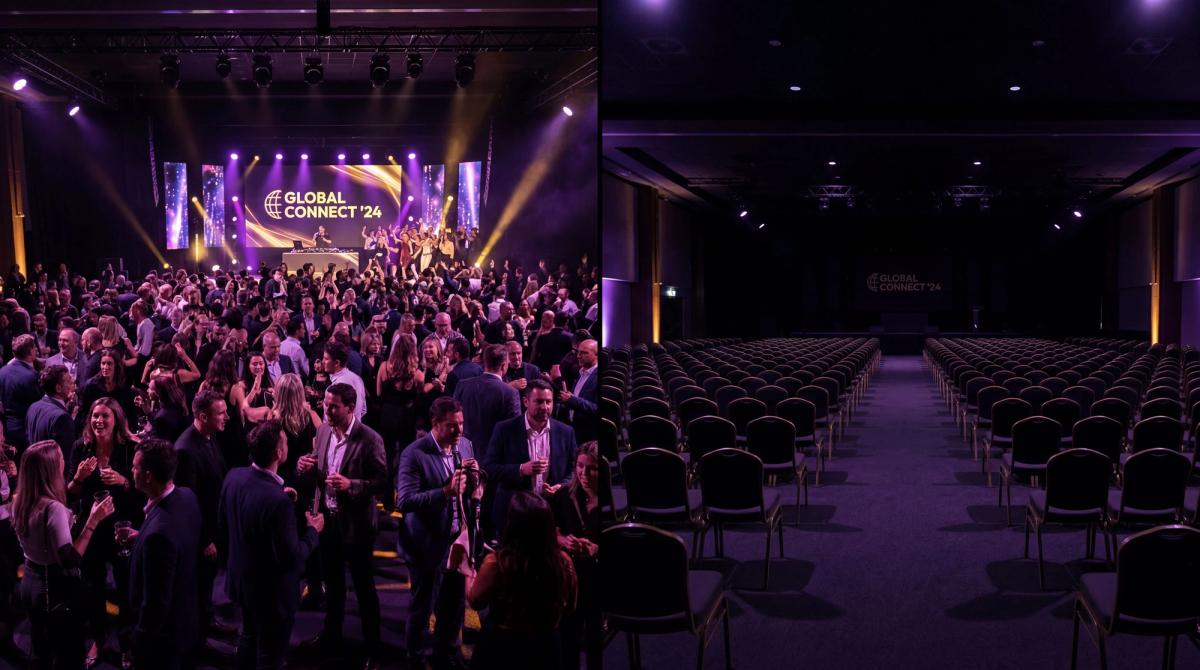
The $15,000 you saved didn't disappear. It redistributed itself across every other line item as diminished returns.
What Happens When You Cut Entertainment vs. Other Budget Lines?
This is the comparison nobody makes, so let me make it.
Cut entertainment ($15,000 saved):No emotional peak. Flat energy. Forgettable event. Declining future attendance. Post-event survey scores drop.
Cut premium catering — downgrade from plated to buffet ($12,000 saved):Attendees notice for about 20 minutes. Then they move on. Nobody has ever declined a conference invitation because the lunch was buffet-style.
Cut upgraded linens and centerpieces ($5,000 saved):Virtually invisible to 95% of attendees. The event planner notices. Nobody else does.
Cut the premium bar package — switch to beer and wine only ($8,000 saved):Some grumbling. Manageable. People adjust.
Entertainment is the one cut that hollows out the event. Everything else is a trim. This is the difference between reducing quality and removing purpose.
How Do You Make the Budget Case for Entertainment to Finance?
Stop talking about entertainment. Start talking about engagement economics.
Finance doesn't care that the band was incredible. Finance cares about cost efficiency, attendee retention, and measurable outcomes. So reframe the conversation:
Cost per impression.If your event has 300 attendees and the entertainment generates 50 social media posts with an average reach of 200 people, that's 10,000 impressions. At $15,000, you're paying $1.50 per impression — competitive with most digital channels and significantly more impactful because it's organic, authentic content.
Engagement per dollar.According to 52% of business leaders say events deliver the greatest ROI of any marketing channel. Entertainment is the component most directly responsible for the emotional engagement that drives that ROI.
Retention economics.For internal events, the math is even simpler. If one employee who would have otherwise left stays because the company culture felt worth staying for, that single retention saves $30,000-$50,000 in replacement costs. Your entertainment budget just paid for itself with one save.
Speak procurement's language. Frame entertainment as a performance multiplier, not a luxury add-on.
Why Is "Good Enough" Entertainment Worse Than No Entertainment?
This is the trap I see most often. The budget gets trimmed, not eliminated. Instead of hiring a professional act, someone books a DJ who's "pretty good" or a musician who's "affordable." The thinking is: something is better than nothing.
It's not.

Mediocre entertainment actively damages your event. It creates a peak — just a negative one. Attendees notice the awkward transitions, the low energy, the moment where the performer clearly wasn't calibrated for a corporate audience. Now your peak-end memory isn't "no entertainment." It's "bad entertainment." That's categorically worse.
If you can't do entertainment well, don't do it at all. Invest that money in a spectacular closing moment, an unexpected interactive element, or an that doesn't depend on performance talent. A confident decision to skip entertainment is respectable. A half-hearted attempt at entertainment is a scar.
What Are Smart Ways to Maximize Entertainment ROI Without Overspending?
You don't need a $50,000 headliner to create an emotional peak. You need strategic placement and the right act for the right moment.
Book for the moment, not the whole night.A 45-minute set during the peak window (usually right after dinner, before the energy dips) delivers more impact than four hours of background music nobody listens to.
Match the act to the audience.A high-energy cover band is wasted on a 50-person executive dinner. An acoustic duo is wasted on a 500-person sales kickoff. Fit matters more than budget.
Use entertainment as a transition tool.The dead zones in events — between sessions, during room flips, the awkward 20 minutes after dinner — are where energy dies. A roaming performer, a live painter, or an interactive station during those gaps costs a fraction of a headline act and solves the actual problem.
Negotiate smart.Book early. Bundle with that have established vendor relationships. Off-peak dates (Tuesday through Thursday) often come with lower performance fees.

Repurpose the content.Professional entertainment generates photo and video content that extends the event's lifespan. Budget $500 for a photographer during the performance and you've created three months of social media content.
When Is Entertainment Actually the Wrong Investment?
I'm an entertainment producer. I make money when you book entertainment. And I'm telling you: not every event needs it.
Small strategy sessions (under 30 people).The intimacy is the experience. Entertainment would feel forced.
Events where the content IS the draw.A technical conference with a world-class speaker lineup doesn't need a band competing for attention. It needs clean AV and good coffee.
Extremely short events.A 90-minute product launch doesn't have room for a performance. Use that budget on production value instead — lighting, sound, and staging that make the presentation itself feel like entertainment.
When the budget genuinely isn't there.If entertainment means cutting safety, staffing, or accessibility accommodations, it's the wrong call. Full stop.
The honest answer is that entertainment is a multiplier. It multiplies good events into great ones. But it can't rescue a fundamentally broken event, and it shouldn't come at the expense of the basics.
What Do You Say When Someone Suggests "Just Using a Spotify Playlist"?
You smile politely. Then you explain that a Spotify playlist is not entertainment. It's ambiance. There's a meaningful difference.
A playlist doesn't read the room. It doesn't adjust tempo when the energy dips. It doesn't create a moment that makes 300 people look up from their phones simultaneously. It doesn't give your CEO a story to tell at the next board meeting.

A playlist is the corporate event equivalent of a screensaver. It fills space. It does not create memory.
If the budget truly only allows for a playlist, that's fine — own it. But don't pretend it's a substitute for live entertainment and then wonder why the event felt flat. You chose ambiance over experience. The results will reflect that choice.
Frequently Asked Questions
How much should you spend on entertainment for a corporate event?
Industry benchmarks from suggest entertainment typically runs 5-15% of total event budget, depending on the event type and goals. For a $100,000 event, that's $5,000-$15,000. The right number depends on whether entertainment is a supporting element or the centerpiece of the experience.
What percentage of event budget goes to entertainment?
For corporate galas and celebrations where entertainment is the focal point, allocate 10-15%. For conferences where content is the priority, 3-5% for ambient or transitional entertainment is typical. Awards shows and fundraisers often push to 15-20% because the entertainment drives ticket sales.
Is entertainment worth the cost for corporate events?
When matched correctly to the audience and event format, yes. Entertainment creates the emotional peak that drives post-event satisfaction, social sharing, and future attendance. The question isn't whether it's worth the cost — it's whether the alternative (no peak moment) is worth the savings.
What's the ROI of event entertainment?
Direct ROI is difficult to isolate, but the metrics that matter include post-event survey scores (entertainment consistently ranks as the most memorable element), social media impressions generated during the performance, and year-over-year attendance trends. Events with strong entertainment components see higher repeat attendance and better Net Promoter Scores.
How do you justify entertainment costs to stakeholders?
Frame it as engagement infrastructure, not a luxury. Present cost-per-impression calculations, compare against equivalent digital marketing spend for the same reach, and reference attendee feedback data from previous events. Stakeholders respond to frameworks, not feelings.
What are alternatives to expensive live entertainment?
Interactive experiences — live art installations, immersive photo activations, gamified networking — often cost less than headline musical acts and generate equal or higher engagement. Roaming performers, mentalists, and specialty acts offer high impact at lower price points than full bands. The key is choosing the format that matches your audience, not defaulting to the cheapest option available.
The Bottom Line
Every budget has limits. Every line item deserves scrutiny. I'm not arguing that entertainment should be exempt from financial discipline. I'm arguing that cutting it without understanding what it does — without calculating what you lose, not just what you save — isn't discipline. It's negligence dressed up as pragmatism.
The next time someone highlights that entertainment line and asks if you really need it, the answer is simple: you need it exactly as much as you need the event to work.
And if the event doesn't need to work, you probably don't need the event at all.