

You've said it. Your client has said it. The VP of Marketing said it in a meeting where they spent 45 minutes debating napkin colors but allocated exactly zero minutes to what 300 people would actually experience for four hours.
"We'll figure out the entertainment later."
That sentence has killed more events than bad weather, broken projectors, and open bars combined. It sounds reasonable. It sounds like prioritization. In reality, it's the moment your event stops being an event and starts being a meeting with catering.
The Entertainment Afterthought Is an Industry-Wide Problem
Here's what actually happens. A company decides to throw a gala, a conference, an awards night, a holiday party. The planning committee forms. They book a venue. They agonize over the menu. They debate the theme. They build a slide deck for the CEO's keynote. They spend three weeks choosing between two shades of navy blue for the table linens.
And then — usually about four to six weeks before the event — someone says, "Oh, what are we doing for entertainment?"
By that point, your options have gone from "impressive" to "available." And there's a massive difference between those two words.
The best acts — the ones that transform a room, create genuine moments, and give people something to actually talk about on Monday — they're booked months in advance. The acts still available six weeks out? They might be fine. But "fine" isn't what you're spending $50K–$200K on an event for.
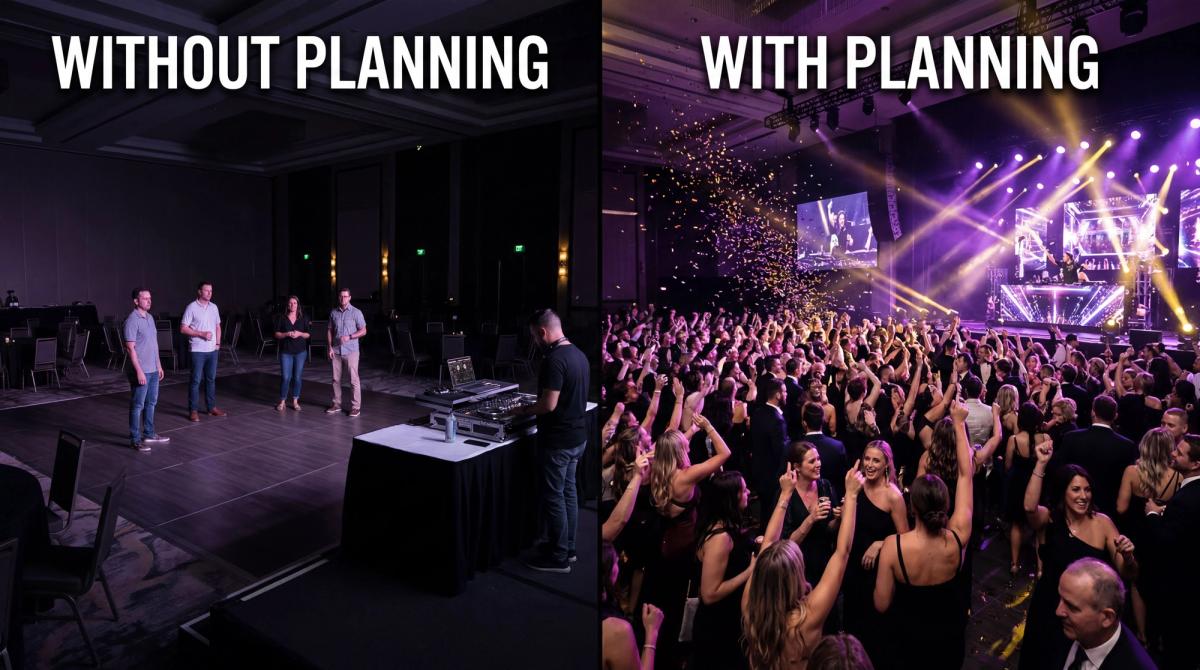
Why Entertainment Gets Deprioritized (And Why It's Always Wrong)
I've been in the trenches long enough to know why this happens. It's not stupidity. It's structural.
Entertainment feels subjective.Venues, catering, AV — those feel like logistics. Hard decisions with hard numbers. Entertainment feels like a "creative" decision, so it gets pushed into the soft, squishy "we'll get to it" category.
Nobody owns the entertainment decision.The event planner handles logistics. Marketing handles messaging. The executive team handles the agenda. Entertainment falls into a gap between all three. It's everyone's responsibility, which means it's nobody's.
There's a budget psychology problem.Event budgets get built top-down. Venue first, catering second, AV third. By the time entertainment comes up, the budget has already been allocated to everything else. Now you're fitting entertainment into whatever's left — which is almost always less than it needs to be.
Here's the thing: none of these reasons are good enough. Because entertainment isn't a line item. It's the experience itself.
What Actually Happens When You Book Entertainment Last Minute
Let me walk you through the real-world consequences, because I've watched this play out hundreds of times.
You lose negotiating power.Entertainment providers know when you're desperate. A four-week timeline doesn't scream "strategic partner." It screams "we need a warm body with a playlist." You'll pay more for less, and you'll have zero leverage to customize the experience.
You get generic performances.The best entertainment isn't one-size-fits-all. A great act needs time to understand your audience, your company culture, your event objectives. Are you celebrating a merger? Launching a product? Thanking a team that just survived a brutal Q4? The entertainment should reflect that. But customization requires lead time — typically for quality corporate acts.
Your event loses its emotional arc.Great events aren't just a sequence of things happening. They have pacing. They build. There's a peak moment. When entertainment is bolted on at the end, it doesn't integrate into that arc. It just... happens. Somewhere between dessert and the coat check.
You burn your internal credibility.Here's the one nobody talks about. When the entertainment falls flat, the person who planned the event takes the hit. Not the committee that deprioritized it. Not the budget holder who left $3,000 for a four-hour evening. The planner. That's not fair, but it's how organizations work.
The 6-Month Rule That Saves Events
If you take one thing from this post, take this:entertainment should be the third thing you book, not the last.
- Venue
- Date confirmation
- Entertainment concept
Not the specific act — the concept. What is the entertainment supposed to achieve? Energy? Connection? Laughter? Spectacle? That decision shapes everything else: the room layout, the AV requirements, the schedule, the budget allocation.
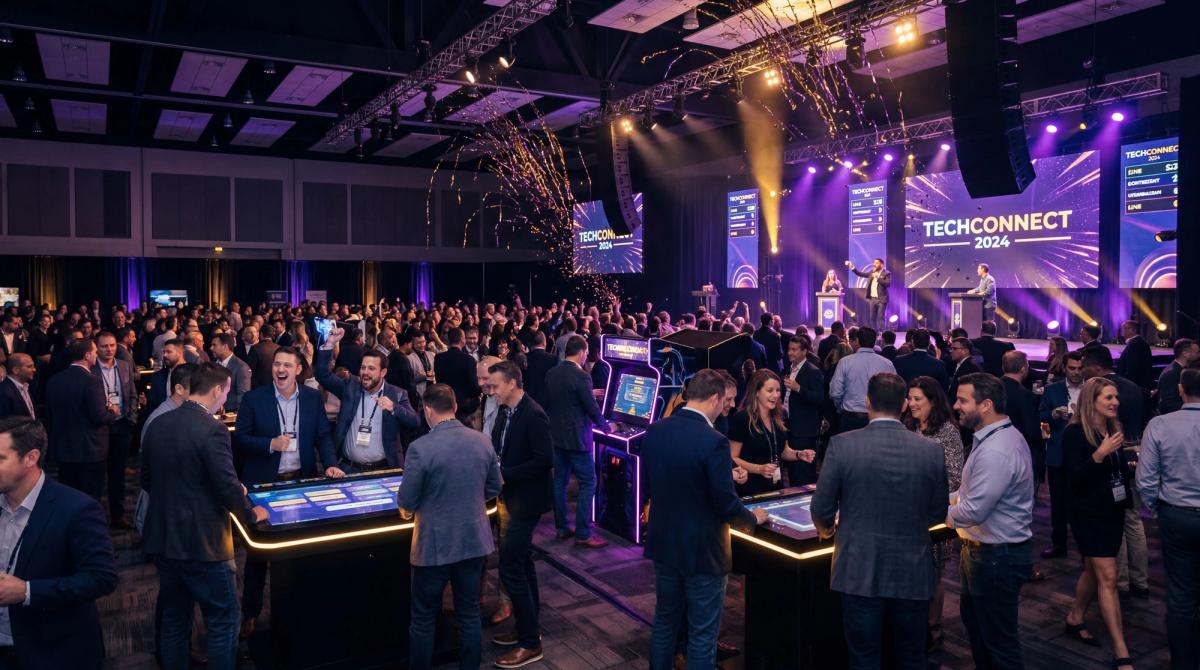
When you lock in the entertainment concept early, something shifts. The event starts to have a point of view. Instead of "dinner and some kind of show," it becomes "an evening where 400 people compete in a live interactive game show that ties into our company values." That's not a party. That's a strategic experience.
This is exactly what we do with — it's not a DJ set you bolt on. It's an interactive entertainment platform that needs to be woven into your event timeline, your AV setup, and your audience flow. The events where it works best? The ones that planned for it from day one.
"But Our Budget Won't Allow Great Entertainment"
I hear this constantly. And respectfully — that's usually not true. What's true is that the budget was spent before entertainment was considered.
Let's do some honest math. A typical corporate event for 200 people might look like:
- Venue: $15,000–$30,000
- Catering: $20,000–$40,000
- AV & production: $10,000–$25,000
- Décor & design: $5,000–$15,000
- Entertainment: "Whatever's left"
"Whatever's left" ends up being $2,000–$5,000. For a four-hour event. For 200 people. That's $10–$25 per person for the thing they'll actually remember.
Now compare that to the $100–$200 per person you spent on food they'll forget by Tuesday.
The budget problem isn't a budget problem. It's a priority problem. Reallocate 15-20% of your total event budget to entertainment from the start, and you'll be shocked at what becomes possible.that actually engage guests. Custom performances that tie into your brand. Technology-driven entertainment that creates shareable moments.
The has been saying it for years: the events people remember are the ones that made them feel something. Not the ones with the best risotto.
The Entertainment-First Planning Framework
Here's a framework I've developed after years of . It's counterintuitive, but it works.
Month 1: Define the emotional objective.Not "we need a band." What do you want people to feel? What should they be talking about the next day? What's the one moment you want everyone to remember?
Month 2: Concept and budget allocation.Lock in 15-20% of total budget for entertainment. Start conversations with entertainment providers. Share your emotional objective, not just your date and headcount.
Month 3: Book the act.Confirm the entertainment and begin customization discussions. Share company context, audience demographics, event flow.
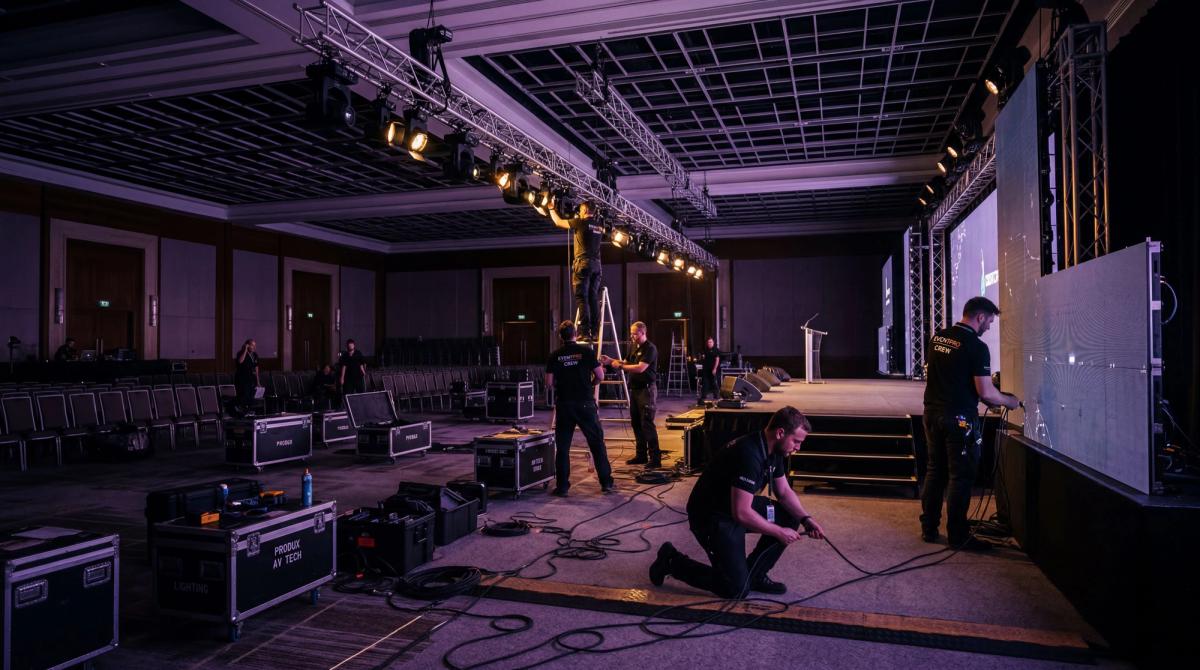
Months 4-5: Integration.This is where the magic happens. The entertainment isn't a separate thing — it's integrated into your event timeline, your room layout, your AV plan. A game show needs different staging than a band. An interactive experience needs different crowd flow than a keynote.
Month 6: Rehearsal and refinement.Final customization, tech checks, run-of-show integration. This is the step that doesn't exist when you book four weeks out.
According to event marketers are under more pressure than ever to prove ROI. Entertainment that's been strategically planned and integrated into the event objectives is measurable entertainment. Last-minute bookings are just... noise.
The Real Cost of "We'll Figure It Out Later"
Let me tell you what "later" actually costs.
It costs you the attendee who flew in from Vancouver and spent four hours at a forgettable event they could have watched on Zoom. It costs you the sales team that was supposed to bond but spent the evening standing around a cocktail table with nothing to do. It costs you the client who came to your gala and left thinking, "That was... fine."
"Fine" is the most expensive word in event planning. Because "fine" means they won't talk about it. They won't post about it. They won't remember it. And they definitely won't feel closer to your brand because of it.
The events that actually work — the ones that drive retention, build culture, close deals, and generate genuine word-of-mouth — those events treated entertainment as the strategic investment, not an afterthought.

The Shift Is Already Happening
Here's the good news. The best — and across the industry — are starting to flip the script. Entertainment-first planning is becoming a real methodology, not just something opinionated blog writers push for.
identifies entertainment deprioritization as one of the top five errors that tank corporate events. The industry is waking up to the fact that logistics without experience is just... logistics.
The question isn't whether you can afford to prioritize entertainment. It's whether you can afford not to. Because your competitor's holiday party? The one everyone in your industry is still talking about? They didn't "figure out the entertainment later."
They figured it out first.
Frequently Asked Questions
How far in advance should you book corporate event entertainment?
For the best selection and customization options, book entertainment 3-6 months before your event. High-demand seasons like the holiday period (November-December) may require 6-9 months lead time. Booking early gives performers time to customize their act to your company and event objectives.
What percentage of an event budget should go to entertainment?
Allocate 15-20% of your total event budget to entertainment. Most planners make the mistake of budgeting venue and catering first and giving entertainment whatever's left. That approach almost always results in a generic, forgettable experience.
Why does corporate event entertainment get treated as an afterthought?
Three main reasons: entertainment feels like a subjective "creative" decision (so it gets deprioritized behind logistics), no single person usually owns the entertainment decision, and event budgets are built top-down with entertainment last in line. All three are solvable with an entertainment-first planning framework.
What's the difference between booking entertainment early vs. last minute?
Early booking gets you: choice of top-tier talent, customization to your brand and audience, proper integration into your event timeline, and better pricing. Last-minute booking gets you: whoever's available, generic performances, no customization, higher costs, and an experience that feels bolted on rather than built in.
How do you measure ROI on corporate event entertainment?
Track attendee engagement metrics (participation rates in interactive elements, social media mentions, post-event survey scores), compare them to events without strategic entertainment, and measure downstream outcomes like employee retention, client relationship scores, and deal pipeline acceleration. Strategic entertainment consistently outperforms generic options across all these metrics.
What types of corporate event entertainment create the most engagement?
Interactive entertainment consistently outperforms passive entertainment for engagement. Formats like audience participation experiences, and technology-driven interactive platforms create 3-5x more social sharing and significantly higher post-event satisfaction scores compared to traditional bands or DJs alone.