

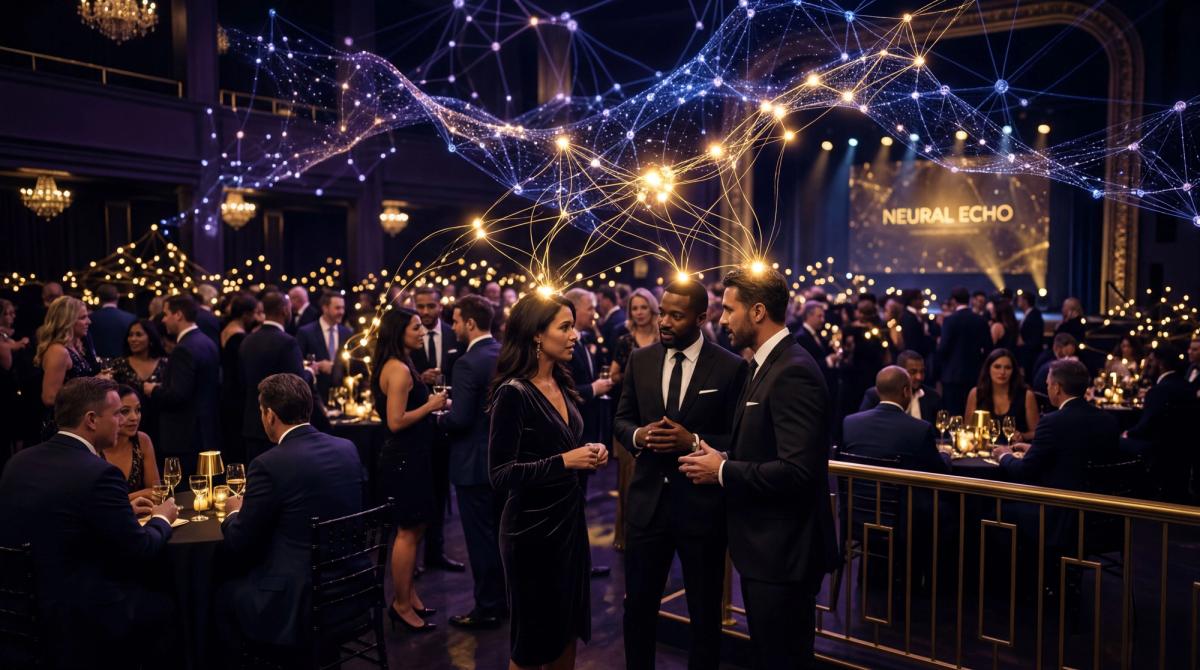
Here's a thought that should terrify anyone who plans corporate events for a living: your attendees will forget almost everything about your event within 30 days.
Not some of it.Almost all of it.
The venue, the centerpieces, the carefully curated lunch menu, the seventeen-slide deck from your VP of Operations — gone. Dissolved into the same cognitive fog where we store childhood dentist appointments and Tuesday afternoon meetings from three weeks ago.
But here's the part that should excite you: the moments they do remember? Those are entirely within your control. Not by spending more money. Not by adding more content. By understanding the architecture of human memory and designing your event around it.
This isn't motivational fluff. This is peer-reviewed cognitive science with direct, actionable implications for how you structure, pace, and punctuate your next corporate event.
Let's get into it.
The Uncomfortable Truth About Event Memory
Your attendees' brains are not recording devices. They don't capture a continuous film of your event and play it back later. Memory is reconstructive — your brain stores fragments, emotional impressions, and a handful of vivid moments, then fills in the gaps with assumptions and generalizations.
Research on shows that when people recall experiences, they reconstruct a visual image or spatial sense of what happened, but many details are drawn from general knowledge rather than actual recollection. They may not remember what people wore, exactly who was there, or what order things happened in.
What they do remember is how the experience made them feel. The emotional signature of your event outlasts every logistical detail by a wide margin.
So the question isn't "How do we make our event better?" It's "How do we make our event more memorable?" And those are very different questions.
The Peak-End Rule: Kahneman's Gift to Event Designers
In the 1990s, Nobel laureate Daniel Kahneman and his colleague Barbara Fredrickson uncovered something that should have rewritten every event planning playbook in existence: people judge an experience based almost entirely on two moments — the peak (the most emotionally intense point) and the end (the final impression).
Not the average. Not the total. The peak and the end.
This is the and the evidence for it is robust. In Kahneman's famous 1993 cold water experiment, participants actually preferred a longer, more painful trial over a shorter one — because the longer trial ended with slightly warmer water. The better ending overwrote the worse experience.
A confirmed the effect across 174 studies: people consistently evaluate experiences based on peak intensity and the ending, while neglecting total duration.
What this means for your event:
Your attendees aren't averaging the quality of every hour. They're remembering the single most intense moment and whatever happened last. That $400 closing keynote speaker who phones it in? That is the memory of your event. That flat, logistically necessary "closing remarks and thank-yous" segment? Congratulations — you just made "meh" the final taste in everyone's mouth.
Design the Peak
Every event needs at least one engineered peak moment — a point of genuine surprise, delight, or emotional intensity that rises above the baseline. This isn't the moment you think is important; it's the moment that creates the strongest emotional response.
Some examples that work:
- A live entertainment act that nobody saw coming (not announced in the agenda)
- An interactive experience that gets people physically out of their seats
- A genuinely moving personal story from someone with real stakes — not a canned "inspirational" talk
- A moment of collective participation where the room does something together
Design the Ending
Stop ending your events with logistics. No one's memory was ever improved by "Don't forget to fill out the survey and the parking garage closes at 11."
The final 15 minutes of your event should be as deliberately designed as the opening. A surprise performance. A callback to something from earlier in the day. An emotional high note that sends people out the door feeling something.
As I wrote in most event timelines frontload the energy and let the last hour die a slow, administrative death. The Peak-End Rule says that's the worst possible strategy.
The Von Restorff Effect: Why Sameness Is the Enemy of Memory
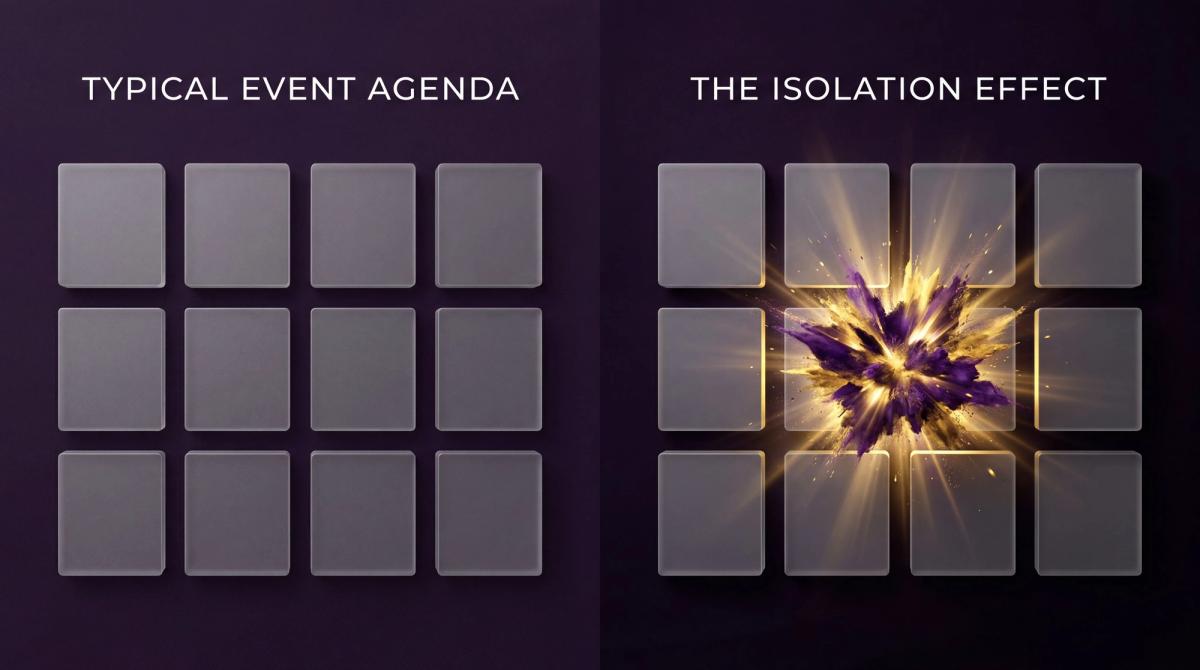
In 1933, German psychiatrist Hedwig von Restorff published a study demonstrating something deceptively simple: when you present a list of similar items with one distinctly different item,.
This is the Von Restorff Effect, also called the "isolation effect," and it has profound implications for event design.
Think about a typical corporate conference day: keynote, panel, breakout, keynote, panel, lunch, keynote, panel, networking. Every segment has roughly the same format, the same energy, the same sensory texture. It's a list of homogeneous stimuli. And according to Von Restorff, homogeneous stimuli are exactly what the brain is designed to forget.
What this means for your event:
Memory requires contrast. If everything looks and feels the same, nothing stands out, and nothing gets encoded as distinctive. You need moments that break the pattern — not just in content, but in format, energy, sensory experience, and emotional register.
Practical Pattern-Breaking
- After three seated sessions, introduce something physical — a live demonstration, a standing activity, a holographic experience that changes the sensory environment entirely
- Vary the format: if you've done two panels, the next segment should be radically different in structure
- Use unexpected entertainment as a "pattern interrupt" between content blocks — not as filler, but as a deliberate memory anchor
- Change the lighting, the music, the room configuration. The brain notices change.
The point isn't novelty for novelty's sake. It's that your brain literally cannot form strong memories from undifferentiated experiences. Distinctiveness is a prerequisite for remembering.
Emotional Encoding: Why Feelings Beat Facts Every Time
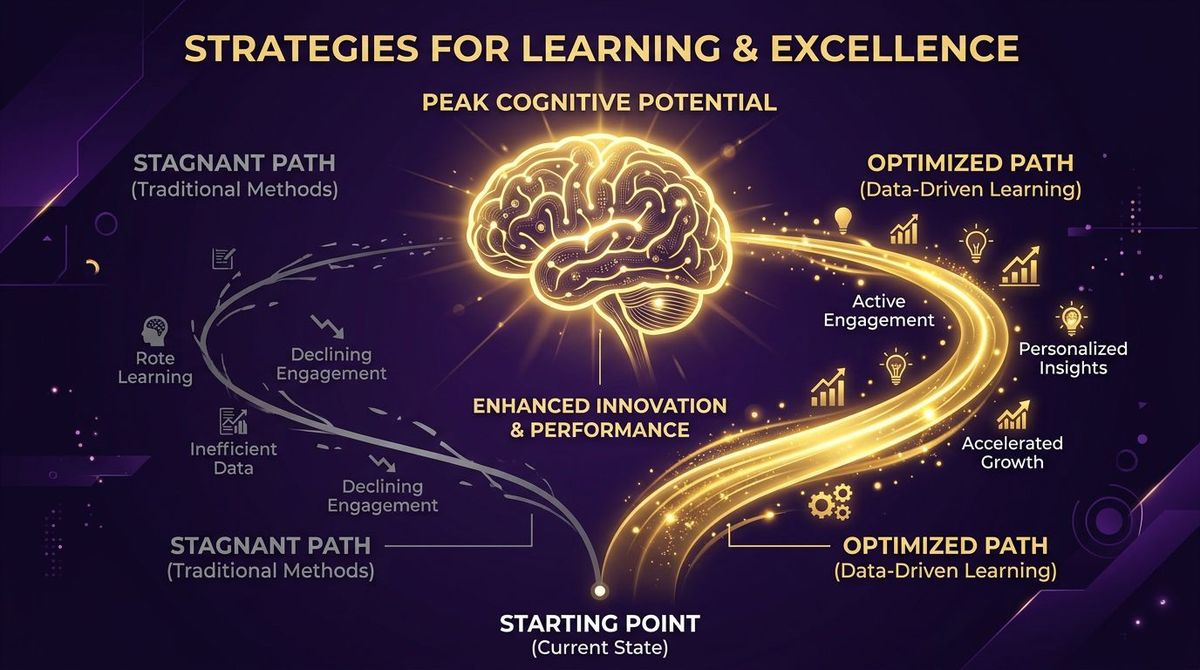
Here's where the neuroscience gets specific. When you experience something that triggers an emotional response — surprise, delight, awe, laughter, even productive discomfort — your amygdala signals your hippocampus to pay attention. This triggers the release of norepinephrine and cortisol, which during and after the event.
This isn't metaphorical. Emotionally arousing experiences are biochemically more memorable than neutral ones. The research on emotional encoding shows that arousing information is more likely to be detected, attended to, encoded, and later retrieved.
Your attendees won't remember the content of that keynote. They'll remember how they felt during it. They won't remember the specifics of the team-building exercise. They'll remember the laughter, the moment of connection, the surprise.
What this means for your event:
Every major moment in your event should be evaluated not by its informational value, but by its emotional payload. Ask: "What will people feel during this?" If the answer is "attentive" or "informed," that's fine for the middle sections. But your peak moments and your ending need to aim higher:surprised, moved, delighted, connected, awed.
This is exactly why live entertainment isn't a luxury line item — it's a memory-encoding mechanism. A doesn't just "add fun." It engineers the emotional peaks your attendees' brains need to form lasting memories.
The Primacy-Recency Effect: Bookend Your Event
Closely related to the Peak-End Rule is the : people tend to remember the first and last items in a sequence better than those in the middle.
For events, this means your opening and closing carry disproportionate weight. The first 10 minutes set the emotional tone and create the "primacy" anchor. The last 15 minutes create the "recency" anchor — the freshest memory attendees carry out the door.
The practical implication:Stop opening your events with housekeeping and logistics. Stop closing them with surveys and announcements. Both of those anchors are wasted on administrative noise.
Open with something that earns attention. Close with something that earns applause.
What People DON'T Remember (So Stop Obsessing Over It)
Let's be honest about where event budgets often go versus what actually drives memory:
Quickly forgotten:
- The specific venue (unless it was extraordinarily unique)
- What was served for lunch
- The exact decor and table settings
- Most of the slide content from presentations
- The swag bag contents
- The Wi-Fi password struggle (okay, they might remember that — negatively)
Persistently remembered:
- The moment everyone laughed together
- The unexpected performance that caught them off guard
- The conversation they had with someone new during an activity
- How the event ended — whether with a bang or a whimper
- The single most emotionally intense moment of the day
- Whether they felt like a participant or an audience member
This isn't to say logistics don't matter. Bad logistics create negative peaks — and those get remembered too (thanks, Kahneman). But once you've cleared the "competent execution" bar, additional spending on logistical polish has diminishing returns on memory formation. The marginal dollar is almost always better spent on experience design.
A Practical Framework: The Memory Architecture Model
Here's how to put all of this together into a planning framework:
1. Map Your Emotional Arc
Before you finalize your agenda, draw the intended emotional trajectory of your event. Where are the highs? Where are the valleys? Is there a clear peak? Does the energy rise toward the end or collapse?
2. Engineer One Undeniable Peak
Identify your single most memorable moment and protect it with your budget, your timeline, and your creative energy. This is the moment people will describe when someone asks "How was the event?" Make it visceral, surprising, or emotionally resonant.
3. Design the Last 15 Minutes Like They're the Whole Event
Whatever you put at the end becomes the memory. Make it count. A surprise callback, a live performance, a moment of collective energy — anything but a slide that says "Thank you" in Calibri.
4. Break the Pattern at Least Three Times
Audit your agenda for sameness. If any three consecutive segments have the same format (sit, listen, clap), insert a pattern interrupt. Change the modality. Move the bodies. Shift the energy. Engage a different sense.
5. Prioritize Emotional Payload Over Informational Density
For your key moments, ask "What will they feel?" not "What will they learn?" The feeling is what survives the 30-day memory filter. The information can live in a follow-up email.
6. Open Strong, Close Stronger
Your first and last impressions are your most valuable real estate. Spend your creative and entertainment budget disproportionately on these bookends.
The Bottom Line
You can't control what people remember. But you can dramatically influence it by understanding the architecture of human memory and designing your events accordingly.
The Peak-End Rule tells you where to invest: the peak moment and the ending. The Von Restorff Effect tells you how to make moments stick: through distinctiveness and contrast. Emotional encoding tells you what drives memory: feelings, not facts. And the Primacy-Recency Effect tells you to protect your bookends.
Your event doesn't need to be perfect for 8 hours. It needs to be unforgettable for 15 minutes.
Design those 15 minutes with the same rigor you apply to the entire event, and you'll be the planner whose events people are still talking about a month later. Instead of the one whose events they vaguely remember attending.
Frequently Asked Questions
What do event attendees remember most after a corporate event?
Research based on Daniel Kahneman's Peak-End Rule shows attendees primarily remember two things: the most emotionally intense moment (the peak) and the final experience (the end). Logistical details like venue, food, and slide content fade quickly, while emotional moments — surprise entertainment, shared laughter, genuine human connection — persist in memory for weeks and months.
How can I make my corporate event more memorable?
Apply three evidence-based principles: engineer at least one emotionally intense peak moment (using or interactive experiences), design a strong ending that leaves attendees on an emotional high, and break up repetitive formats with pattern interrupts that create distinctiveness (the Von Restorff Effect). Focus your budget on experience design rather than incremental logistical polish.
What is the Peak-End Rule in event planning?
The Peak-End Rule, discovered by psychologist Daniel Kahneman, states that people evaluate experiences based primarily on the most intense moment and the final moment — not on the average or total quality. For event planners, this means the single best moment and the closing experience disproportionately determine how attendees remember your entire event.
Why do attendees forget most event content within a month?
Human memory is selective by design. The brain encodes emotionally arousing experiences more strongly than neutral ones through a process involving the amygdala and hippocampus. Most event content — presentations, panels, slides — registers as low-arousal information and doesn't trigger the neurochemical response needed for strong long-term memory formation. Only moments with genuine emotional impact survive the 30-day filter.
How important is event entertainment for attendee memory?
Critically important, and not for the reasons most planners think.and aren't luxuries — they're memory-encoding mechanisms. Live performances and participatory activities create the emotional arousal and pattern-breaking distinctiveness that the brain requires to form lasting memories. They transform passive observation into active, emotionally charged experiences.
Should I invest more in event decor or event experiences?
The science strongly favors experiences. Once your event clears the bar of competent, professional execution, additional investment in decor and aesthetics has diminishing returns on memory formation. The same budget redirected toward a surprise performance, an or a designed peak moment will have a measurably greater impact on what attendees remember and how they describe your event to others.