

You've already made the mistake. You just don't know it yet.
That band you booked off a highlight reel? They sound different live. That DJ who was "affordable"? Wait until you see the sound rental invoice. That comedian your CEO loved at a friend's wedding? Your compliance team is going to have a rough night.
Booking live entertainment for corporate events is one of the highest-leverage decisions in your entire event plan. Get it right, and people talk about your event for months. Get it wrong, and they still talk about it — just not the way you wanted.
Here are the rules nobody puts in the RFP template.
Why Should You Always See the Act Live Before Booking?
Because a highlight reel is a lie. A beautiful, professionally edited, 90-second lie.
Every performer has a sizzle reel. Every sizzle reel contains only the best 1% of their career — the packed room, the standing ovation, the perfect lighting. What it doesn't show you is the other 40 minutes. The awkward transitions. The dead air between songs. The moment the energy dips and they don't know how to get it back.
Before you sign anything, see the act perform. In person. Full set. If geography makes that impossible, request a full unedited video of a recent corporate gig — not a wedding, not a bar show, not a festival. Corporate audiences behave differently. They're sober longer. They're judging harder. They're checking their phones.
If a performer can't provide unedited footage of a corporate event, that should tell you something.
Why Is the Cheapest Entertainment Option Almost Never the Cheapest?
Because the sticker price isn't the price.
A solo acoustic guitarist quotes you $800. Great. But they don't bring their own PA system. That's $400. They need a monitor. That's $150. They don't have a lighting rig. That's another $600 if you want it to look like anything other than a Tuesday open mic. Suddenly your $800 act costs $1,950 — and they still can't fill a ballroom with energy.
Meanwhile, a full-service entertainment company quotes you $3,500 all-in: sound, lights, setup, teardown, liability insurance, a backup plan, and a performance guarantee. The math isn't even close.
This is especially true with — the hidden costs aren't in the performance. They're in everything around it. Sound that doesn't reach the back of the room. Lighting that makes your stage look like a hospital cafeteria. No one managing the timeline, so the act starts during dessert service and competes with 200 forks.
According to contingency budgets of 15-30% are standard practice in event planning. Entertainment is where that contingency gets spent most often — because it's where planners underestimate costs most often.
Why Does Timing Matter More Than Talent When Booking Entertainment?
A world-class act at the wrong moment is just noise.
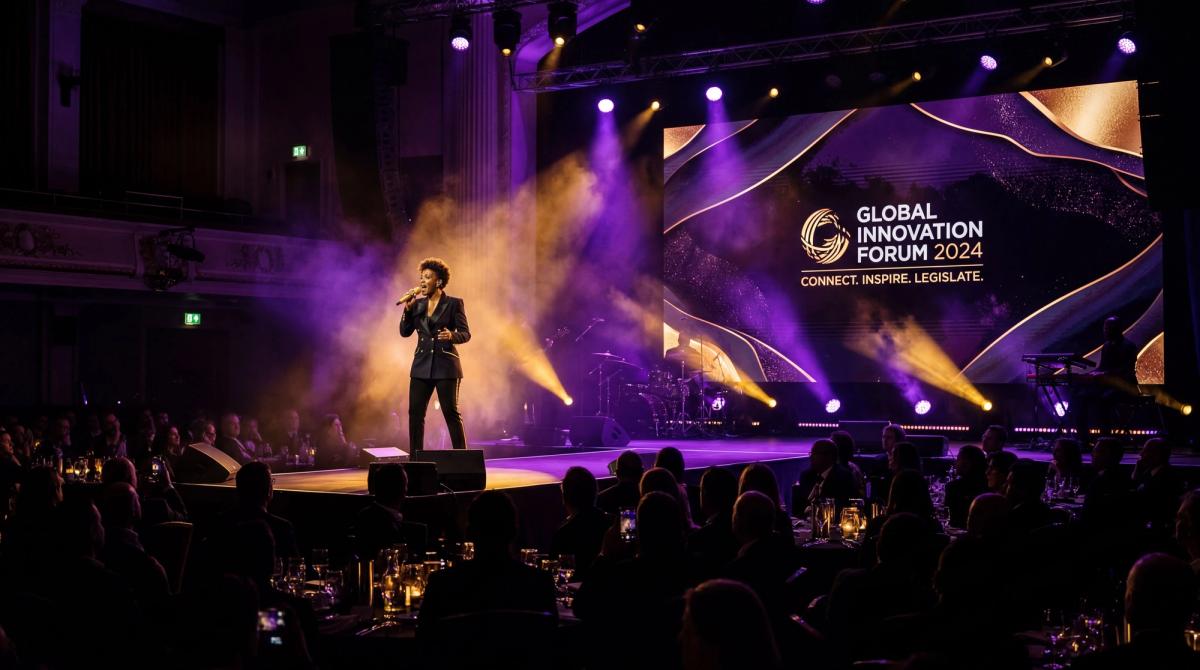
You could book the best cover band in the country. If they start their set at 6:15 PM while half your guests are still in a breakout session and the other half are loading up at the bar, it doesn't matter. The room is empty. The energy is flat. The band plays to 40 people who aren't listening, and by the time the room fills up, the performers have burned through their best material.
Timing is structural. It's not about talent — it's about the flow of the evening. Entertainment should arrive at the moment of highest attention, not compete with food service, keynote speakers, or the networking break everyone actually came for.
The rule: entertainment goes where attention already is. Not where you hope attention will be.
Here's what that looks like in practice:
- Cocktail hour: ambient, low-energy, conversational-friendly
- Post-dinner, pre-awards: high energy, performance-driven, crowd participation
- Late night: dance floor, requests, interactive
- During dinner: background only, unless it's the main event
If your entertainment provider isn't asking detailed questions about your run of show, find a different provider.
How Does Your Entertainment Choice Reflect Your Brand?
Your entertainment is a brand statement whether you intend it to be or not.
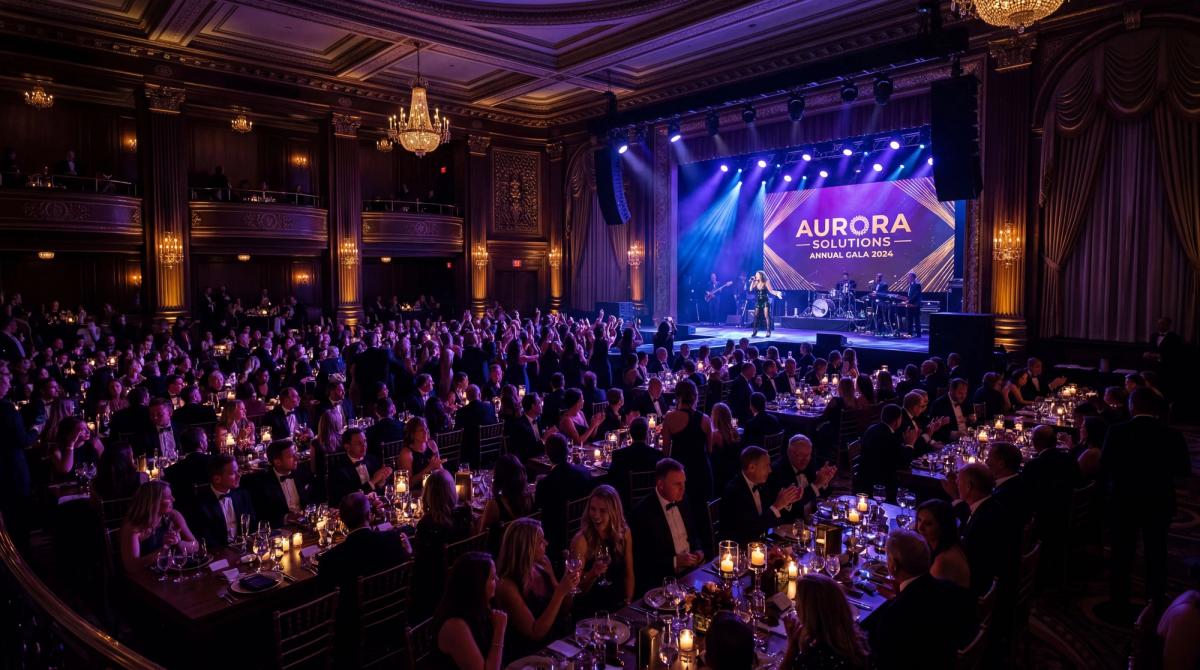
Attendees process your event as a single experience. They don't separate the venue from the food from the entertainment from the AV. It's all one impression. And entertainment — because it's the emotional peak — carries disproportionate weight.
Book a generic Top 40 cover band and your event feels generic. Book an with crowd-driven song selection and real-time engagement, and your event feels innovative. Book a comedian who pushes boundaries too far, and your event feels reckless.
This isn't about playing it safe. It's about intentionality. The entertainment you choose tells your audience what you think of them. Invest in something remarkable, and they feel valued. Phone it in, and they notice.
What Is an Entertainment Rider and Why Should You Take It Seriously?
The rider isn't a list of diva demands. It's a quality guarantee.
When a performer sends you a technical rider specifying a 32-channel mixing console, four monitor mixes, and specific stage dimensions, they're not being difficult. They're telling you exactly what they need to deliver the performance you're paying for. Ignore the rider, and you get a compromised show. Then you blame the act.
According to riders typically include three components: a technical rider (sound, lighting, stage), a hospitality rider (food, beverages, accommodations), and sometimes a security rider. The technical rider is non-negotiable — it exists because the performer has done 500 shows and knows exactly what they need.
The hospitality side? That's often negotiable. Most professional corporate entertainers are reasonable people. But when you cut the technical requirements to save $300 on a monitor wedge, you're cutting the quality of a $5,000 performance. That's not savings. That's sabotage.
Read the rider. Budget for the rider. If you can't meet the rider, have the conversation before the contract is signed — not the day of the event.
Why Should You Always Have a Plan B for Event Entertainment?
Because things break. People get sick. Flights get cancelled. Gear fails.
Every experienced event planner has a contingency plan for entertainment. The best ones never have to use it. But the reason they never have to use it is because they have it.
Your Plan B could be:
- A DJ setup that can run independently if the band has a technical failure
- A pre-built playlist and sound system that can fill 30 minutes of dead air
- A second performer on standby (this is what uRequest Live solves — interactive entertainment that adapts in real time)
- A relationship with a local agency that can deploy a replacement act on 24-hour notice
And here's the critical part: don't tell anyone about your Plan B. Not the client. Not the headliner. Not your team. The moment you announce a backup plan, you create permission for the primary plan to fail. Keep it in your back pocket. If you need it, deploy it seamlessly, and no one will ever know the difference.
Why Should You Book for Your Audience, Not Your Personal Taste?
Your favourite band is irrelevant.
This is the hardest rule for most planners — especially when the decision-maker is a C-suite executive who "knows what good music sounds like." Your CEO loves jazz. Great. Your 400-person audience of sales reps aged 28-45 does not want to sit through a 90-minute jazz quartet after a three-day conference.
Know your audience demographics. Know the purpose of the event. A team-building offsite for engineers requires different entertainment than a client appreciation gala for financial advisors. A product launch for a tech company has different energy needs than a 50th anniversary celebration.
The consistently highlight that attendee satisfaction is driven by relevance, not prestige. A perfectly matched mid-tier act will outperform a mismatched premium act every time.
Ask yourself: what does the audience need to feel at this moment? Then book accordingly.

Why Is the MC More Important Than the Headliner?
Because the MC controls the room for the entire night. The headliner gets 45 minutes.
A great MC sets the tone from minute one. They manage energy between segments. They cover transitions, handle technical delays, keep the timeline on track, and make sure the audience stays engaged through the parts of your event that aren't designed to be engaging — the CEO speech, the award presentations, the sponsor acknowledgments.
A weak MC lets the room drift. Conversations start. Phones come out. By the time your headliner takes the stage, half the audience has mentally checked out. No performer can recover a room that was lost two hours ago.
When you're allocating your entertainment budget, spend disproportionately on the MC. A $2,000 MC who keeps 400 people locked in all night is worth more than a $10,000 headliner who walks into a cold room.

The One Rule That Contains All the Others
Every mistake in this list comes from the same place: treating entertainment as a line item instead of a strategic decision.
Entertainment isn't decoration. It's not the thing you book after the venue, the catering, the AV, and the gift bags. It's the thing your attendees will remember in six months when every other detail has faded. It's the emotional anchor of your event.
Treat it that way. Budget for it accordingly. And hire people who understand that the difference between good entertainment and great entertainment isn't volume — it's intention.
Frequently Asked Questions
How far in advance should you book entertainment for a corporate event?
Six to twelve months for premium acts. Three to six months for mid-range performers. Anything less than eight weeks and you're choosing from whoever is left — not who's best. Peak seasons (November-December for holiday parties, June for galas) require even longer lead times. If your event falls on a Saturday in December, start booking in January.
How much does live entertainment cost for a corporate event?
Ranges are wide. A solo performer or small acoustic act runs $800-$2,500. A professional cover band typically costs $3,000-$10,000. A DJ with full production runs $2,000-$7,000. Celebrity or touring acts start at $15,000 and go up from there. These numbers should include sound, lighting, and setup — if they don't, add 30-50% for production costs. Entertainment typically represents 8-10% of a total event budget.
What should be included in an entertainment rider?
A professional rider includes three sections. The technical rider covers sound system specifications, stage dimensions, lighting requirements, power supply needs, and load-in/load-out logistics. The hospitality rider covers meals, beverages, dressing room requirements, and parking. The security rider — if applicable — covers crowd barriers, backstage access, and personal security. The technical rider is the one that directly affects your audience's experience.
How do you choose the right entertainment for a corporate audience?
Start with three questions: Who is the audience (demographics, industry, culture)? What is the purpose of the event (celebration, motivation, networking)? What emotional state should attendees leave in? Then match the entertainment to those answers — not to your personal preferences, not to what's trending, and definitely not to what's cheapest. Request references from similar corporate events, not just any events.
What's the difference between hiring a band vs. a DJ for corporate events?
Bands deliver visual spectacle and live energy that's hard to replicate. They're best for galas, award shows, and events where the entertainment is the centerpiece. DJs offer flexibility, broader music selection, and the ability to read and adapt to a crowd in real time. They're ideal for networking events, dance portions, and events with shifting energy needs. The best corporate events often use both — a DJ for ambient and transitions, a band or live act for the peak performance window.
Should you let attendees choose the music at a corporate event?
Yes — with guardrails. Crowd-driven music selection dramatically increases engagement because people invest in entertainment they helped shape. The key is using a managed request system that filters inappropriate content and maintains energy flow, rather than handing someone an open mic or an unfiltered request box. This is exactly what interactive entertainment platforms are designed to solve.