

54 Team Building Activities for Small Groups That Actually Land
Real formats for teams of 3 to 10, sorted by group size, energy level, and what you want people to walk away with. No trust falls, no forced fun.
For Teams of 3 to 5
The one-question standup
Skip the status update. Open your next meeting with a single real question everyone answers in one sentence, like the best thing that happened this week outside work. At three to five people it costs ninety seconds and it changes the temperature of the whole meeting.
Pair-and-share problem swap
Each person names one thing they are stuck on, work or otherwise, and the group spends five minutes on each. With a team of four you get four fresh brains on every problem, which a group of thirty could never give you. Small size is the feature here, not the limitation.
Reverse show and tell
Instead of showing off, each person brings something they are bad at and wants help with. It flips the usual bravado and builds trust fast, because everyone is admitting a gap. Only works when the group is small enough that nobody can hide from their turn.
Build-a-story relay
One person starts a story with a single sentence, the next adds a line, around the table you go. With four or five people you loop fast enough to keep it silly and sharp. It is improv without the pressure of an audience, and it surfaces who thinks fast on their feet.
The desert island draft
Pose a scenario, like you are opening a restaurant together, and have the group draft roles, decisions, and one rule they will never break. A small team has to actually agree, which is where you learn how they negotiate. Big groups fracture into cliques and dodge the hard call.
Two-minute passion pitch
Each person gets two minutes to pitch a hobby or obsession as if convincing the group to try it. You learn more about a coworker in two passionate minutes than in two years of hallway small talk. Keep a soft timer so nobody rambles and everyone gets equal air.
Blind drawing pairs
One person describes an image only they can see while their partner draws it without looking. It is a pure communication test wrapped in a laugh. With a small group everyone plays both roles, then compares who gave the clearest instructions and who guessed best.
The gratitude round
Each person calls out one specific thing a teammate did recently that helped them. Specific, not generic. In a group of four this takes three minutes and it lands because it is impossible to fake or hide behind others. Recognition works best face to face and small.
Rapid-fire this or that
Fire off quick either-or questions, mountains or ocean, night owl or early bird, and everyone answers at once by pointing or standing. It is a fast, low-stakes warm-up that reveals surprising splits. A tight group can rip through twenty of these in five minutes and stay loose.
For Teams of 6 to 10
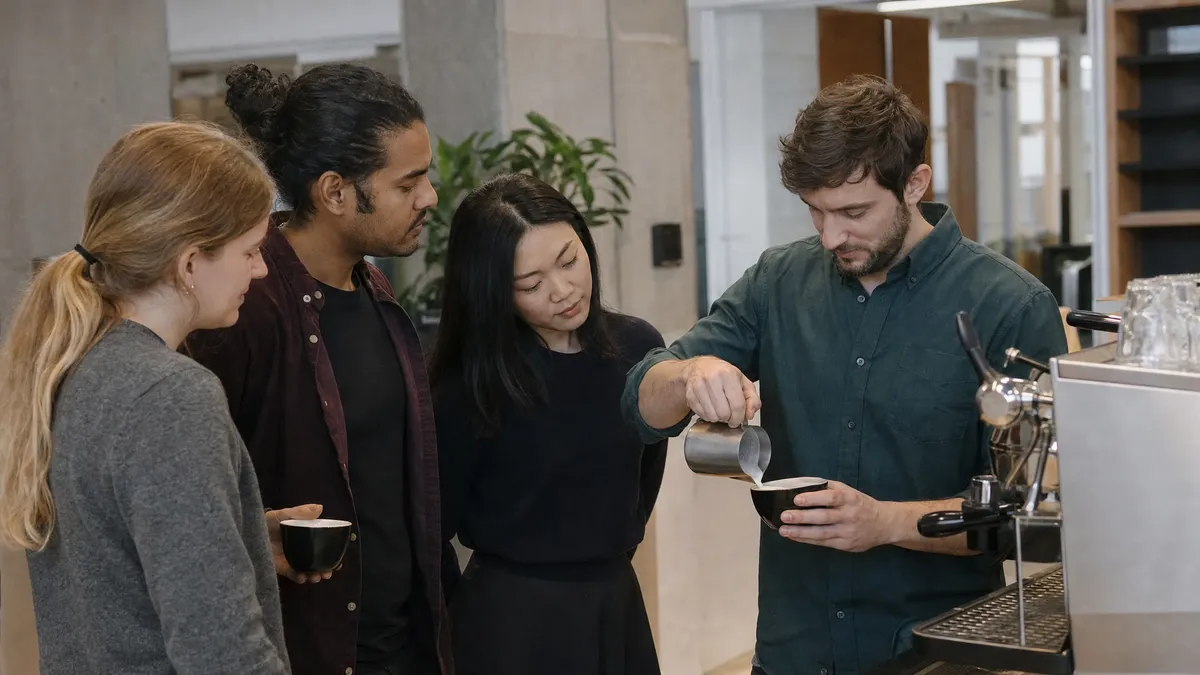
Write your team an anthem
This is the one people remember. A team writes and records an original song together in a couple of hours, no musical experience needed. We built our Song CoLab experience around exactly this, and when we ran it for Spotify they called it transformational. A team of eight is the sweet spot: enough voices to fill a chorus, small enough that everyone writes a line.
Escape-room-style puzzle set
A curated set of locks, clues, and a ticking clock forces a group of eight to split tasks, communicate, and trust whoever cracked the last code. You instantly see who leads under pressure and who quietly solves the hardest puzzle. Six to ten is the ideal count; more than that and half the room stands around.
The mini game show
Turn the group into contestants where everyone votes and competes live. We built Majority Rules for exactly this energy, and it works just as well for ten as for a thousand because every single person is playing, not watching. A small crew means fast rounds and real trash talk.
Cook-off in small teams
Split six to ten people into two or three cooking teams with the same ingredients and a time limit. Coordination, delegation, and a little chaos, then everyone eats the results. Food is the great equalizer and the cleanup conversation is where the real bonding happens.
Human knot
Everyone grabs two random hands across the circle, then the group untangles without letting go. At six to ten people it is solvable but genuinely tricky, and it forces physical communication and patience. Fewer than six is too easy, more than ten turns into a mess nobody can direct.
Team trivia with a real host
Split into small teams and run themed rounds with a host who keeps the banter fast. We have produced trivia for huge corporate crowds with Adam Growe, the longtime host of Cash Cab Canada, but the format shines for small groups too because every table stays in it. Nobody checks out when their table needs their answer.
The marshmallow challenge
Teams get spaghetti, tape, string, and a marshmallow, and race to build the tallest freestanding tower with the marshmallow on top. It is a classic because it exposes how a group prototypes versus over-plans. Twenty minutes, cheap supplies, and a surprising amount of arguing about physics.
Silent lineup
Have the group line up by birthday, or years at the company, without speaking a word. They have to invent a system on the fly using gestures alone. With eight people it is a genuine puzzle in nonverbal communication, and the debrief about how they organized is the real payoff.
Pitch-and-invest
Split into pairs or trios, give each a wild business idea, and have them pitch it to the rest who invest pretend money. It blends creativity, persuasion, and a little competition. Six to ten people gives you three or four pitches and a real vote, which keeps everyone invested, literally.
The story cube
Roll a set of picture dice and the team builds a single connected story incorporating every image, one person per roll. It is collaborative and unpredictable, and it rewards listening because each person has to build on the last. Great for a group that needs to loosen up before real work.
Deep-Conversation Formats
The question deck
Work through a deck of progressively deeper questions, starting light and moving toward the real ones. Small groups are the only place this works, because vulnerability does not scale. Ten people can go somewhere real; a hundred cannot. Let people pass on any card, no explanation needed.
Peaks and valleys
Each person shares the high point and low point of their year, or their career. It is simple and it goes deep fast, and in a small group the shared low points bond people more than any win. Set the tone by going first with something genuinely honest, not a humble-brag.
The origin story round
Everyone tells the story of how they ended up in this room, the winding version, not the resume version. You learn about the career pivot, the lucky break, the risk that paid off. In a small group there is time for the whole arc, and the detours are always the best part.
What I wish you knew
Each person finishes the sentence I wish the team knew that I... It surfaces the things people carry silently, from working styles to life stuff affecting their week. Only run this with a group that already has some trust, and keep it small so it stays safe.
The advice circle
One person puts a real decision or dilemma on the table, and the group offers perspective, no fixing, just honest input. Then the next person goes. A small circle means everyone gets meaningful airtime and the advice is specific, not a chorus of generic takes.
Values auction
Give everyone the same pretend budget and auction off values like autonomy, recognition, security, and adventure. What people spend on reveals what actually drives them. In a small group you can discuss every purchase, which turns a game into a real conversation about motivation.
The failure share
Each person tells the story of a real failure and the one thing it taught them. Nothing builds trust faster than a leader admitting a genuine mistake. Small groups make this safe because there is no crowd to perform for, just a few people listening closely.
Ten years from now
Everyone describes where they hope to be in ten years, work aside, and what they are doing now to get there. It is future-focused and hopeful, and it helps a team see each other as whole people with lives beyond the org chart. Keep it to a small circle so it stays personal.
Skill-Swap and Learning Formats
Teach a five-minute skill
Each person teaches the group one small thing they are good at, from a card trick to a spreadsheet shortcut to folding a fitted sheet. It positions everyone as an expert in something, which flattens hierarchy fast. A small group means everyone teaches and everyone learns in one sitting.
Lunch and learn, member-led
One teammate presents a topic they love over lunch, then answers questions. Rotate weekly. The magic in a small team is that the questions turn it into a real discussion, not a lecture. People bring their whole selves when the audience is people they actually know.
Reverse mentoring pairs
Pair a senior person with a junior one and have each teach the other something, tech to tools, industry context to fresh perspective. It breaks the usual one-way flow of a big org. Small groups let you make thoughtful pairings instead of random ones, which is the whole point.
The 20-minute workshop
Someone runs a hands-on mini workshop in a real skill, negotiation, storytelling, basic design, with the group actually practicing, not just listening. At six to ten people everyone gets a turn to try it and get feedback, which a full-room training session never allows.
Book or article club
Everyone reads the same short article or chapter, then meets to argue about it. Keep it small so it is a conversation and not a panel. The disagreement is the value; a good article that splits the room teaches you how your teammates think and where they push back.
Shadow swap
Pair up and spend an hour watching each other work, then compare notes on what surprised you. It builds empathy for roles people only half understand. In a small team you can arrange every pairing to cross a function line, so nobody shadows their own desk neighbor.
The problem clinic
One person presents a genuine work challenge in detail, then the group acts as consultants for twenty focused minutes. Everyone learns from the thinking, not just the presenter. Small groups keep it honest and specific instead of a vague brainstorm that goes nowhere.
Failure post-mortem, blameless
Walk through a recent project that did not go to plan and dig into the system, not the people. Done in a small trusted group it becomes a genuine learning tool instead of a blame session. The rule is simple: examine the decision, never the decider.
Out-of-Office Micro-Adventures
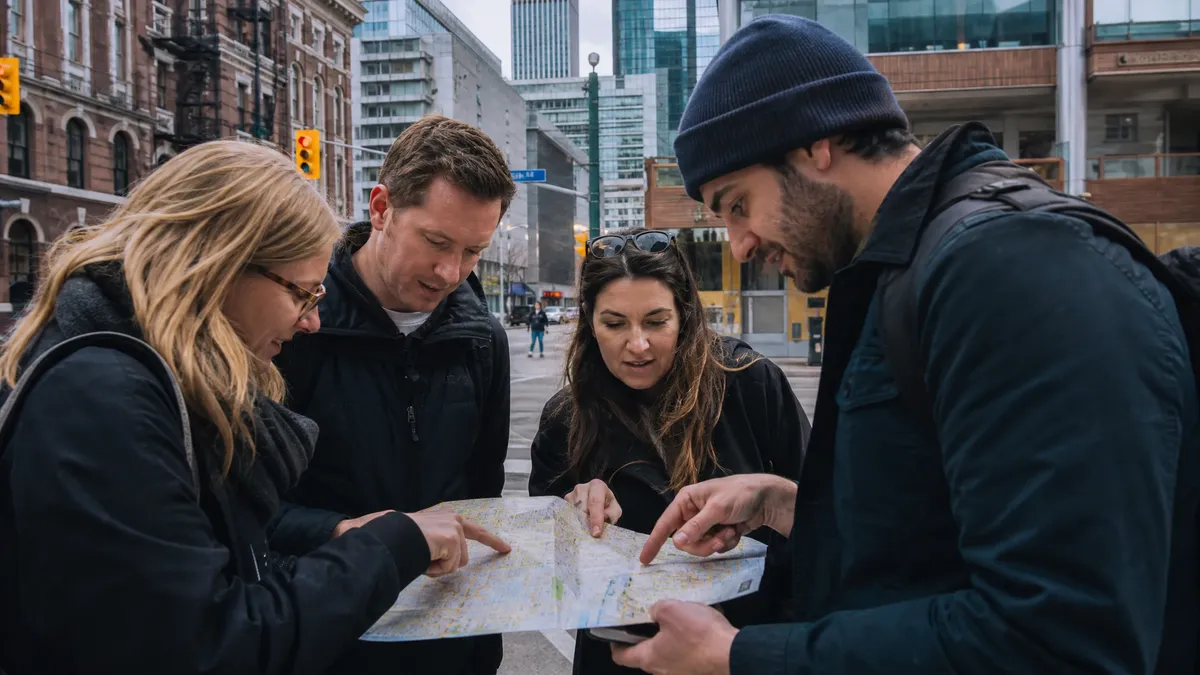
The neighborhood photo hunt
Give the group a list of quirky things to photograph nearby, most creative shot wins. A small team can actually stay together and riff off each other instead of scattering into a logistics nightmare. Ninety minutes, zero budget, and everyone comes back with a story.
Coffee shop crawl
Visit three cafes in an afternoon, one drink each, one topic of conversation per stop. Changing the scenery loosens people up in a way a conference room never will. Small groups fit around one table at every stop, which keeps the whole conversation shared, not split.
Cooking or mixology class
Book a hands-on class where the team makes something together under a pro. The shared not-knowing is the great equalizer, the CEO burns the garlic just like everyone else. Small classes mean real instruction and a meal or a round you actually made together at the end.
The mystery outing
One person plans a surprise afternoon and reveals nothing until you arrive. The anticipation is half the fun, and the surprise gives the group a shared first-time experience. Easy to organize for a handful of people, a nightmare to coordinate for a crowd.
Volunteer for an afternoon
Spend a few hours volunteering together, a food bank, a park cleanup, a build. Doing something that matters bonds a team in a way trust falls never will. A small group can plug into almost any volunteer shift without overwhelming the organization you are helping.
Local landmark you have never seen
Pick the museum, tower, or park in your own city that everyone has meant to visit and never has. Being tourists at home resets the group dynamic. With a small crew you move at one pace and share every reaction instead of losing half the team at the gift shop.
The walking meeting adventure
Take a real discussion outside and walk a route while you talk it through. Movement changes thinking and side-by-side beats face-to-face for honesty. Small groups can actually hold one conversation on a walk; more than five and it splinters into pairs and stragglers.
Farmers market challenge
Give the group a budget and a market, and task them with building a shared meal or snack spread from what they find. It blends a light scavenger hunt with a real payoff. Small teams negotiate the menu together, which is where the fun and the mild arguing live.
Axe throwing or the arcade
Sometimes the point is just to compete at something dumb together. A small group turns any activity bar into a tournament with real stakes and real bragging rights. The low skill floor means everyone can play, and the loser buying the next round is a bonding ritual.
Low-Energy Options That Still Land
The slow lunch, phones away
Book a real lunch, no agenda, one rule: phones in a pile in the middle. Sometimes the whole activity is undistracted time together. It sounds too simple to count as team building, but a tired team that just eats and talks often needs it more than another exercise.
Show and tell from home
Each person brings one object from home that means something to them and tells the short story behind it. It is low-effort and quietly moving, and it works when the team is drained because it asks for a memory, not energy. A small group makes every object worth pausing on.
The appreciation letter
Everyone writes a short note to one teammate about something they genuinely value in them, then hands it over. Quiet, low-key, and it lands hard. No performance required, which is exactly why it works when the group has nothing left in the tank for anything louder.
Puzzle table
Set up a big jigsaw puzzle in a common area and let people drift over between tasks. It is passive, meditative team building that happens sideways while people chat. Small teams actually finish it together over a week, and the shared low-stakes goal is oddly satisfying.
Guided coffee and questions
Grab coffee and work through a few gentle conversation prompts at whatever pace feels right. No timer, no pressure, no winner. For a burned-out team, a calm structured chat does more than a high-energy game that just demands more from people who have nothing to give.
The playlist swap
Everyone adds three songs to a shared playlist and says one line about why. Then you play it in the background while you work. It is nearly zero effort and you learn something real about everyone. The small group means the playlist is short enough to actually get through.
Watch and discuss
Watch a short talk or a great five-minute video together, then talk about it over coffee. It gives a tired team a shared thing to react to without demanding they generate the energy themselves. Small groups turn the discussion into a conversation, not a silent screening.
The wins wall
Each person writes down one win from the last month, big or small, and reads it out. It is a gentle reset that reminds a drained team they are actually getting things done. Takes ten minutes, needs nothing but sticky notes, and lifts the mood without asking for a performance.
Expert Pro Tips
Frequently Asked Questions
What are team building activities for small groups?
What team building works for a team of 5?
What are good team building activities for adults?
How long should a small-group team building activity take?
What team building works for a tired or burned-out team?
Do small-group activities need a budget or facilitator?
Why do small groups work better for team building than large ones?
Want a small-group format your team will still talk about next quarter? Our Song CoLab experience has teams write and record an original anthem together, no musical experience required.
Explore our team building experiences
Get StartedMajority Rules turns any group into contestants voting live from their phones. It works for ten people or two thousand, because everyone is playing, not watching.
Bring the game show to your team
Contact Us