
Corporate Team Building Activities That Actually Earn Their Budget
Fifty-plus formats we book and run, from hosted game shows to retreat offsites, sorted by budget and by whether they change how your team works on Monday.
Hosted Experiences Worth Paying For
Category: Hosted
Song Co-Lab Collaborative Songwriting
Your team writes, records, and produces an original song in a single session, guided by professional musicians. Everyone contributes, from lyric brainstorming to the final vocal take, and the finished track leaves the room as a permanent artifact. We ran it for Spotify and they called it transformational. It is the rare activity where the quiet people and the loud people both walk out proud of the same thing.
Majority Rules Live Game Show
Our signature format: the whole room votes from their phones and the leaderboard moves in real time. It scales from 50 to 2,000-plus people without splitting anyone into spectators. We launched it to 300 event planners in Edmonton and they rebooked us within two months. When the entire audience is a player, the awkward stand-and-watch problem disappears.
Live Band Karaoke
A full professional band backs your team through real songs on a real stage. It beats bar karaoke by a mile because the musicians carry the nervous singers and lift the confident ones. Teams pick songs together, rally around whoever grabs the mic, and generate the stories people retell at the next all-hands. Energy in the room goes vertical the moment the first chorus hits.
Celebrity-Hosted Trivia
We have produced virtual and in-person trivia with Adam Growe, the longtime host of Cash Cab Canada, for large international corporate audiences. A professional host is the difference between a quiz and a show. They read the room, keep last-place teams laughing, and turn dead air into momentum. For distributed teams, this format connects offices across time zones in one live broadcast.
AI Photo Booth Activation
Guests step in and walk out as an oil painting, a movie poster, or whatever theme you brief. The images post to a live gallery the whole room watches fill up. It runs itself in the background of a larger event and quietly becomes the thing people crowd around. The shareable output extends the event onto everyone's phone the same night.
Interactive Game Show Tournament
Teams go head-to-head through trivia, physical challenges, and rapid-fire rounds with a live scoreboard. Natural roles emerge fast: someone leads, someone knows the obscure answer, someone keeps the team calm under pressure. A skilled host keeps every table engaged regardless of rank. It is competition with enough silliness that nobody takes the loss personally.
Murder Mystery
Your group works a fictional case through clues, suspects, and reveals across a dinner or an afternoon. It forces the kind of cross-table talking and deal-making that networking hours never quite produce. Introverts often outshine extroverts here because the puzzle rewards listening over volume. The narrative gives shy participants a character to hide behind, which lowers the social stakes.
Improv Comedy Workshop
A professional troupe walks your team through exercises that teach active listening, yes-and thinking, and composure on your feet. Every drill requires a partner, so nobody succeeds alone. The skills transfer straight to pitches, brainstorms, and hard client conversations. The laughter creates an open, relaxed room that carries into whatever comes next on the agenda.
Drum Circle
Everyone gets a percussion instrument and a facilitator builds the group from a basic beat to a full ensemble. It is teamwork you can hear: the circle only works when everyone listens and stays in sync. No musical background needed, and the physical drumming is a genuine stress release. For a room that has been sitting through sessions all day, the standing, moving energy is a reset.
Retreat and Offsite Formats
Category: Retreat
The Multi-Day Offsite Arc
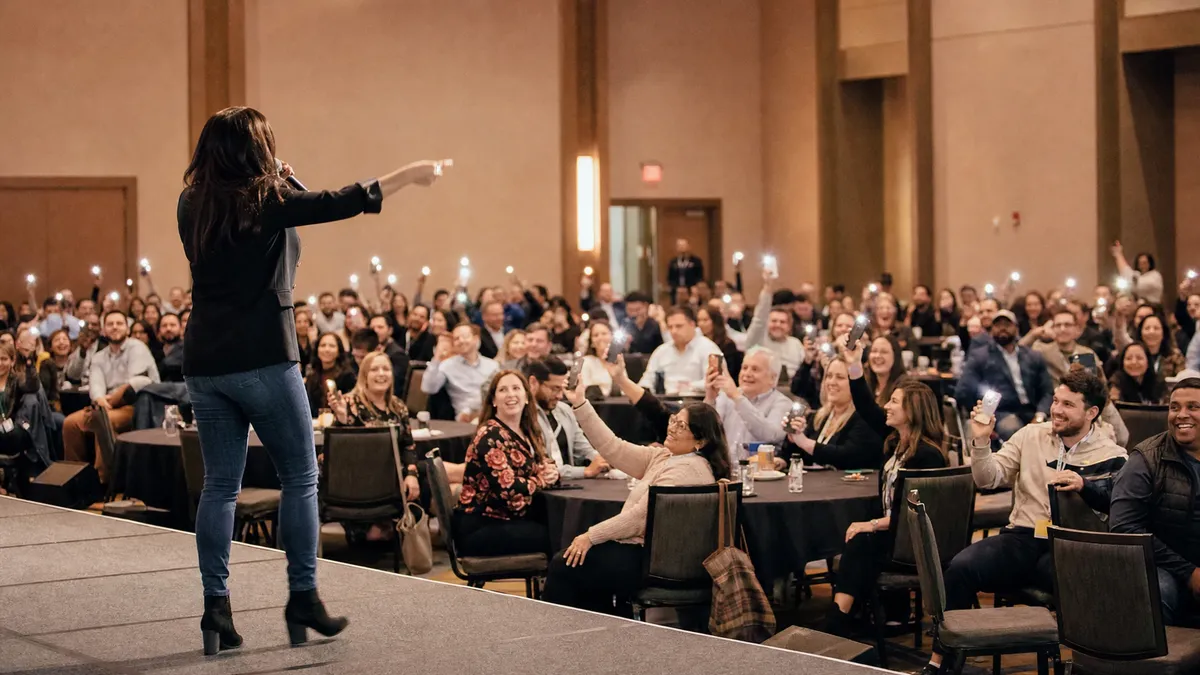
Structure the retreat like a story: open with a low-stakes connector, build to a shared creative or competitive peak, and close with a reflective wrap. The arc matters more than any single activity. Teams that peak too early spend day two flat. Design the emotional rhythm the way you would a conference agenda, with deliberate highs, breaks, and a strong finish.
Songwriting Deliverable Session
A retreat is the ideal setting for Song Co-Lab because you have the time to do it right. The team leaves with a finished anthem tied to the offsite theme, and that recording becomes a touchpoint people replay for months. It is the rare team building output that survives past the bus ride home. It also gives a multi-day retreat a concrete artifact to point back to.
Outdoor Adventure Challenge
Ropes courses, kayaking, or a guided hike put teams in a shared physical challenge where titles stop mattering. The junior person who is a strong climber suddenly leads the senior VP. That role reversal is the point, and it resets hierarchies in ways a boardroom never will. Choose a difficulty tier that includes the least athletic person on the team, not the most.
Culinary Competition
Teams plan, cook, and plate a dish against the clock under a chef's guidance, then pitch it to judges. It blends creativity, delegation, and budgeting into something that tastes like a night out rather than a corporate drill. Roles sort themselves fast, from the planner to the presenter to the person who just chops. Everyone eats the result together, which is a built-in reason to keep talking after the timer stops.
Escape Room Circuit
Portable rooms turn breakout spaces into timed puzzle races for teams of four to eight. Under a ticking clock, teams have to communicate cleanly, divide tasks, and combine different thinking styles. It reveals how the group actually behaves under pressure without feeling like an assessment. Running identical rooms in parallel lets teams compete on the same challenge for a fair finish.
City-Wide Scavenger Race
An Amazing Race format sends teams across a neighbourhood solving clues and completing photo challenges for points. It gets people off the retreat property and into a shared adventure with a competitive spine. The best challenges force teams to interact with strangers or each other, which breaks cliques fast. It doubles as a way to explore an unfamiliar retreat destination together.
Fireside Storytelling
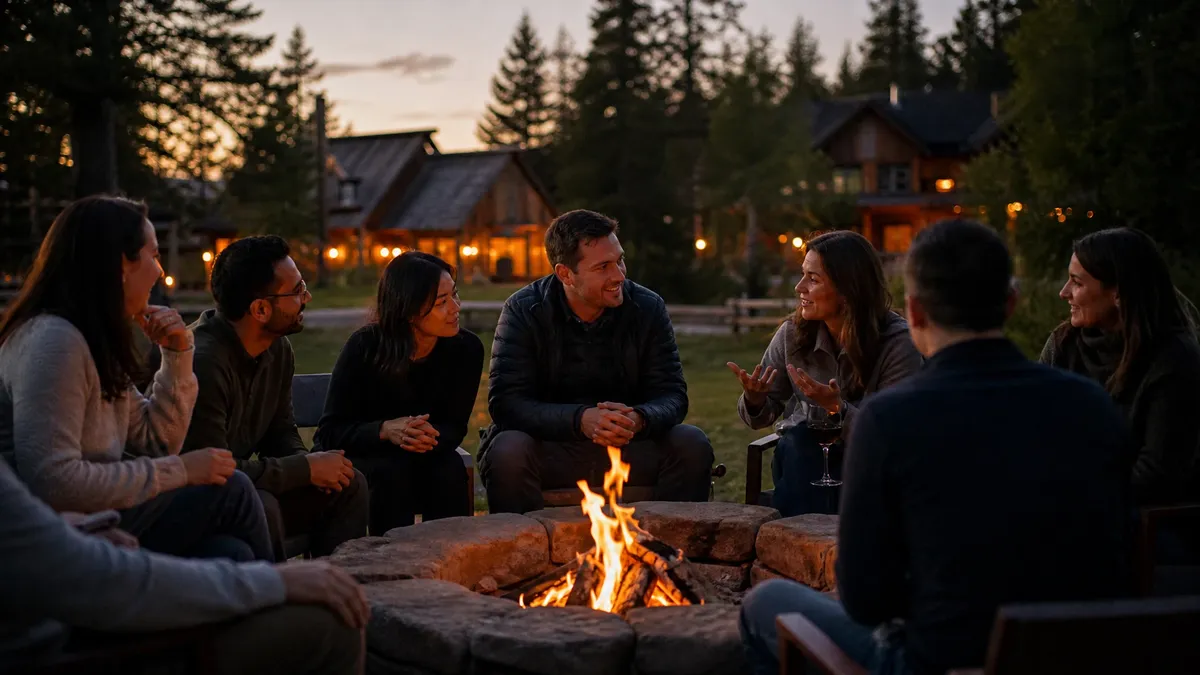
A facilitated evening where people share a real story on a prompt, structured so it never turns into forced oversharing. Done well, this is where colleagues become people to each other. The trick is a skilled facilitator who sets boundaries and models the right depth. It is the quiet counterweight to a day full of high-energy competition.
Give-Back Build
Teams assemble bikes, pack meals, or build kits for a local charity, then see them handed over. It channels team effort toward something outside the company, which lands differently than an internal game. The shared purpose does bonding work that pure fun cannot. Pick a cause with a visible, immediate recipient so the impact feels real rather than abstract.
Movement and Wellness Block
A morning yoga flow, a guided stretch, or a group walk resets a retreat that has been all boardroom and buffet. It is not a headline activity, but it keeps energy and attention alive across a long agenda. Optional participation matters here so it never feels like mandated wellness. Slot it between heavy sessions to break up sitting and clear heads.
Quarterly All-Hands Formats
Category: All-Hands
Live Audience Voting Round
Drop a Majority Rules segment into the all-hands where the whole room votes from their phones on company questions and predictions. It converts a passive update meeting into a live event nobody scrolls through. The data on screen is a talking point, and the competition wakes the room up. It works whether the audience is 50 people in a room or thousands on a stream.
Opening Trivia Icebreaker
Kick the meeting off with a five-minute trivia burst on the quarter's wins, new hires, or product facts. It rewards people for actually knowing what the company did, and it starts the meeting with energy instead of a slow slide deck. Keep it short so it primes the room rather than derailing the agenda. Fresh questions each quarter keep it from going stale.
Cross-Team Two Truths
Pull two people from different departments and run a fast round of Two Truths and a Lie about each. It is a 90-second window into someone most of the room only knows from email. Rotating the spotlight across quarters slowly introduces the whole company to itself. It is nearly free and needs no equipment beyond a microphone.
Minute to Win It Relay
A few quick physical challenges pull volunteers on stage while the rest of the room cheers. It injects motion into a sit-down meeting and creates instant highlight-reel moments. Because it is short and volunteer-driven, nobody feels dragged into it. The stakes are low and the payoff in room energy is high.
Team Lip Sync Bit
A department preps a short lip sync performance to open or close the meeting. It takes almost no skill, just commitment, and the buildup gives that team something to rally around beforehand. The reveal becomes a recurring all-hands tradition people compete to top. Rotating which team performs each quarter spreads the fun and the ownership.
Recognition Segment With Teeth
Build a structured moment where peers, not just managers, call out specific work from the quarter. Recognition done vaguely is noise, so require a concrete example with every shoutout. It is the cheapest retention tool you have and it belongs in every all-hands. Naming the actual work, not just the person, is what makes it land.
Company Family Feud
Run a Family Feud round using survey answers you collected from staff the week before. Seeing the aggregate opinions of your own company on screen is genuinely funny and revealing. It turns an internal poll into a shared laugh and a competitive round. The survey step also gives quieter employees a low-pressure way to contribute.
Rapid Demo Showcase
Give three teams two minutes each to demo something they shipped, presented with energy rather than a status report. It is team building disguised as visibility: people see peers' work and the presenters get a real audience. Tight time limits keep it punchy and force clarity. It also surfaces wins that would otherwise stay buried in one team's channel.
Executive Team Formats
Category: Executive
Facilitated Strategy Offsite
Leadership teams need a neutral facilitator more than any other group, because rank distorts every conversation when an insider runs the room. A skilled outside facilitator surfaces the disagreements people are sitting on. Pair the hard strategy work with one genuinely fun shared activity so the group bonds, not just debates. The mix of candor and play is what makes senior teams actually open up.
Peer Coaching Circle
Each leader brings one real challenge and the group coaches through it in structured rounds. It builds the trust that lets a leadership team disagree well later. The structure keeps it from turning into a therapy session or a gripe circle. Rotating the hot seat means everyone both gives and receives, which levels the room.
Leadership Improv Intensive
Improv strips the armor off senior people faster than any workshop, because you cannot fake your way through a scene. It teaches the composure and listening that hard leadership conversations demand. Watching a CEO fumble a scene and laugh about it does quiet wonders for a team's psychological safety. The shared vulnerability is the real curriculum, not the comedy.
Vision-Setting Through Song
Run Song Co-Lab with the leadership team and aim the lyrics at the company's direction for the year. Forcing a group to agree on what to say in a chorus is a surprisingly sharp alignment exercise. The output is a shared statement of intent that is easier to rally the wider company around than a slide. It also gives a serious offsite a creative release valve.
Leadership Cook-Off
Put the executive team in aprons against the clock and watch how they delegate when the stakes are just dinner. Low pressure reveals real working styles: who plans, who improvises, who cannot let go of control. It is a diagnostic disguised as a competition, and the debrief afterward is where the value sits. Sharing the meal they made keeps the conversation going past the timer.
Working-Style Workshop
A facilitated session on how each leader actually operates, using a shared framework, gives the team a common language for friction. Once people can name a style difference, they stop reading it as a character flaw. Keep it practical and tied to real recent conflicts, not abstract personality typing. The payoff is fewer misreads in the meetings that follow.
War-Room Simulation
Drop the leadership team into a fictional crisis and make them decide together under time pressure. It rehearses the muscle of coordinated decision-making before a real crisis demands it. The simulation exposes gaps in how the team communicates when the pressure is on. The debrief is where a leadership group learns how it actually behaves under fire.
Hosted Leadership Dinner
A private dinner with a hosted entertainment element, from a strolling magician to a short trivia set, keeps a leadership gathering from collapsing into shop talk. The programming gives the evening structure and shared moments to react to. It signals the company invested in the team, which senior people notice. The right host reads the table and keeps the energy warm without forcing it.
Measuring Whether It Worked
Category: Measurement
Pre and Post Pulse Survey
Ask three questions before the event and the same three a week after: do you feel connected to your team, do you trust your colleagues, would you recommend working here. The delta is the closest thing to proof team building has. One survey with no baseline tells you nothing. The comparison is the entire point, so send the first one before anyone walks in.
eNPS Movement
Track employee net promoter score across quarters and watch whether team building events line up with upticks. It is a blunt instrument, but a sustained pattern is a real signal to leadership. One data point proves nothing, so look at the trend across several quarters. Tie the reading to a consistent survey cadence so the numbers stay comparable.
Cross-Team Connection Count
A few weeks out, ask people to name colleagues from other teams they now feel comfortable reaching out to. If the number went up, the mixing worked. This measures the actual goal of most team building, which is breaking down silos, not just having fun. It is more revealing than a satisfaction score because it tracks behavior, not mood.
Participation Rate
Track how many people actually took part versus stood at the edge checking their phones. High passive attendance is a design failure, not a scheduling one. If a third of the room opted out, the format was wrong, and that is the metric telling you to change it. It is the simplest signal available and the one most often ignored.
Manager Check-In Signal
Ask managers a fortnight later whether they have noticed any shift in how their team collaborates. It is qualitative, but managers see the day-to-day that surveys miss. Their read is an early indicator of whether anything actually stuck. Collect it consistently after every event so you build a pattern rather than a one-off impression.
Retention as the Long Signal
Consistent, well-designed team building correlates with retention over the long run, and retention is the number the budget conversation actually turns on. You will not tie a single event to a single resignation, but a pattern of investment shows up in the exit interviews you never have to run. Frame it to leadership as a retention line, not an entertainment line.
The Shared Artifact Test
Ask whether people are still referencing the event weeks later, whether that is a Song Co-Lab recording, an inside joke from the game show, or a photo on a desk. Durable references are the sign it went deeper than a good afternoon. Activities that produce a tangible artifact almost always outscore ones that do not. If nobody mentions it a month on, the format was disposable.
Content Engagement
Watch how the photos and video from the event perform on your internal channels. High engagement means people are re-living the positive emotion, which is the bonding effect extending itself for free. Low engagement usually means the event did not generate anything worth resharing. Post the recap within 48 hours while the feeling is still fresh.
Budget Tiers: What You Get at Each Level
Category: Budget
Facilitated Icebreakers ($)
Structured icebreaker games and question rounds led by an internal host cost almost nothing beyond time. Done with intent, they still deliver real connection, especially for newer or fully remote teams. The ceiling is low but so is the risk. This is the entry tier: a smart way to test whether your group engages before spending on production.
In-House Trivia Night ($)
A trivia or games night your team runs in a booked room, with a volunteer host and a prize, lands in the low-cost tier. It is limited by your host's stage skills, but for a small team it is plenty. The gap between this and a professionally hosted version is real, though, and shows up the moment energy dips. Treat it as the budget-conscious floor, not the ceiling.
Field Day Games ($)
Minute to Win It challenges and relay games need little more than props and an open space. They punch above their cost because the physical, silly energy bonds people fast. The tradeoff is that they suit smaller groups and warmer weather better. For a low spend and a light day, they are hard to beat.
Hosted Game Show ($$)
A professionally hosted and produced game show with proper AV, a real host, and custom rounds sits in the mid tier and it is where the quality jump becomes obvious. This is the level where the event stops feeling internal and starts feeling like a show. For most corporate groups, this is the sweet spot of cost against impact. It scales cleanly from a department to a full company.
Live Band Karaoke ($$)
A full band, a stage, sound, and lights put live band karaoke in the mid tier, and the production is exactly what separates it from a cheap alternative. The musicians carry the room and make everyone sound better than they are. It doubles as both team building and the entertainment for the evening. For a party that also needs to bond a team, it earns its cost twice.
Escape Room Circuit ($$)
Bringing in portable escape rooms with facilitators and branded puzzles lands mid tier, priced by the number of rooms and the customization. It delivers a premium, high-production puzzle experience without a headline budget. The parallel-room format keeps everyone active at once. For a group that likes a challenge, it is a reliable mid-range choice.
Song Co-Lab Full Production ($$$)
A fully produced Song Co-Lab session with professional musicians, recording, and a finished track sits in the premium tier, and the artifact is what justifies the spend. This is the level Spotify called transformational. You are paying for a lasting output, not just an afternoon. When the goal is a memory that survives the year, this tier delivers it.
Celebrity-Hosted Event ($$$)
Bringing in a recognized host, like the Cash Cab Canada host we have produced trivia with, moves you into the premium tier. The name draws attention and the professionalism guarantees the room stays with you. It suits big-audience moments, conferences, and events where the guest list expects a marquee element. For a flagship gathering, the star power earns its line item.
Multi-Day Destination Offsite ($$$)
A full retreat with travel, venue, and a designed multi-day activity arc is the top of the budget, and the return comes from the concentrated time together, not any single line item. This is the tier where a team can genuinely reset. It demands the most planning and the clearest goals to justify the outlay. Done with intent, it does what no single-day event can.
Expert Pro Tips
Frequently Asked Questions
What are the best corporate team building activities?
How much does corporate team building cost?
What team building works for a corporate retreat?
What are good team building activities for large groups?
How do you measure whether team building actually worked?
How far in advance should you book corporate team building?
Our live game show turns the whole room into players, from 50 people to 2,000-plus. See how it works for your event.
Bring Majority Rules to Your Team
Get StartedTell us your group size, your goal, and your budget. We will design an experience built to change something, not just fill an afternoon.
Design a Custom Team Building Event
Contact Us