
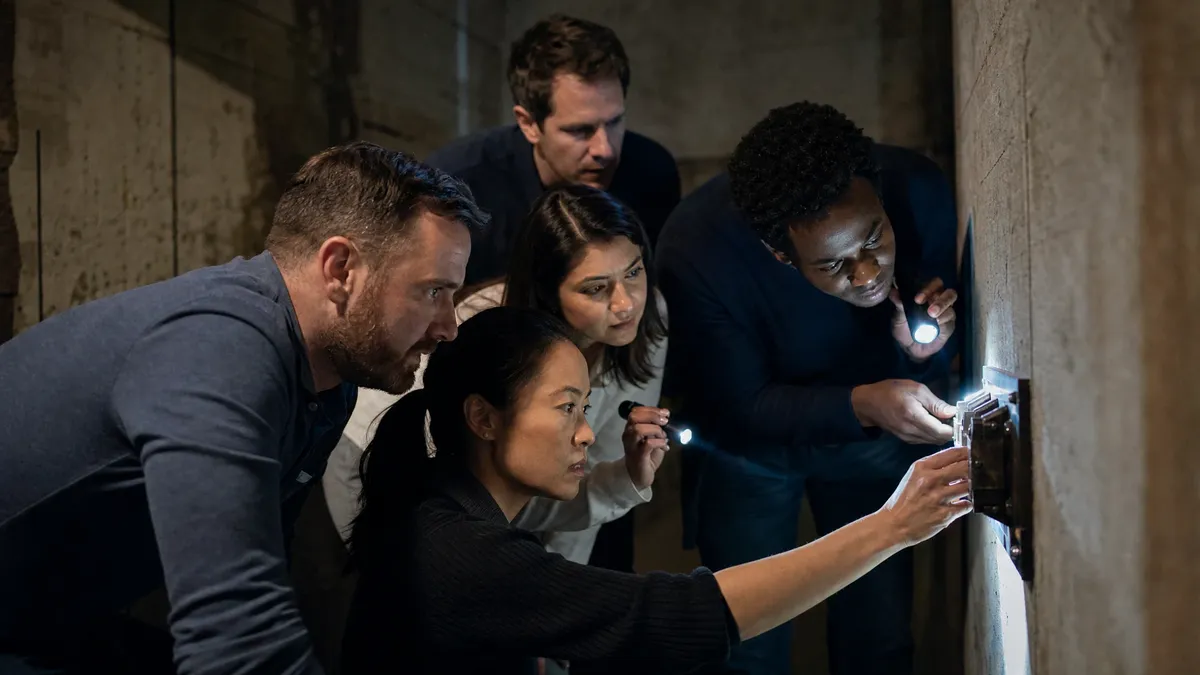
Escape Room Team Building: How to Run One Your Team Actually Talks About After
The psychology of why locked rooms bond teams, plus how to book it, build a DIY office version, run it virtually, and debrief it so the lessons outlast the countdown.
Why Escape Rooms Work for Teams: The Psychology
Shared Pressure Reveals Real Roles
A ticking clock strips away polite meeting behavior and shows you how people actually operate when the pressure is real but the risk is fake. Someone naturally starts coordinating, someone else goes heads-down on a single puzzle, someone keeps morale up. These roles are usually invisible at work until a crisis exposes them, and an escape room compresses that discovery into an hour.
Small Wins Build Momentum
Escape rooms are engineered as a chain of tiny victories, a lock pops, a hidden drawer slides open, a code works, and each one releases a hit of collective dopamine. That rhythm of frequent, shared success is exactly what a strong working team feels like on a good project. It teaches people what winning together actually sounds like in the room.
Communication Becomes Visible
In a locked room full of clues, information hoarding gets punished within minutes. The team that shouts out every number, symbol, and dead end solves faster than the team of individuals quietly working their own corner. People feel the cost of poor communication in real time, which lands harder than any slideshow about it ever could.
The Timer Forces Delegation
You cannot solve a good escape room by having one person do everything, the clock will not allow it. The team has to split up, trust each other with separate puzzles, and pool the answers. That forced delegation is a live rehearsal of the exact skill most teams struggle with at work: letting go and trusting a teammate to own a piece.
Failure Is Safe Here
A wrong guess in an escape room costs nothing but a laugh, which makes it one of the rare workplace settings where people take real risks and speak up without fear. That psychological safety is the whole point, and it is a muscle teams can carry back to the office. People who risk a bad idea in the room get a little braver about it at their desk.
Everyone Has a Job
Good escape rooms are built with parallel puzzles so a team of six is never watching one person work. Physical searchers, pattern-spotters, math people, and big-picture organizers all have something to do at once. Nobody stands on the sidelines, which is the difference between an activity a team participates in and a show they watch. People are tired of being talked at, and participation beats presentation every single time.
It Levels the Org Chart
The VP has no advantage over the intern when the puzzle is a jigsaw or a hidden cipher. That flattening is enormously valuable for teams where hierarchy usually shapes who speaks. Junior people get seen solving problems, senior people get to follow someone else's lead, and everyone leaves with a slightly different read on each other.
How to Run an Escape Room Team Building Event
Decide: Book a Venue, Host On-Site, or DIY
You have three real options. Book a commercial escape room (easiest, but caps at whatever the room holds and can splinter a big group across time slots), hire a mobile or hosted version that comes to your office or event space (scales far better for larger teams), or build a DIY office version yourself (cheapest, most customizable, most work). Match the choice to your group size and how much control you want over the story.
Right-Size Your Teams
The sweet spot per room is 4 to 6 people. Below four, tough rooms overwhelm a small group; above six or seven, people start standing around with nothing to do and check out. If you have 40 people, that is roughly six to eight teams, not one giant room, so plan for parallel rooms, multiple heats, or a format built to run several teams at once.
Mix the Teams on Purpose
Do not let people self-select into their usual lunch crew, that defeats the entire point. Deliberately mix departments, seniority levels, and people who rarely work together. The goal is new connections, not reinforcing the cliques that already exist. A little discomfort in the team assignments is a feature, not a bug.
Set the Stakes Before You Start
A light competitive frame lifts energy: fastest team wins, most clues found, or a simple did-you-escape leaderboard across multiple rooms. Keep the prize small and the tone playful. The competition should make people lean in, not turn on each other. You want bragging rights at Monday's standup, not a grudge.
Brief the Rules and the Point
Spend two minutes up front on the rules (how hints work, what is off-limits, the time limit) and one sentence on the point: this is about how you work together, not whether you escape. Setting that expectation early gives permission to fail and takes the sting out of a team that runs out of time. It also primes people to notice their own teamwork, which makes the debrief land.
Assign a Neutral Observer
For serious team development, station a facilitator or observer in or near each room whose only job is to watch the dynamics, not the puzzles. Who took charge? Who got frozen out? When did communication break down? Those notes are gold for the debrief and turn a fun hour into genuine insight. Most people cannot see their own team dynamics while they are inside them.
Protect the Debrief Window
Block 20 to 30 minutes after the room for a structured conversation, and defend it like part of the event, because it is the most important part. The escape room generates the raw material; the debrief is where it converts into something a team keeps. Skip it and you have booked an expensive game, not team building. This is the single most-skipped step and the one that separates a designed event from a filled slot.
Scale It for a Big Group
For 50, 200, or 500-plus people, one escape room does not work, you need a format built to run every team at once with a shared clock and a live leaderboard. This is the territory where a hosted, tournament-style experience earns its keep. We built our live game show Majority Rules on exactly this problem, giving a whole room of 300-plus people something to do with their phones at the same time, and the same principle applies to large-scale escape formats: nobody watches, everybody plays.
DIY Office Escape Room Ideas: Build Your Own Puzzles
Start With One Story, Not One Puzzle
The mistake most DIY builders make is designing puzzles first and stapling a theme on later. Flip it. Pick a single narrative (the server room is locked and the code is hidden, the CEO left a treasure hunt, a fictional saboteur planted clues) and let every puzzle serve that story. A clear premise is what makes a pile of locks feel like an adventure instead of a worksheet.
The Locked Box Chain
The backbone of almost every DIY escape room is a series of small lockboxes and padlocks (number locks, letter locks, directional locks, key locks) where solving one puzzle gives the combination to the next. Cheap lockboxes and a variety of padlock types are the core kit, and you can build an entire hour around a five-lock chain. Each opened box reveals the next clue and a satisfying click of progress.
Cipher and Code Puzzles
A simple substitution cipher, a Caesar shift, or a decoder key hidden elsewhere in the room turns a string of symbols into a lock combination. These reward the pattern-spotters on the team and create a natural division of labor while others search for the key. Keep the cipher solvable in a couple of minutes, because a code nobody can crack stalls the whole room.
Hidden-in-Plain-Sight Clues
Numbers written on a wall calendar, a combination spelled out in the titles of books on a shelf, a clue printed in tiny text on a coffee mug. The best DIY clues are objects that look like ordinary office decor until someone realizes they mean something. This teaches teams to question assumptions, which is exactly the transferable skill you want.
The Riddle-to-Directory Puzzle
Write riddles whose answers point to specific office locations or objects (the place where coffee is born, the machine that eats paper) and stash the next clue there. This gets people out of their chairs and physically moving, which keeps energy high. It also uses your actual office as the game board, which no commercial room can match for inside jokes.
Physical Assembly Puzzles
Scatter torn pieces of a map, a photo cut into a jigsaw, or a clue that only reads correctly when several transparent sheets are stacked. Assembly puzzles force collaboration because no one person can finish them alone, and they give the hands-on people on the team a clear job. The reveal of an assembled image is a natural momentum spike.
The Invisible Ink Reveal
A UV flashlight and invisible-ink pen let you hide a clue that only appears under blacklight, written directly on a wall, a document, or the inside of a drawer. It is a cheap effect that feels genuinely magic and teaches teams to re-examine things they already looked at. One UV pen and a couple of small flashlights cover a whole room.
The Deliberate Red Herring
Plant one puzzle or object that looks important but leads nowhere. A good red herring teaches teams to test ideas quickly and abandon dead ends instead of tunneling on a bad theory, which is a real workplace skill. Use it sparingly, though, because a room full of red herrings just feels unfair and frustrating.
Design for a Fast Reset
If multiple teams will run the same room in heats, build every puzzle to reset in under five minutes: resettable locks, laminated clues you can wipe, a checklist of where each item goes. A room that takes 20 minutes to reset kills your schedule and your energy between groups. Photograph the finished setup so anyone can reset it fast.
Themed Scenario Ideas
The Heist
The team is a crew of thieves who have to crack the vault and grab the loot before security arrives. The premise is universally understood, gives every puzzle an obvious stake, and the countdown is baked into the story. Combination locks, a fake safe, and a laser-string tripwire (yarn across a hallway) sell it instantly.
Defuse the Device
A fictional bomb or malfunctioning reactor is counting down, and the team has to solve the puzzle chain to shut it off. It is the highest-tension theme and turns the timer into the villain, which raises the energy in the room. Keep it clearly cartoonish and light so it reads as a game, never as anything unsettling.
Escape the Sinking Ship
The vessel is going down and the team must find the lifeboat keys and the escape route before the room floods. Nautical props, a captain's log full of clues, and a map of the ship do the set dressing. The isolation and shared jeopardy make it a natural bonding scenario where everyone is genuinely in the same boat.
The Antidote Lab
A lab accident released something, and the team is racing to mix the antidote from clues scattered around the room before the countdown ends. Beakers, a fake formula, and color-mixing puzzles give it a science-lab feel. It leans hands-on, which suits teams that like physical, tactile problem solving over pure logic.
The Missing Executive
A fictional colleague has vanished and left a trail of clues around the office leading to where they hid the big announcement. This corporate-flavored version weaves in your real workspace and company lore, which no off-the-shelf room can do. Keep the missing person purely fictional and the tone affectionate, never a jab at a real employee.
Space Station Malfunction
Systems are failing on the orbiting station and the crew has to reboot the reactor and restore oxygen before time runs out. The sci-fi framing invites big, playful energy and justifies a string of technical-feeling puzzles. Foil blankets, a control-panel prop, and a countdown to reentry sell the setting on a small budget.
The Cold Case
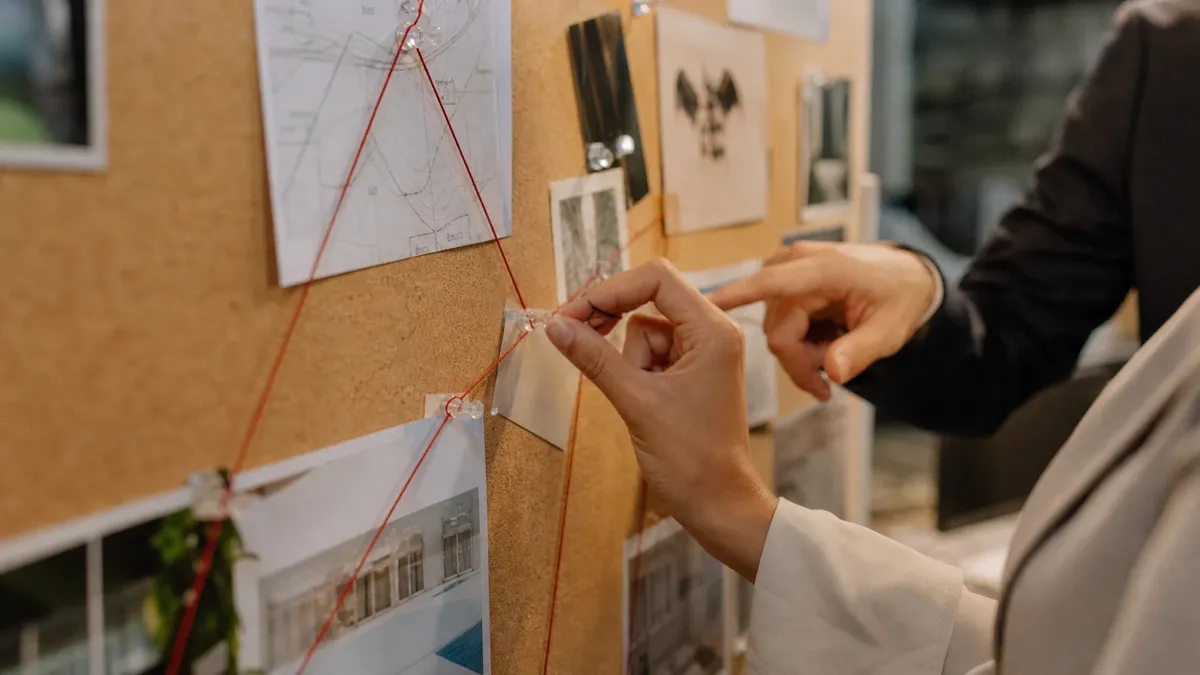
The team plays detectives reopening an unsolved case, piecing together evidence, a suspect board, and a hidden confession. It rewards the logic and pattern people and pairs beautifully with a murder-mystery layer if you want a longer format. A corkboard with red string and photos is a cheap prop that instantly reads as a detective's office.
The Sabotaged Product Launch
A rival planted clues that will crash tomorrow's big launch, and the team has to find and fix the sabotage in time. It maps neatly onto real business stakes and lets you build inside jokes about your industry and product. This modern, no-costume-required theme lowers the barrier for reluctant participants who roll their eyes at wizards and pirates.
The Wizard's Study
A fantasy escape where the team hunts through a magician's cluttered study for the spell that unlocks the door. It gives permission to be theatrical and works well for groups that enjoy costumes and whimsy. Old books, potion bottles, and a wax-sealed scroll create the atmosphere, and hidden-compartment puzzles fit the magic theme perfectly.
Virtual Escape Room Options for Remote Teams
Live-Hosted Video Escape Rooms
A professional host on video guides the team through a story, often controlling an in-person avatar with a camera who acts as the team's hands in a real room. This is the closest a remote team gets to the real thing, and a good host keeps energy up and prevents the dead air that kills virtual events. It is the premium option and worth it for a team that rarely meets in person.
Self-Guided Digital Puzzle Sites
Web-based escape rooms present puzzles on screen that the team solves together over a shared video call, no host required. They are the cheapest and easiest to book on short notice, and many are surprisingly clever. The tradeoff is that without a facilitator the team has to self-organize, so they suit groups that already collaborate well.
The Google Forms DIY Version
You can build a genuinely fun free virtual escape room using nothing but a Google Form where each correct answer unlocks the next section. Puzzles link to images, hidden text, and external clues, and a wrong answer keeps the team locked on that step. It is a fantastic low-budget option and fully customizable to your company's inside jokes.
Breakout-Room Team Splits
For a big remote group, split everyone into breakout rooms of four to six, give each the same puzzle set, and race them on a shared clock. It keeps a large virtual crowd active instead of watching one team solve, which is the number one failure mode of virtual events. Pop between rooms to check on energy and nudge stuck teams.
Point-and-Click Avatar Rooms
Some platforms drop the team into a shared virtual space they explore together, clicking on objects to find and combine clues. The shared game world gives remote players a stronger sense of being in a place together than a grid of faces does. Look for one with built-in voice or run it alongside your video call.
The Hybrid In-Office and Remote Room
When part of the team is in the office and part is remote, a hybrid format has both groups solving linked puzzles that require sharing information across the video call. It deliberately forces the in-person and remote halves to depend on each other, which addresses the real fracture line in hybrid teams. Design it so neither group can win alone.
The Async Week-Long Hunt
For distributed teams across time zones, release a puzzle a day over a week through email or a shared channel, with a leaderboard tracking who solves each one. It keeps engagement humming without forcing everyone onto a single call at an ungodly hour. The slow-burn format also gives quieter people time to contribute on their own schedule.
Run a Tech Check First
Virtual escape rooms live or die on the tech working, so test the platform, the screen sharing, the breakout rooms, and everyone's audio before the clock starts. We learned this producing large-scale virtual trivia with Adam Growe, the longtime host of Cash Cab Canada, for international corporate audiences: the facilitation and the tech rehearsal are what separate a slick remote event from an awkward one.
Debrief & Takeaway Frameworks That Make It Stick
Debrief Immediately, Not Later
The conversation right after the room, while the frustration and the triumph are still fresh, is where an escape room becomes team building instead of just a game. Gather everyone before the adrenaline fades, ideally over food or a drink. A debrief scheduled for a future meeting never carries the same honesty, because the specific moments blur within a day.
The Three-Question Framework
The simplest reliable debrief runs three questions: What worked well as a team? What slowed us down? What would we do differently next time? It is easy to run, works for any group, and surfaces the real dynamics fast. The answers almost always map straight onto how the team operates at work, which is the connection you are after.
Name the Roles People Fell Into
Ask the group who naturally led, who tracked details, who kept morale up, who went quiet. Naming these roles out loud, without judgment, helps people see patterns in how they show up under pressure. It often reveals hidden strengths, the junior person who quietly organized everyone, that go unnoticed in normal work.
Dig Into the Bottleneck Moment
Every room has a moment where the team got stuck, tempers frayed, or communication broke down. Walk back to it: what actually happened, what broke the logjam, who unstuck it. That single moment is usually the richest teaching material of the whole hour, because it mirrors exactly how the team behaves when a real project stalls.
Connect It Back to Real Work
The bridge that makes the lesson stick is one explicit link to the day job. If the team solved it by shouting out every clue, ask where at work information gets hoarded instead. If delegation won the day, ask where they could trust each other more on real projects. Without this bridge, it stays a fun afternoon and nothing more.
Capture One Commitment Each
Close by asking every person for one small thing they will try differently at work based on what they noticed. Keep it tiny and concrete: ask for help sooner, share updates louder, delegate one task. Small, specific, self-chosen commitments are the ones that actually survive contact with Monday morning.
Do Not Force the Lesson
The fastest way to ruin a great escape room is to bolt a heavy-handed corporate moral onto it. Forced fun is a design failure, and so is a forced lesson. If the team had a blast and made a couple of honest observations about how they work, that is a win. Trust the experience to do its work rather than lecturing over top of it.
Common Mistakes to Avoid
Booking It to Fill a Slot
The most common mistake is treating the escape room as a box to tick, a thing on the offsite agenda between lunch and the closing remarks. An event booked to fill time feels like it, and people can tell. Decide what you actually want out of it (new cross-team connections, a look at how people collaborate, just a genuinely fun reward) and design around that goal.
Cramming Too Many Into One Room
Stuffing ten people into a room built for six guarantees that four of them stand around checking their phones. Overcrowding is the fastest way to make people feel like spectators at their own team-building event. Split into smaller teams across parallel rooms or heats, even if it means a little more scheduling.
Skipping the Debrief
Teams pour money into the room and then rush everyone back to their desks the moment the door opens, throwing away the part that actually creates value. Without the debrief, you booked an escape room, not a team-building event. The game generates the material; the conversation is where it turns into something a team keeps.
Letting Friends Team Up
When people pick their own teams, they cluster with the colleagues they already know, and you reinforce the exact silos you were hoping to break. Self-selected teams feel comfortable and accomplish nothing new relationally. Mix departments and seniority deliberately, even though a few people will grumble about not being with their crew.
Turning It Into a Performance Review
The instant people suspect their boss is grading their puzzle-solving, the psychological safety that makes the format work evaporates. Nobody takes a risk or floats a wild idea when they think it counts against them. Keep it explicitly low-stakes and make clear that no one is being evaluated. The whole value is in people behaving freely.
Running It With No Facilitator
For pure fun, a self-run room is fine, but if you want actual team development, going without someone to observe dynamics and lead the debrief leaves most of the value on the table. The facilitator sees what the team cannot see about itself. Skipping that role is why so many escape-room outings are remembered as fun but not as meaningful.
Ignoring Access and Comfort Needs
Escape rooms can be physically demanding, tight spaces, crawling, standing for an hour, and not everyone is comfortable being locked in a small room. Check in privately about mobility, claustrophobia, and other needs before the event, and have an alternative role or room ready. An activity that excludes someone is the opposite of team building.
Expert Pro Tips
Frequently Asked Questions
Is an escape room good for team building?
How do you debrief an escape room team building event?
How many people per escape room team?
How do you run an escape room for a large corporate group?
Do virtual escape rooms work for remote team building?
Can you build a DIY office escape room?
How long should an escape room team building event take?
Skip the DIY logistics and let us build a hosted, interactive experience that scales from a small team to a ballroom and comes with the facilitation built in.
Design a Custom Team-Building Experience
Get StartedOur songwriting team-building experience has your team write and record a custom anthem together. Spotify did it and called it transformational.
Try Song CoLab, Team Building That Bonds
Contact Us